Mojtaba Khamenei Appointed as Iran's New Supreme Leader
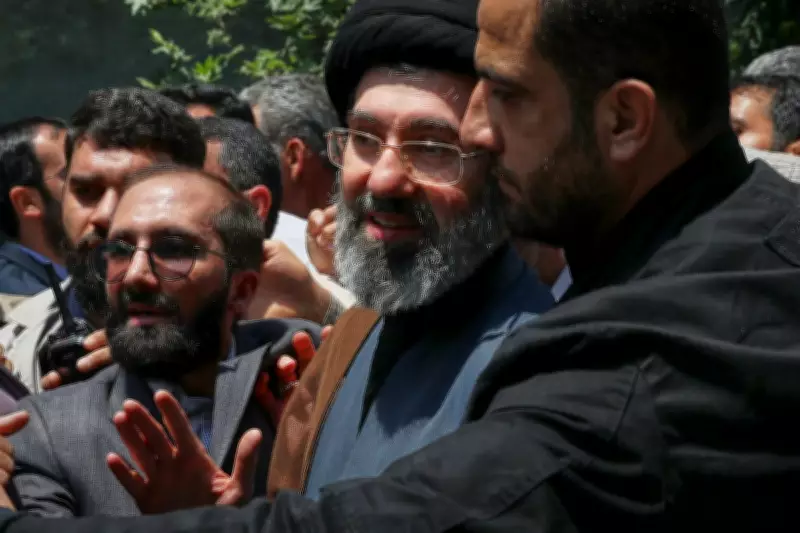
Mojtaba Khamenei, the 56-year-old son of the late Ayatollah Ali Khamenei, has been officially confirmed as Iran's new supreme leader. This pivotal transition follows the death of his 86-year-old father, who was killed in a US-Israeli strike on his personal compound on Saturday, 28 February 2026. The attack also claimed the lives of Ayatollah Khamenei's wife, Mansoureh Khojasteh Bagherzadeh, and Mojtaba Khamenei's wife, Zahra Adel, according to Iranian authorities.
Selection by the Assembly of Experts
The Assembly of Experts, a powerful body comprising 88 Islamic religious scholars, made the decision to appoint Mojtaba Khamenei. This assembly undergoes a rigorous vetting process by the Guardian Council to ensure loyalty to the supreme leader, with their primary duty being to appoint and supervise this key position. Reports from Iran International, an independent news outlet, indicate that pressure from the Islamic Revolutionary Guard Corps (IRGC) influenced the election process.
Background and Profile of Mojtaba Khamenei
Mojtaba Khamenei is the second-oldest son of the late ayatollah and has largely remained out of the public eye until recently. Like his father, he has a dual background in Islamic theology and military service. He currently teaches advanced theology at a religious seminary in Qom, having studied Islam since high school under some of Iran's most influential scholars.

During the Iran-Iraq war, he served in the Iranian military from 1987 to 1988. Despite never holding a formal public office, he is widely regarded as the most influential among his father's six children. He is considered a hardline conservative cleric with strong ties to the IRGC.
Controversies and Allegations
Mojtaba Khamenei's selection is likely to spark controversy in Iran, given the Islamic Republic's historical stance against hereditary rule, which both he and his father have publicly opposed in accordance with Shia theological principles. In 2005, he was accused of interfering in presidential elections when conservative candidate Mahmoud Ahmadinejad won, with reformist figures like Mehdi Karroubi pointing fingers at the "master's son." His father defended him, stating, "He is a master himself, not a master's son."
In 2009, he reportedly took control of the Basij, an Iranian paramilitary group, to suppress anti-government protests following elections. Additionally, a Bloomberg investigation revealed that he allegedly owns over 11 luxury properties in the UK through shell companies, valued at more than $138 million (£103 million), including one on Bishop's Avenue in north London. The Assembly of the Forces of Imam's Line has denied these allegations of significant financial assets. He has been under US sanctions since 2019.
Implications for Iran's Future
The appointment of Mojtaba Khamenei marks a significant moment in Iran's leadership, coming after his father's 37-year clerical rule. This succession raises questions about continuity and potential shifts in Iran's domestic and foreign policies, especially in light of ongoing tensions with the US and Israel. Demonstrations in support of the late ayatollah have spread across Iran, reflecting the nation's complex political landscape as it navigates this new era under Mojtaba Khamenei's leadership.