Modi Receives Standing Ovation in Israeli Parliament During Historic Visit
Indian Prime Minister Narendra Modi delivered a powerful address to Israel's parliament on Wednesday, declaring that "no cause can justify the murder of civilians" while offering New Delhi's full support following the October 2023 Hamas attack. The Indian leader received a rousing welcome from Israeli lawmakers at the start of his two-day diplomatic mission, promising "friendship, respect and partnership" with the Middle Eastern nation.
Zero Tolerance for Terrorism
Speaking before the Knesset, where he received a standing ovation after his thirty-minute speech, Mr Modi emphasized India's consistent and uncompromising policy of zero tolerance for terrorism. "Like you, we have a consistent and uncompromising policy of zero tolerance for terrorism, with no double standards," he told the assembled lawmakers. The Indian prime minister added that both nations should ensure their friendship remains "a source of strength in an uncertain world."
Both Mr Modi and Israeli Prime Minister Benjamin Netanyahu, who also addressed the special parliamentary session, spoke extensively about terrorist attacks their respective nations had confronted. Mr Netanyahu specifically noted that India and Israel both face the challenge of confronting radical Islamist extremism.

Historic Relationship Strengthening
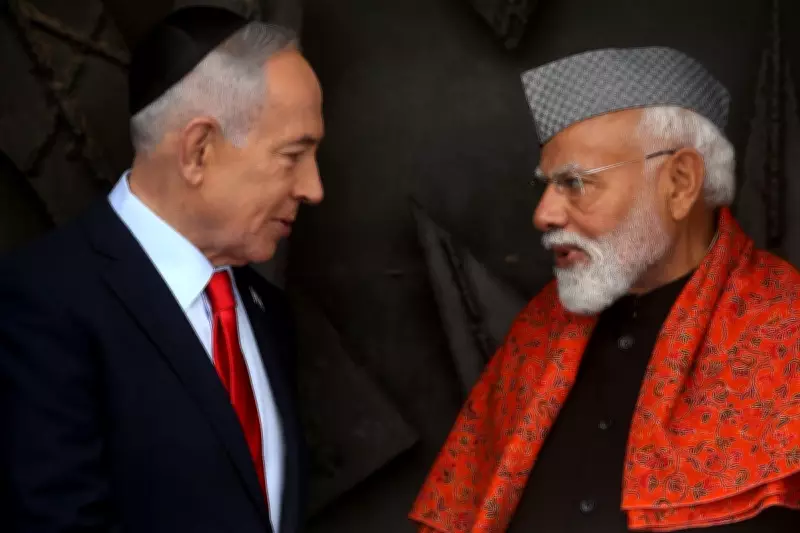
Mr Modi, leader of the Hindu nationalist Bharatiya Janata Party, became the first Indian prime minister to visit Israel in 2017. During that groundbreaking trip, he and Mr Netanyahu took a barefoot stroll along a beach in the northern port city of Haifa. Nearly nine years later, with both leaders still in power, they are expected to hold substantive talks on artificial intelligence and defence cooperation, particularly as Israel seeks to expand its military exports.
The Indian leader was greeted at the airport with an enthusiastic hug from Mr Netanyahu, who later introduced him to the Knesset as "Narendra, my dear friend." The Israeli prime minister expressed profound appreciation, stating: "I've never been more moved than by your visit here with us. You are a great friend of Israel, a great champion of the Israel-India alliance and a great leader on the world stage."
Strategic and Economic Dimensions
This diplomatic visit is likely to provide Israel with a significant boost after witnessing relations with numerous allies deteriorate over its prosecution of the war in Gaza. An Israeli government official told Reuters that Mr Modi's presence would "pave the way for new partnerships and collaborations across many fields." Another official from Israel's foreign ministry indicated that bilateral ties were on the verge of a substantial upgrade.
Mr Modi's journey underscores how dramatically Israel-India relations have evolved during his tenure. His government's embrace of Israel represents a notable shift in India's foreign policy, which historically supported Palestinian causes. India did not establish full diplomatic relations with Israel until 1992, and this visit aims to strengthen security, economic and technological cooperation between the two nations.
Beyond being a powerful political ally, India serves as Israel's second-largest trading partner in Asia. According to India's commerce ministry, total trade between the two countries reached $3.6 billion during the 2025 fiscal year.
Regional Context and Ceasefire Support
Mr Modi had been among the first global leaders to swiftly express solidarity with Israel following the October 2023 attack that triggered Israel's war on Gaza. Mr Netanyahu expressed gratitude for this support, noting: "You didn't flinch. You didn't waver. You didn't give excuses. You stood next to Israel. You stood by Israel."

In response, Mr Modi affirmed India's "strong support" for the US ceasefire plan for Gaza that received endorsement from the UN Security Council last year. This plan outlines measures for ending Hamas' rule, disarming the militant group, rebuilding the territory, and withdrawing Israeli troops, while offering only a vague commitment to potential Palestinian statehood. "We believe that it holds the promise of a just and durable peace for all the people of the region, including the Palestine issue," Mr Modi stated.
The visit occurs against a complex regional backdrop where the United States has deployed a substantial naval force near Iran's coast ahead of potential strikes against the Islamic Republic. The two nations remain at an impasse regarding Tehran's nuclear programme. Additionally, the US has dispatched an aircraft carrier to the Mediterranean Sea, destined for Israel's coastline.
A potential US attack on Iran could provoke Iranian retaliation against Israel as well as US military installations in Gulf Arab countries, where millions of Indians reside and work, sending home billions of dollars in remittances annually. In his address to Israeli lawmakers, Mr Modi spoke generally about challenges to regional stability, acknowledging that the landscape had grown more difficult in recent years, but made no specific mention of the US military build-up or Iran.
Parliamentary Dynamics
Some opposition lawmakers briefly walked out of the special parliamentary session to protest the speaker's decision not to invite the head of Israel's Supreme Court. However, they returned for Mr Modi's remarks. The speaker belongs to Mr Netanyahu's right-wing government, which has maintained a confrontational relationship with the judiciary.