Ireland's Minister for Social Protection has publicly stated that the Taoiseach should accept an invitation to visit the White House on St Patrick's Day if one is formally extended, despite ongoing international tensions surrounding US President Donald Trump's controversial stance on Greenland.
Minister Advocates for Maintaining Diplomatic Access
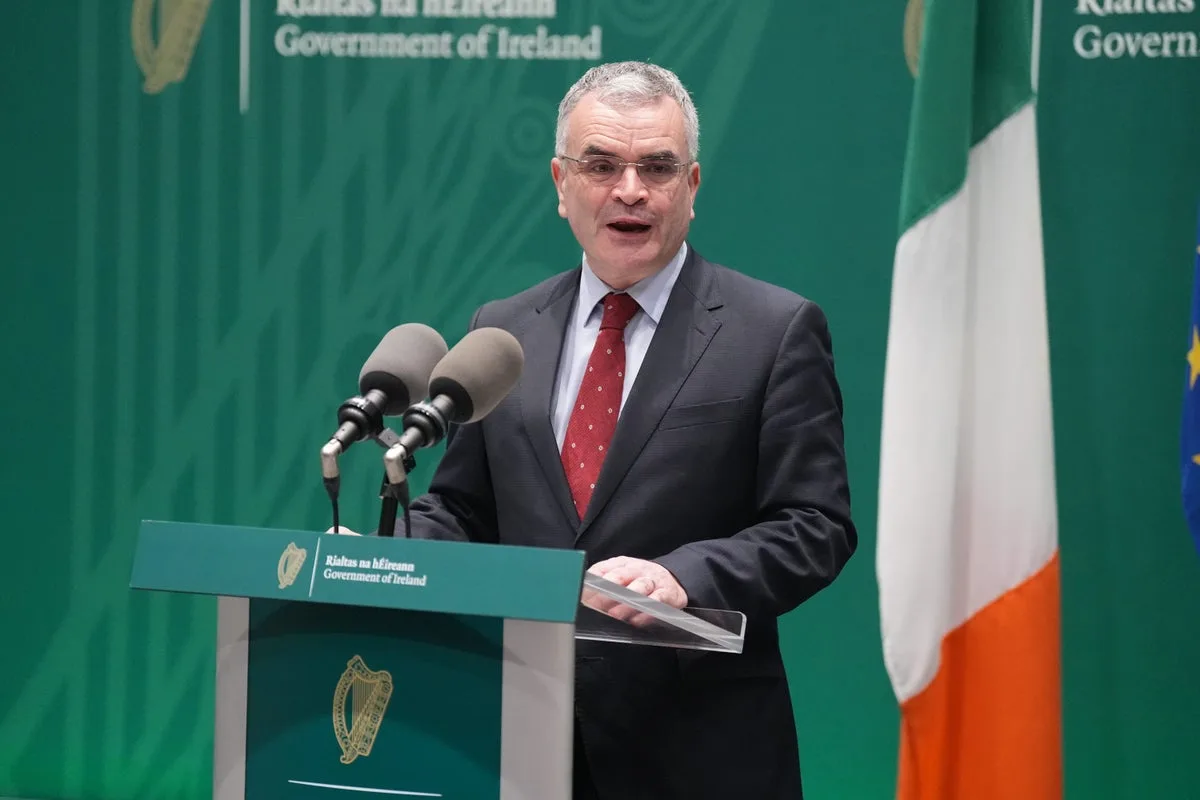
Dara Calleary made his position clear when questioned by reporters about whether the current turmoil caused by President Trump's Greenland policies should prompt Taoiseach Micheal Martin to reconsider the traditional annual diplomatic visit. The minister emphasised the unique opportunity this access provides Ireland on the global stage.
"Very few countries get the opportunity of access to the president of the United States of America on an annual basis for a number of hours," Mr Calleary stated. "It's a chance for him, as he did last year, to discuss face to face with the president various issues."
Background to the Greenland Controversy
The diplomatic landscape has become increasingly complex following President Trump's recent threats to impose 10% tariffs on eight European allies from February 1 unless they agree to his proposed purchase of Greenland. The semiautonomous Danish territory has become a focal point of international tension, with the US president refusing to rule out using military force to seize the island.
Mr Calleary addressed these concerns directly, noting: "At whatever point those issues will be, in the middle of March, it'll be a chance for a face to face discussion for dialogue, which is always important at any time, particularly in times of pressure."
The minister further stressed the importance of maintaining open channels of communication, describing it as "really important" that dialogue between nations continues uninterrupted during challenging diplomatic periods.
Parliamentary Opposition to White House Visit
The Taoiseach faced direct questioning about the potential White House visit from opposition politician Richard Boyd Barrett during parliamentary proceedings on Tuesday. The People Before Profit TD presented a comprehensive critique of President Trump's international record.
Mr Boyd Barrett highlighted several contentious issues:
- The US administration's role in what he described as "arming a genocide" in Gaza
- President Trump's invitation to Russian President Vladimir Putin to join a "Board of Peace" for the region
- Allegations that the US had "kidnapped the President" of Venezuela
- Criticism of immigration and customs enforcement practices
- Threats made against multiple nations including Colombia, Mexico, Cuba, Canada and Iran
The opposition TD posed a direct challenge: "Surely you're not going to go off to the White House and celebrate our national day and hand them shamrock?"
Taoiseach's Response to Parliamentary Questions
While Micheal Martin's parliamentary response did not provide a definitive confirmation about his White House intentions, he outlined the broader strategic considerations guiding Ireland's diplomatic approach.
"We are in a very serious situation and our national interest, quite frankly, is to protect Irish workers," the Taoiseach stated. "And we would behave accordingly to do that and to achieve that, and to make sure that we can get a reasonable international legal framework through the UN, through getting countries to adhere to the international rule of law."
Mr Martin emphasised the enduring nature of Irish-American relations, noting: "We've always had a very strong relationship with the US, irrespective of who the president happens to be or who's in power on the Hill at any given time – and that has underpinned a very significant economic relationship which puts bread on the table of Irish workers."
The Taoiseach's comments reflect the delicate balancing act facing Irish diplomacy – maintaining crucial economic and political relationships while navigating increasingly complex international waters marked by President Trump's unconventional foreign policy approaches.






