Middle East Conflict Widens as Iran-US War Engulfs Multiple Nations
The escalating conflict between the United States, Israel, and Iran has paralysed the Middle East, with the war spilling over into numerous countries across the region. Retaliatory strikes have drawn in nations including Saudi Arabia, Bahrain, Qatar, the United Arab Emirates, Kuwait, Jordan, Oman, and Iraq, following initial attacks. Iran has threatened its "most intense offensive operation" against US bases, while civilian targets in the Gulf, such as hotels and airports, have also been hit, with no immediate end to the hostilities in sight.
US-Israeli Attacks on Iran and Regional Fallout
War erupted on Saturday, February 28, 2026, with Iran's Supreme Leader Ayatollah Ali Khamenei among the early casualties. The large-scale military assault by the US and Israel aimed to dismantle Iran's nuclear programme and remove the country's leadership. Since then, strikes have continued to target key military sites and government buildings across Iran. In a tragic incident, at least 175 people, mostly children, were killed in an attack on a girls' primary school in Minab, prompting outrage from human rights groups and the United Nations, which called for an investigation into the "horrific" event. The school was adjacent to Islamic Revolutionary Guards Corps buildings, which were also destroyed.
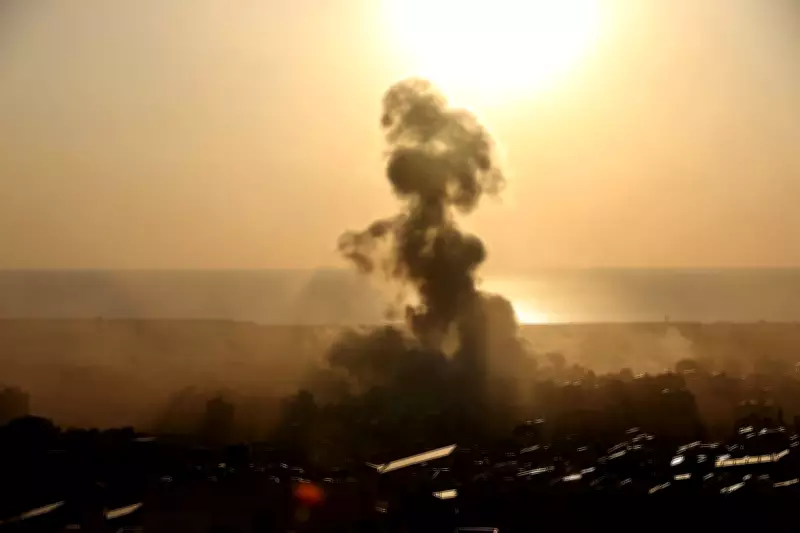
Fighting expanded on Sunday as Israel attacked Iran's energy infrastructure, hitting a major fuel depot and causing apocalyptic scenes with plumes of black smoke, acid rain, and toxic fumes across Tehran. Outside the Middle East, a US submarine torpedoed an Iranian warship in international waters off the coast of Sri Lanka on Wednesday, March 4, killing at least 87 Iranian soldiers.

Iranian Retaliation and Attacks on Gulf Countries
Iran has launched missiles and drones at Israel, striking civilian targets and killing nine people in Beit Shemesh on Sunday, March 1, according to Israeli authorities, with a total of eleven fatalities reported so far. President Masoud Pezeshkian stated that avenging the US-Israeli attacks was Iran's "legitimate right and duty." On Tuesday, March 10, Iran's army targeted oil refineries and fuel storage in Haifa with drones in retaliation for attacks on Iranian oil depots.
In the Gulf region, Iran has attacked several US military bases, causing chaos and forcing countries to deploy armed forces to intercept aircraft. Key incidents include:
- A missile attack on the US Navy's 5th Fleet service centre in Bahrain on Saturday, February 28, with residential buildings in Manama also struck.
- Strikes on US bases in Qatar, Kuwait, and the UAE, including Al Udeid air base and Ali Al Salem.
- The Palm Hotel in Dubai hit by debris from an Iranian missile attack, resulting in a fire.
- One death and seven injuries at Dubai International Airport after an "incident."
- A drone attack on Oman's Duqm commercial port on Sunday, March 1, and an oil tanker off the coast with four injuries.
- The US embassy in Riyadh, Saudi Arabia, hit by drones on Tuesday, March 3, causing a limited fire, followed by an Iranian strike on the Aramco oil refinery in Ras Tanura.
- Qatar intercepting at least 17 ballistic missiles on Monday, March 9.
Despite President Pezeshkian issuing an apology to surrounding countries, fighting has persisted, with two deaths in Saudi Arabia from a projectile and a Pakistani taxi driver killed in Dubai by falling debris.
Expansion to Lebanon, Iraq, Syria, Jordan, and Beyond
Fighting between Israel and Hezbollah has intensified along Lebanon's border, despite a fragile Qatar-mediated ceasefire. Hezbollah launched attacks in retaliation for Ayatollah Khamenei's death, firing rockets and drones. Israel responded by pounding southern Lebanon and Beirut, killing Hussein Makled, whom it identified as "the head of Hezbollah's intelligence headquarters." Human Rights Watch reported Israel's use of white phosphorous over civilian homes, a weapon that can burn skin to the bone. As of Monday, March 9, at least 400 people have been killed and over 1,000 injured in Lebanon, with over 500,000 displaced, prompting a UN declaration of a major humanitarian crisis.

Attacks have also been reported in Iraq, Syria, and Jordan. The conflict has crept closer to Europe, with Azerbaijan accusing Iran of a drone strike on its territory on Thursday, March 5, and Turkey intercepting ballistic missiles in its airspace, though Iran has denied these claims.
Impact on Global Shipping and Cyprus
At least ten vessels have been attacked in the Strait of Hormuz, a major shipping route largely closed due to the fighting. Hundreds of ships are anchored to avoid hits, with oil prices surging over $100 a barrel due to disruptions. In Cyprus, the UK confirmed strikes hit the RAF Akrotiri air base on Sunday, March 1, targeting its runway, with further drones intercepted. The UK has deployed a warship and helicopters with counter-drone technology to defend the base.
As US Secretary of Defense Pete Hegseth promised the heaviest day of bombardment yet, the Iranian establishment remains defiant, vowing not to give in. The conflict shows no signs of abating, with widespread casualties, displacement, and economic turmoil across the region.