In a significant political development, Republican senators Mitch McConnell and Thom Tillis have broken ranks with former President Donald Trump over his stated intention to withdraw the United States from the North Atlantic Treaty Organization (NATO). The senators issued stark warnings that such a move would undermine American security, benefit geopolitical rivals, and require stringent legislative approval under existing law.
Bipartisan Defense of the Alliance
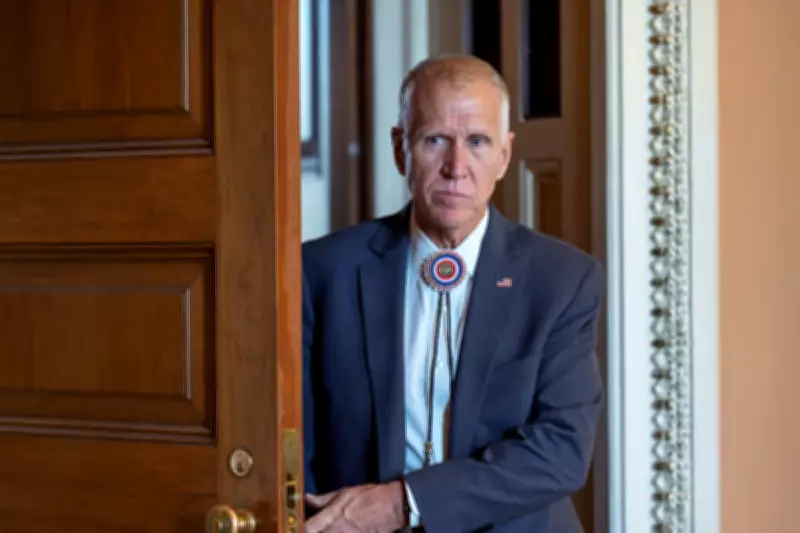
On Thursday, Senator Thom Tillis, a Republican from North Carolina, joined forces with Democratic Senator Jeanne Shaheen to defend NATO's critical role. Both lawmakers co-chair the Senate NATO Observer Group and emphasized the alliance's historical solidarity with the US. "NATO stood by America when we were under attack and came to our aid after the September 11th attacks," they stated in a joint declaration. "Their soldiers fought and died alongside our troops in Afghanistan."
The senators issued a direct rebuke to Trump, asserting that "any president that contemplates attempting to withdraw from NATO is not only fulfilling Vladimir Putin and Xi Jinping's greatest dreams but would be undermining America's own national security interests." This statement highlights the deep concerns within both parties about the potential consequences of abandoning the transatlantic alliance.

McConnell's Firm Stance
Earlier, on Wednesday, former Senate Republican leader Mitch McConnell collaborated with Democratic Senator Chris Coons to release a joint statement reinforcing NATO's importance. McConnell and Coons, who serve as the top Republican and Democrat on the Senate defense appropriations subcommittee, noted that "NATO troops fought and died in Afghanistan and Iraq alongside American forces."
They cautioned that "the United States must not take this sacrifice – nor our allies' commitment to make it again – lightly." Addressing internal disputes within the alliance, they added, "Alliance disputes are as old as the alliance itself. Americans are safer when NATO is strong and united. It is in our interest for all allies to tend this unity with care."
Trump's Longstanding Criticism
Donald Trump has consistently criticized NATO throughout his political career, arguing that member nations do not contribute sufficiently to defense spending. His recent comments have escalated these tensions. In an interview with Reuters on Wednesday, Trump confirmed he is "absolutely without question" considering withdrawing the US from NATO. He further elaborated in a separate discussion with the Telegraph, stating he had never been "swayed by NATO" and that the matter of withdrawal was "beyond reconsideration."
Notably, Trump did not consult with NATO before collaborating with Israel in military actions against Iran, nor did he invoke Article 5 of the NATO treaty. This clause mandates collective defense among member states in response to an armed attack in Europe or North America, underscoring his unilateral approach to foreign policy.
Legal and Political Hurdles
Withdrawing from NATO would face substantial legal and political obstacles. Under a 2024 law, a US president cannot unilaterally exit the alliance without securing a two-thirds majority vote in the Senate or an act of Congress. This legislative safeguard ensures that any decision to leave NATO involves broad bipartisan consensus, making it a challenging endeavor for any administration.
Trump's attacks on NATO have provoked a rare split within the Republican Party, though the most vocal critics, such as McConnell and Tillis, are in their final months in office. Senator Tillis has opted not to seek re-election in November after previously breaking with Trump on domestic policy, while McConnell is retiring after a long tenure beginning in 1985. Their departures may influence the dynamics of future debates on US foreign policy and alliance commitments.
The ongoing debate underscores the deep divisions within American politics regarding international alliances and national security strategy. As Trump continues to advocate for a more isolationist stance, figures like McConnell and Tillis represent a faction within the GOP that prioritizes traditional alliances and multilateral cooperation to counter global threats.