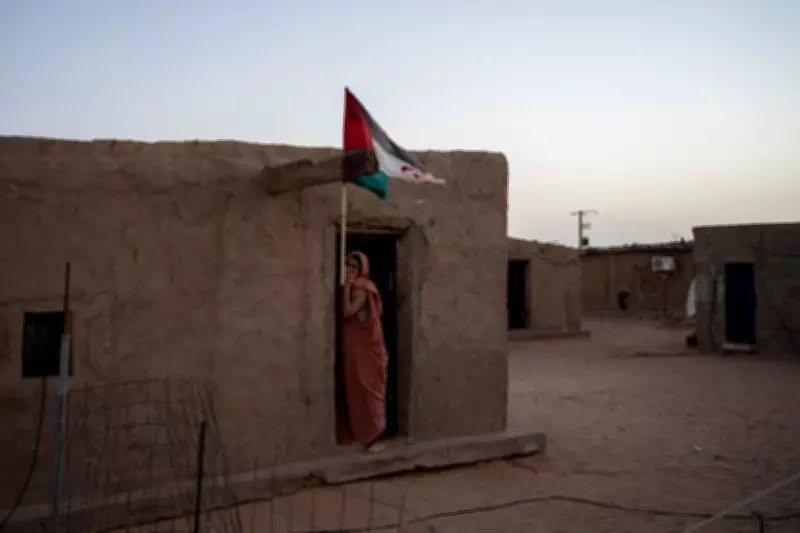
Mali Withdraws Recognition of Sahrawi Republic, Backs Moroccan Sovereignty
In a significant diplomatic shift, Mali's transitional government announced on Friday its formal endorsement of Morocco's autonomy plan for the disputed Western Sahara territory. The Malian Ministry of Foreign Affairs released a statement confirming the withdrawal of its recognition of the separatist Sahrawi Arab Democratic Republic, aligning itself with a growing international consensus supporting Moroccan sovereignty over the region.
A Strategic Realignment in African Diplomacy
The statement from Mali's foreign ministry explicitly declared: "The Republic of Mali supports the autonomy plan proposed by Morocco as the only serious and credible basis for resolving this dispute and considers that genuine autonomy under Moroccan sovereignty is the most realistic solution." This represents a substantial reversal of Mali's previous position, which had recognized the Sahrawi Arab Democratic Republic as the legitimate representative of the indigenous Sahrawi people.
Mali's decision places it alongside numerous African allies, the former Trump administration in the United States, and most European Union member states who have expressed support for Morocco's approach. The transitional government's announcement comes as part of a broader realignment in regional diplomacy concerning one of Africa's longest-running territorial conflicts.

Historical Context and International Dimensions
Western Sahara, a phosphate-rich coastal desert territory approximately the size of Colorado, was under Spanish colonial rule until 1975. Since then, sovereignty has been contested between Morocco and the Polisario Front, which operates from refugee camps in southwestern Algeria and claims to represent the indigenous Sahrawi population.
In October 2025, the United Nations Security Council adopted a resolution that placed Morocco's proposed autonomy plan at the center of international efforts to resolve the conflict. While the resolution did not determine the territory's final status, it described the Moroccan initiative as "serious, credible, and realistic" and established it as the basis for future negotiations.
Notably, the UN resolution made no mention of a referendum on self-determination that includes independence as an option. This omission represents a departure from the solution long favored by the pro-independence Polisario Front and its principal allies, including Algeria, Russia, and China.
Economic Implications and Regional Stability
Following decades of conflict, Western Sahara has recently emerged as an increasingly attractive destination for international investment. European and American firms have shown growing interest in developing fishing, agriculture, and infrastructure projects in the territory. Particularly significant are renewable energy initiatives that would facilitate the transmission of wind and solar power from the resource-rich region.
Mali's endorsement of Morocco's autonomy plan reflects not only diplomatic considerations but also economic pragmatism. By aligning with the Moroccan position, Mali positions itself to potentially benefit from the economic development and stability that a resolution to the Western Sahara conflict could bring to the broader North African region.
The transitional government's decision represents a calculated diplomatic maneuver that acknowledges the shifting international consensus while potentially opening new avenues for economic cooperation and regional stability in a strategically important part of the African continent.