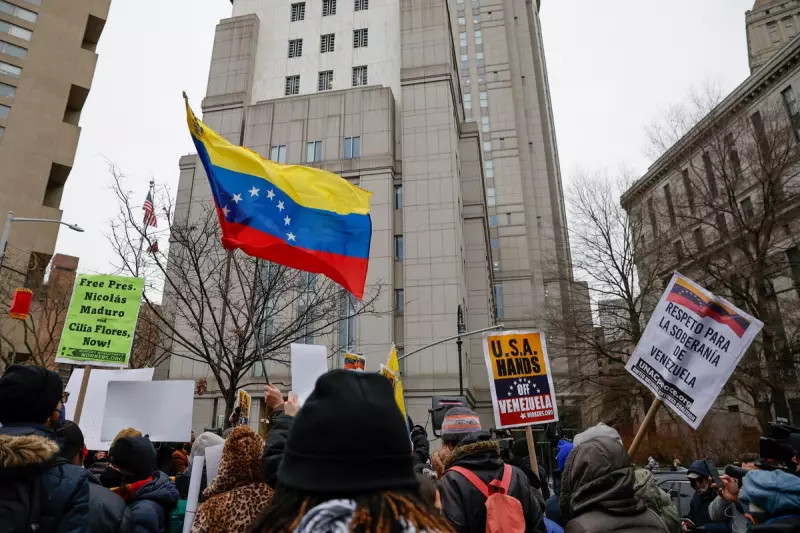
The first US court appearance of deposed Venezuelan leader Nicolás Maduro was a heavily secured spectacle that set the stage for a protracted legal battle, one that could see him imprisoned for decades. Maduro, 63, and his wife, Cilia Flores, 69, were arraigned on Monday on serious drug trafficking charges, just days after a dramatic US military raid seized them from their Caracas home.
A Long Road Ahead: Bail, Health, and Consular Access
Both defendants pleaded not guilty during the hearing, with Maduro defiantly proclaiming himself Venezuela's legitimate president and declaring his capture a kidnapping. Their next court date is scheduled for 17 March. The immediate future involves several critical procedural steps.
While neither requested bail on Monday, their lawyers indicated they might later. However, Judge Alvin Hellerstein's openness to such requests does not guarantee approval. Given the severity of the charges—including narco-terrorism conspiracy and accusations of plotting to import cocaine into the US—prosecutors are certain to argue both are extreme flight risks. Historical precedent is not in their favour; figures like Panama's Manuel Noriega and Mexico's Joaquín "El Chapo" Guzmán were denied bail in similar circumstances.

A pressing concern is the health of the defendants. Flores's lawyer, Mark Donnelly, stated she sustained "significant injuries" during the raid, potentially including fractured ribs, and requires an X-ray. She appeared in court with visible bandages. Maduro's attorney, Barry Pollack, also cited unspecified health issues needing attention while detained. The judge has instructed both legal teams to coordinate with prosecutors to ensure proper medical care at the Metropolitan Detention Center in New York, a facility with a checkered history of medical treatment.
Maduro also requested a consular visit, a right for non-citizens charged in the US. This presents a logistical hurdle, as Maduro himself ordered the closure of Venezuelan embassies and consulates in the US in 2019. Such a visit may also be crucial for navigating US sanctions to facilitate payment of his legal fees.
Substantial Legal Challenges on the Horizon
Maduro's defence team, now bolstered by former Reagan-era official Bruce Fein, has promised "substantial" challenges to the very legality of the prosecution. Central to their argument is the claim of sovereign immunity; Pollack asserted that Maduro, as a head of state, is entitled to privileges that should shield him from prosecution.
This defence strategy mirrors that used unsuccessfully by Manuel Noriega after his 1989 capture. A key difference, however, is Maduro's claim to electoral legitimacy through three popular votes. The US government's longstanding position of not recognising him as Venezuela's legitimate leader will likely be used by prosecutors to undermine his immunity claim. This foundational legal dispute is expected to wind through appeals courts, potentially for years, before a trial on the substantive charges even begins.
The Trump administration has defended the extraordinary operation to apprehend Maduro as a "surgical law enforcement operation," related to an indictment first filed six years ago. As Venezuela grapples with the geopolitical shockwaves, Maduro and Flores remain incarcerated over 2,100 miles from home, at the start of a legal odyssey with no clear end in sight.