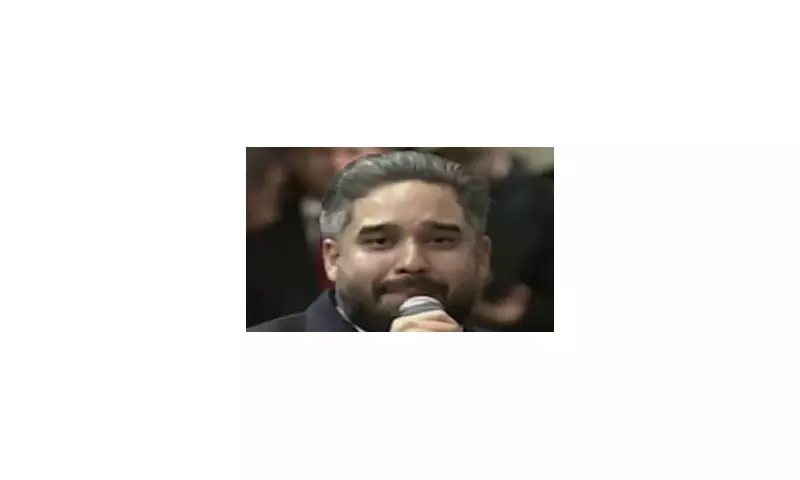
The political landscape of Venezuela was thrown into turmoil this week as the son of captured President Nicolás Maduro broke down in tears while addressing the nation's parliament. The emotional scene unfolded on Monday, 5th January 2026, following the dramatic seizure of Maduro and his wife by United States special forces.
An Emotional Plea and a Defiant Swearing-In
Nicolás Maduro Guerra, the 35-year-old son of the Venezuelan leader and a high-ranking member of the National Assembly, sobbed as he spoke to lawmakers aligned with the ruling party. He condemned the capture of his father as a "kidnapping" and warned of global implications. "If we normalise the kidnapping of a head of state, no country is safe," he declared. "Today, it's Venezuela. Tomorrow, it could be any nation that refuses to submit."
Addressing his absent father directly, he vowed: "Papa, we are fulfilling our duty until you return. The motherland is in good hands, papa, and soon we're going to embrace here in Venezuela."

Despite the crisis, the ruling party proceeded with a scheduled ceremony in Caracas to swear in the National Assembly for a term extending to 2031. In a significant move, Maduro Guerra pledged his "unconditional support" to Delcy Rodríguez, Maduro's deputy who has now assumed the role of interim president. Rodríguez was sworn in by her brother, Jorge Rodríguez, the re-elected speaker of the assembly.
The US Charges and a Conciliatory Shift
The backdrop to this political theatre is a series of grave legal accusations from the United States. Nicolás Maduro and his wife, Cilia Flores, were indicted in a New York court on charges including narco-terrorism, cocaine importation, and weapons offences. During his first US court appearance, Maduro pleaded not guilty, declaring himself an "innocent" and "decent man."
The US indictment also names Maduro Guerra, known as 'Nicolasito', as a co-conspirator. He is accused of involvement in "massive-scale drug trafficking," allegedly using state resources to ship cocaine to the US via multiple routes and discussing narcotics and weapons movements with Colombian officials.
In a notable shift from initial defiance, interim President Delcy Rodríguez struck a more conciliatory tone towards the US over the weekend. She stated Venezuela is seeking "respectful relations" and invited Washington to collaborate on an "agenda of cooperation." This followed a warning from former US President Donald Trump that she could "pay a very big price" for non-compliance.
Uncertain Future and US Intentions
The future for both the Maduro family and Venezuela remains deeply uncertain. Maduro Guerra faces the constant threat of capture to stand trial in New York alongside his father. Meanwhile, the US administration has begun preliminary plans to reopen its embassy in Caracas, signalling a potential new phase of engagement.
US Secretary of State Marco Rubio clarified that America would not govern Venezuela day-to-day but would maintain pressure, particularly through an existing "oil quarantine," to force policy changes and halt drug trafficking. The stunning capture of a sitting head of state marks an unprecedented escalation, leaving Venezuela at a historic crossroads and the international community watching closely.