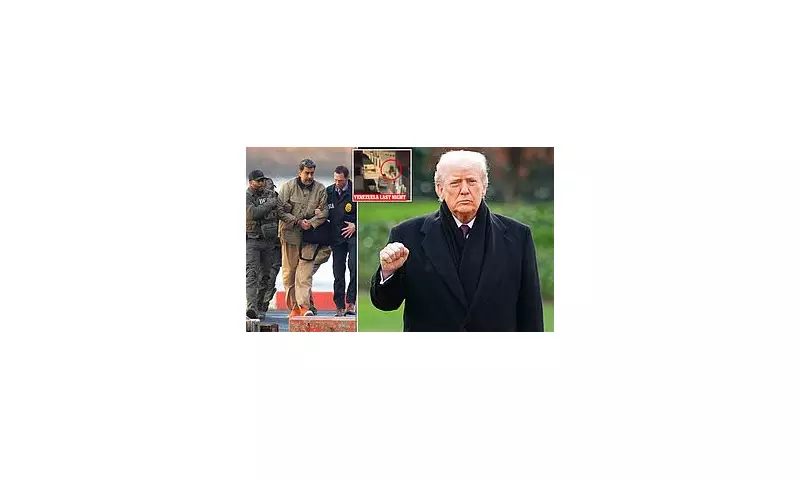
The dramatic capture and extradition of Venezuelan President Nicolás Maduro to the United States may signal the opening move in a far more ambitious American strategy to reshape the international order, according to a newly published national security blueprint.
The 'Trump Corollary' and a New American Doctrine
A National Security Strategy document released last month details a large-scale plan to leverage American military dominance to exert control across the Western Hemisphere and beyond. The policy explicitly states an intention to "assert and enforce a 'Trump Corollary' to the Monroe Doctrine." This modern interpretation, echoing President James Monroe's 1823 declaration, aims to secure favourable trade conditions by preventing rival powers from gaining influence in neighbouring nations.
The document's overarching goal is to unify America's global assets to "strengthen American power and preeminence." This strategic shift comes as the early stages of Venezuela's political transition descended into chaos. While Maduro faced a Manhattan court, violence erupted on the streets of Caracas, leaving the Venezuelan government in reported disarray.

Courtroom Drama and Plans for Rebuilding
On Monday, Nicolás Maduro, 63, pleaded not guilty to drug trafficking charges in a federal courtroom. The deposed leader, wearing prison-issue clothing and shackles, identified himself as the rightful President of Venezuela and claimed he had been "kidnapped" since Saturday, January 3rd. His wife, Cilia Flores, 69, also pleaded innocent. Both were remanded in custody, with their next court date set for March 17.
Concurrently, former President Donald Trump asserted he was "ultimately in charge" of Venezuela's future. He outlined a plan where US oil companies would lead the rebuilding of the nation's shattered energy infrastructure, potentially with American taxpayer support. "A tremendous amount of money will have to be spent and the oil companies will spend it, and then they'll get reimbursed," Trump told NBC News, suggesting the project could take up to 18 months before elections could be held.
Venezuelan opposition figure María Corina Machado pledged to assist Trump, telling Fox News her goal was to transform Venezuela into "the energy powerhouse of the Americas" with open markets and investment.
Greenland Ambitions and Regional Unrest
In a related development highlighting the administration's expansive vision, former Homeland Security Advisor Stephen Miller publicly argued for US sovereignty over Greenland. Appearing on CNN, Miller challenged Denmark's claim to the Arctic territory, stating, "Greenland should be part of the United States." He dismissed the prospect of military conflict over the issue, asserting, "Nobody's gonna fight the United States militarily over the future of Greenland."
Back in Venezuela, the situation remained volatile. Locals reported hearing "anti-aircraft" blasts near the presidential palace in Caracas, though a White House official told CNN the US was not involved, attributing the gunfire to confusion among paramilitary groups. The events mark a turbulent start to what the US security strategy frames as a renewed assertion of American power, with the Maduro case serving as a potent, if contentious, first chapter.