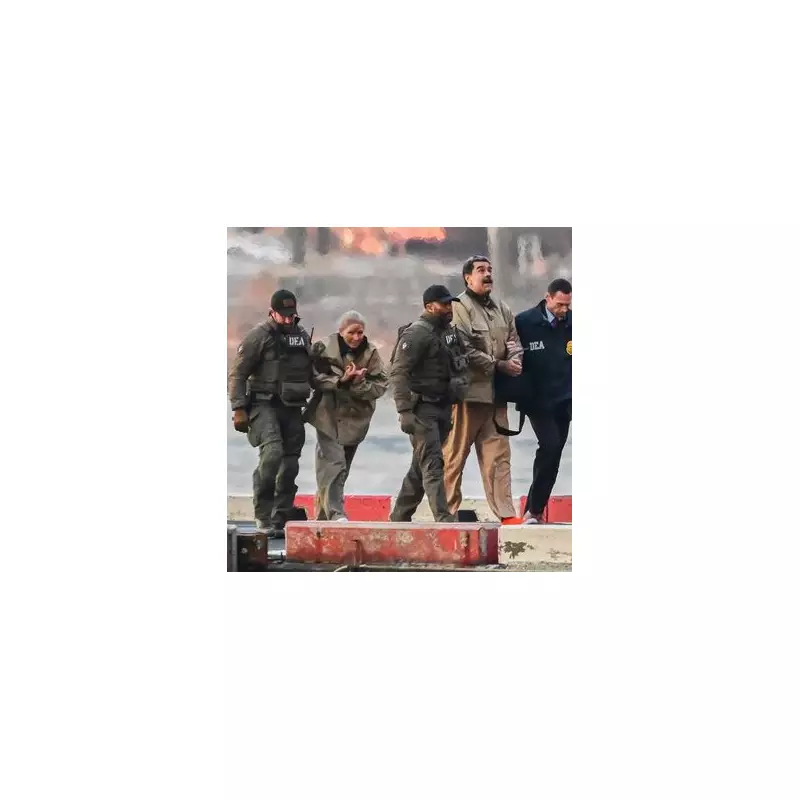
In an unprecedented move, ousted Venezuelan President Nicolas Maduro has been seen being escorted to a New York courthouse in handcuffs, following his dramatic capture by United States forces over the weekend.
From Presidential Palace to US Courtroom
Maduro, alongside his wife Cilia Flores, is scheduled to appear before a judge this afternoon following a military operation on Saturday that seized the couple from their home on a Venezuelan military base. The legal proceeding, while expected to be brief, marks the beginning of what promises to be a protracted legal battle over his indictment on serious narco-terrorism charges.
The US administration, under President Donald Trump, has used these charges to justify the extraordinary capture of a foreign head of state. The core of the prosecution's case is a 25-page indictment, made public on Saturday, which accuses Maduro and several associates, including his wife and son, of conspiring with international drug cartels to facilitate the shipment of thousands of tons of cocaine into the United States. If convicted, they each face the possibility of life imprisonment.

Legal Immunity and Broader Political Aims Contested
Maduro's defence team is anticipated to vigorously challenge the legality of his arrest, arguing that he is immune from prosecution as the sovereign head of a foreign nation. This argument, however, is undermined by the US government's longstanding position of not recognising Maduro as Venezuela's legitimate leader.
The courtroom drama unfolds against a backdrop of escalating rhetoric from the White House. Speaking aboard Air Force One, President Trump suggested the operation could be a precursor to further intervention in the region. He pointed to Cuba's economic struggles following the loss of Venezuelan oil support, stating, “Cuba looks like it’s ready to fall. I don’t know how they’re going to hold on. All their money came from Venezuela, from Venezuelan oil.”
Trump also took aim at Colombia's leftist president, Gustavo Petro, calling him "a sick man who likes making cocaine and selling it to the United States. And he's not going to be doing it very long." These comments signal a clear intent to extend American pressure across the hemisphere.
Aftermath of the Capture and US Intentions
Following the capture, Trump indicated that the US would temporarily "run" Venezuela, though Secretary of State Marco Rubio later clarified that Washington would not govern the country day-to-day. Instead, the focus would remain on enforcing an existing 'oil quarantine' against the Maduro regime.
Prior to his detention, Maduro and his allies consistently claimed that US hostility was driven primarily by a desire to control Venezuela's vast reserves of oil and precious minerals. This narrative is now set to clash with the US Department of Justice's criminal case in a New York federal court, setting the stage for a landmark legal and geopolitical confrontation.