Macron Accuses US of Breaking International Rules After Venezuela Raid
Macron: US Breaking International Rules, Turning from Allies

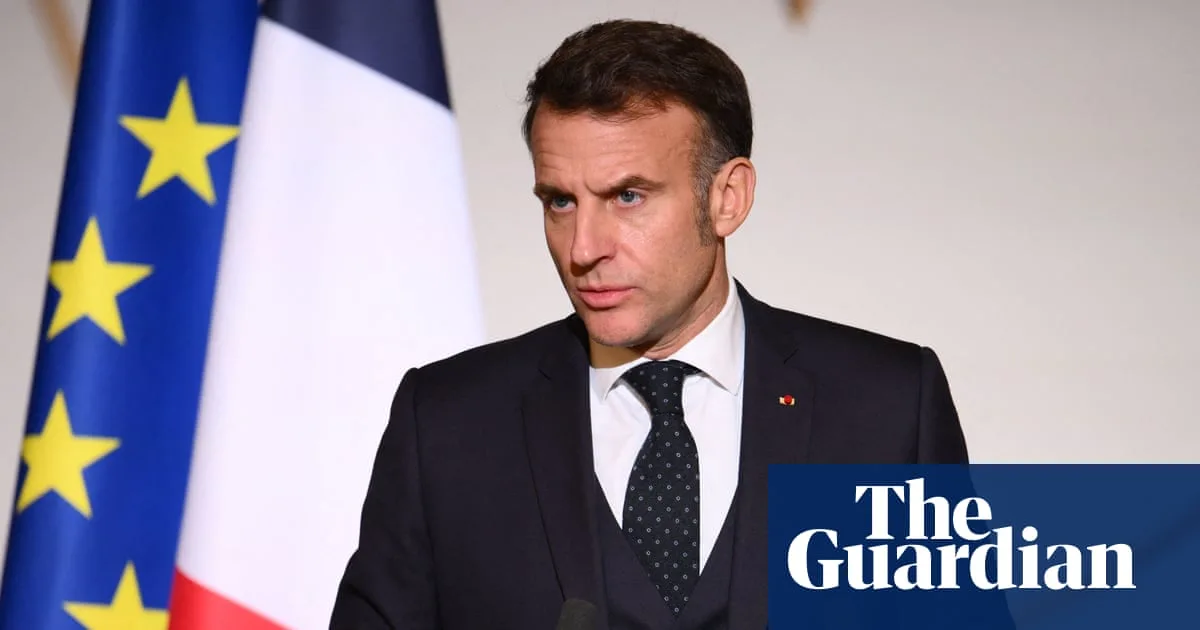
In a powerful and direct address, French President Emmanuel Macron has launched a scathing critique of the United States, accusing the transatlantic ally of abandoning the international rulebook and distancing itself from its partners. The speech, delivered to France's assembled ambassadors at the Élysée Palace, comes amid a turbulent week of unilateral American action that has left European capitals scrambling for a coherent response.

A Stark Warning on the World Stage

President Macron did not mince his words in his annual diplomatic address. He characterised the United States as "an established power, but one that is gradually turning away from some of its allies and breaking free from international rules that it was still promoting recently." He painted a picture of a fragmenting global system, stating, "We are living in a world of great powers with a real temptation to divide up the world," and lamented that multilateral institutions are "functioning less and less effectively."

This impassioned denunciation followed closely on the heels of a personal slight from US President Donald Trump. At a meeting of Republican leaders, Trump mocked Macron's accent while recounting how he pressured France into tripling its drug prices by threatening tariffs on all French imports, including champagne and wine.

Europe's Tepid and Divided Response to Venezuela

The immediate catalyst for Macron's speech was a series of bold moves from Washington. In recent days, Donald Trump authorised an unprecedented military incursion into Venezuela, resulting in the capture of the country's leader, Nicolás Maduro. The operation, which saw explosions rock Caracas and Maduro later appear in handcuffs in Manhattan, sent shockwaves through diplomatic circles.

The European Union's initial collective reaction was notably cautious. The EU's High Representative for Foreign Affairs, Kaja Kallas, backed by 26 of the 27 member states, called for "calm and restraint" rather than outright condemnation. She did, however, remind the US of its "particular responsibility" as a UN Security Council member to uphold international law.

Individual national responses revealed deep fractures:

  • France's Macron stated he would "shed no tears" for Maduro but emphasised the principle of law.
  • Germany's Chancellor Friedrich Merz called for a "complex" legal assessment of the US action.
  • Italy's Prime Minister Giorgia Meloni offered forceful praise, labelling the raid an act of "legitimate" self-defence.
  • Spain's Prime Minister Pedro Sánchez led a small group of critics, declaring Spain would not recognise an intervention violating international law.
  • UK Prime Minister Sir Keir Starmer aligned with Macron, stating the UK shed no tears for Maduro's regime but stressed the importance of adhering to international law.

A Firmer Stance on Greenland and the Search for Unity

On the second major flashpoint – President Trump's renewed threats to annex Greenland, which is part of EU member Denmark – European leaders were more decisive. A coalition including Starmer, Macron, and Meloni issued a joint statement vowing to defend Greenland's "territorial integrity" and the "inviolability of borders." They firmly stated that "Greenland belongs to its people" and only Denmark and Greenland could decide its future.

Behind the scenes, efforts are underway to formulate a concrete plan. French Foreign Minister Jean-Noel Barrot confirmed the issue would be discussed with German and Polish counterparts, stating, "We want to take action, but we want to do so together with our European partners." A German government source confirmed close coordination with other European nations and Denmark, though Spanish officials indicated such a plan was not yet widely known.

Macron's address stands as the most robust European critique of Washington's recent trajectory, highlighting a profound crisis of confidence in the Atlantic alliance and exposing the significant challenges Europe faces in mounting a united front against an increasingly assertive American foreign policy.