Macron Calls for EU Firmness Against US Over Greenland Dispute
French President Emmanuel Macron has declared that the European Union must not yield to "the law of the strongest" and should be prepared to deploy its powerful anti-coercion instrument against the United States. This statement comes in response to President Donald Trump's persistent threats to impose tariffs on European allies who oppose his administration's controversial aim to take over Greenland.
Davos Speech Highlights EU's Stance on International Law
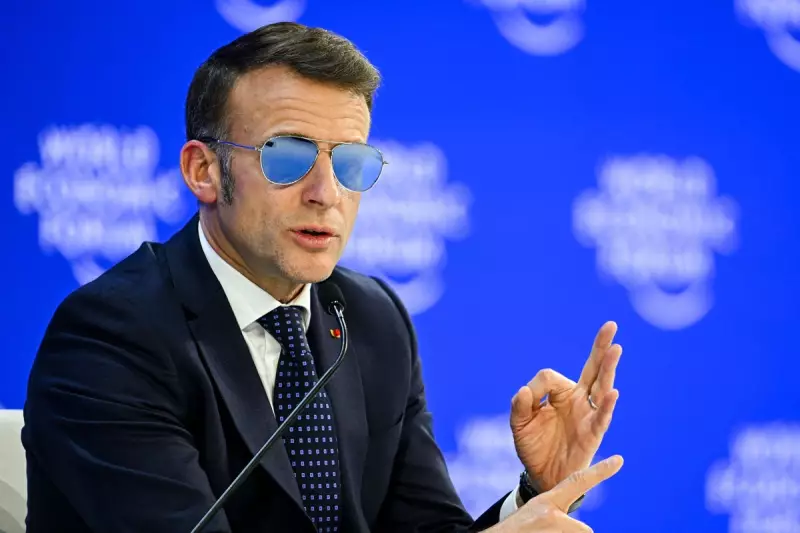
Speaking at the World Economic Forum in Davos on January 20, 2026, Macron emphasised the EU's commitment to principles over power. "We do believe that we need more growth, we need more stability in this world, but we do prefer respect to bullies," he stated in English. "We do prefer science to conspiracies and we do prefer rule of law to brutality." Macron's remarks underscore a growing transatlantic rift, as he insisted the bloc "should not hesitate" in activating the anti-coercion mechanism to counter Trump's Greenland tariff threats.
Trump's Tariff Announcement and EU Retaliation Plans
The crisis escalated when Trump announced tariffs on Saturday targeting imports from European countries that resist the United States' ambition to acquire Greenland, an autonomous territory within the Kingdom of Denmark. European leaders argue these tariffs violate a trade agreement finalised with the Trump administration last year. In response, EU officials are scheduled to convene for an emergency summit in Brussels on Thursday to discuss potential retaliatory measures.

One significant option under consideration is a package of tariffs on approximately 93 billion euros (equivalent to $108 billion) worth of U.S. imports. This retaliatory action could automatically come into effect on February 6, following a six-month suspension period, marking a severe escalation in trade tensions.
US Treasury Secretary Dismisses Concerns and Downplays Escalation
U.S. Treasury Secretary Scott Bessent sought to downplay the situation, expressing confidence that a resolution would be found. Speaking on the sidelines of the Davos forum, Bessent brushed off what he termed "hysteria" about a potential trade war. "It's been 48 hours. As I said, sit back, relax," he told reporters. "I am confident that the leaders will not escalate and that this will work out in a manner that ends up in a very good place for all."
When questioned about the possibility of a prolonged trade conflict between the United States and Europe, Bessent responded dismissively: "Why are we jumping there? Why are you taking it to the worst case?... Calm down the hysteria. Take a deep breath."
Greenland's Status and Diplomatic Rejections
Trump has repeatedly insisted that he will accept nothing less than full ownership of Greenland, a stance that has been firmly rejected by both Danish and Greenlandic leaders. They have consistently stated that the island is not for sale and has no desire to become part of the United States. This fundamental disagreement lies at the heart of the escalating diplomatic and trade dispute.
EU's Anti-Coercion Instrument and US Dismissal
The anti-coercion instrument referenced by Macron is a formidable trade measure that could, if activated, restrict U.S. access to public tenders, investments, or banking activities within the EU, or impose limitations on trade in services. Bessent, however, dismissed the likelihood of the EU utilising this tool for the first time. "Well, having worked with the Europeans, my guess is their next move will be to form a working group, the dreaded 'European working group'," he remarked in an interview with CNBC. "We've seen a lot of working groups."

Financial Market Speculation and Treasury Bonds
Amid the tensions, Bessent also addressed market speculation that European governments might sell off U.S. Treasury bonds held as reserves, a move that could increase borrowing costs for the U.S. government. He firmly dismissed this possibility, stating: "(U.S. government debt) is the most liquid market, it is the basis for all financial transactions and I am sure that the European governments will continue holding it." This comment aims to reassure financial markets about the stability of U.S. debt instruments despite the geopolitical friction.
The situation remains fluid, with EU leaders poised to make critical decisions at their emergency summit, while the U.S. administration continues to advocate for a calm and negotiated outcome. The dispute over Greenland has not only highlighted deep-seated differences in trade policy but also raised significant questions about sovereignty, international law, and the future of transatlantic relations.