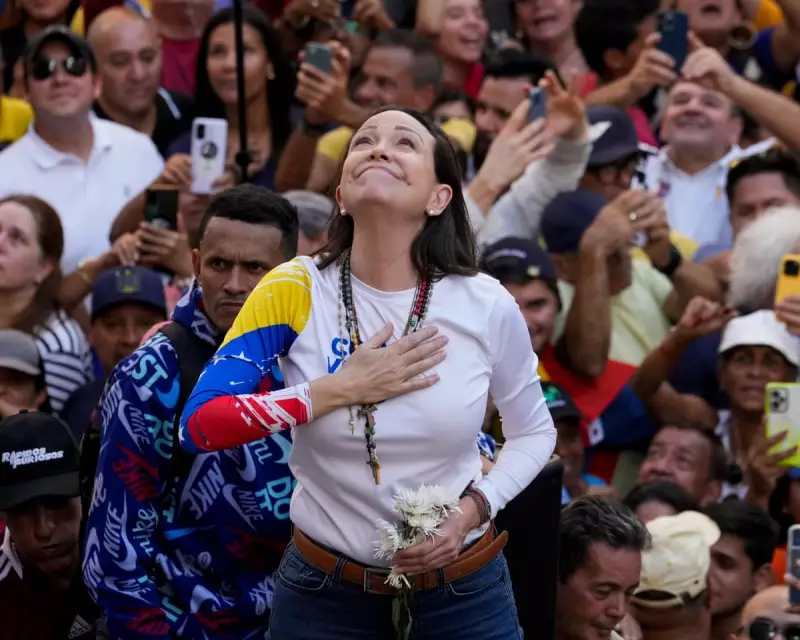
Venezuelan opposition leader María Corina Machado has declared her intention to return to Venezuela imminently, forcefully rejecting the legitimacy of the interim president installed with US backing following the dramatic removal of Nicolás Maduro.
Machado's Defiant Stance and Praise for Trump
In an interview with Fox News from an undisclosed location, the 58-year-old industrial engineer asserted that her movement is prepared to win a free and fair election. Machado claimed her coalition won a 2024 vote "by a landslide" even under fraudulent conditions, and predicted they would secure over 90% of the vote in a legitimate contest.
She reserved significant praise for former US President Donald Trump, thanking him for his "courageous vision" and the "historical actions" taken to dismantle what she termed a "narco-terrorist regime" and bring Maduro to justice. Machado revealed she had not spoken to Trump since 10 October, the day her Nobel Peace Prize win was announced.

The Controversial Rise of Delcy Rodríguez
Machado's planned return sets the stage for a confrontation with Delcy Rodríguez, Maduro's former vice-president, whom Trump unexpectedly endorsed to lead the transition. Many had anticipated Machado would assume leadership after Maduro's detention on Saturday.
Machado launched a scathing attack on Rodríguez, labelling her "one of the main architects of torture, persecution, corruption, narco-trafficking" in Venezuela. She further alleged that political repression has intensified since the weekend's upheaval.
Reports suggest Trump's decision to sideline Machado was influenced by CIA briefings warning that she and her electoral candidate, Edmundo González Urrutia, might face legitimacy challenges from pro-regime forces. Other sources hint at personal pique, suggesting Trump was irritated by her Nobel acceptance.
Deepening Crisis and Military Mobilisation
The political turmoil is unfolding against a backdrop of severe domestic unrest. The Maduro government, before his arrest, issued a decree declaring a "state of external commotion", effectively a state of emergency.
The decree, signed by Maduro after his arrest at 2.01am on Saturday, mandates a sweeping militarisation of the state, including:
- Mobilisation of the armed forces.
- Militarisation of public service infrastructure, the oil sector, and basic industries.
- Suspension of the right to public assembly and protest.
- Orders for the "immediate search and capture" of anyone supporting the US action.
Security incidents continue, with gunshots and explosions reported near the Miraflores presidential palace overnight, attributed by the government to unauthorised drones. In a concerning development for press freedom, at least 14 journalists and media workers were detained in Caracas on Monday; 13 were later released, with one deported.
Meanwhile, Trump has indicated a willingness to work with Rodríguez's team conditional on their compliance with US oil demands, while dismissing the possibility of elections within the next 30 days. Machado, for her part, suggested she would like to personally share her Nobel Prize with the former US president, stating the Venezuelan people would want to give it to him.