There is a certain charm, albeit misguided, in the Liberal Democrat leader Sir Ed Davey's recent calls for the King to cancel his upcoming state visit to the United States. This is, after all, the same political party that once warmly welcomed the brutal Romanian dictator Nicolae Ceausescu during his 1978 state visit to Britain.
A History of Questionable Judgement
Their then leader, David Steel, even presented the despot with a special gift – a Labrador puppy named Gladstone. Ceausescu was so delighted that he bestowed upon the unfortunate dog the honorary rank of Colonel, though the puppy's ultimate fate remains unknown. Given this historical context, the Liberal Democrats might not be the most credible source for lectures on ethical foreign policy.
The Misguided 'Message' of Cancellation
Sir Ed, along with others suffering from similar short-term diplomatic myopia, may believe that cancelling the visit 'sends a message.' However, they fail to recognize that such an action would inflict severe damage on what remains of the so-called 'special relationship' between the two nations.

The residual 'specialness' of this relationship is not maintained by our politicians; it is preserved by the Monarchy. In reality, there are two distinct special relationships operating between Washington and London. The connection between the White House and Downing Street has undoubtedly been strained recently, particularly following Mr Trump's criticisms of British foreign policy.
The Enduring Royal Connection
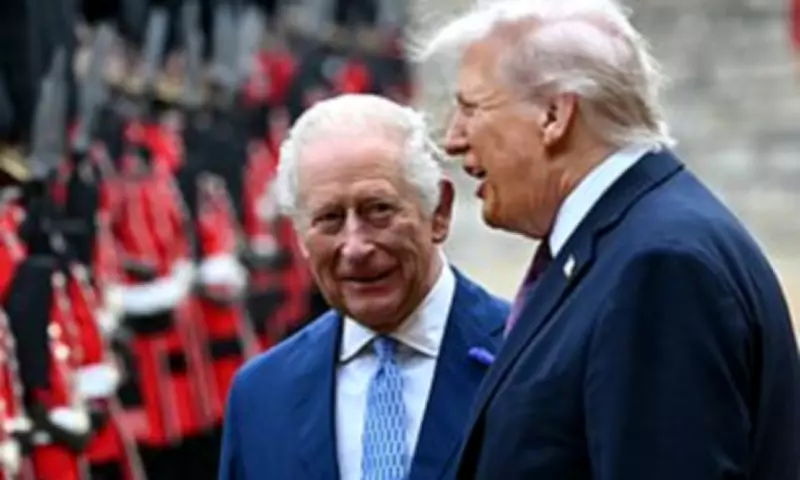
Yet the parallel axis with Buckingham Palace remains as robust as ever. When the King and Queen arrive at the White House, the last thing President Trump will do is subject them to any form of embarrassment. Instead, he will be determined to be an exemplary host.
I can state this with confidence as someone who has interviewed all three figures. Just three months ago, I spoke with Mr Trump at Mar-a-Lago for my forthcoming biography, Elizabeth II. He was effusive in his praise for both the late Queen and the current King.
Distinguishing Between Monarch and Ministers
His state visit to Britain in 2019 – serving as the final state visitor of the Queen's record-breaking reign – was one of the highlights of his first presidency. Last year's repeat visit, at the King's invitation, already stands as a landmark of his second term. As he clearly expressed to me, Mr Trump is perfectly capable of distinguishing between a monarch who stands above politics and the King's ministers.
We must remember that on every state visit, the monarch is accompanied by the Foreign Secretary precisely so that any awkward bilateral issues can be handled by someone else. Whatever the latest developments from the Gulf might be, it will be Yvette Cooper's responsibility to manage them.
Unfounded Fears and Historical Precedent
Sir Ed and his colleagues raise the alarming prospect of President Trump going off-script and saying something inappropriate in front of the King. This scenario is plainly not going to occur. Consider his 2019 state visit to London: then-Foreign Secretary Jeremy Hunt recounted being left waiting on the runway for Mr Trump to disembark from Air Force One.
The delay occurred because the President was finishing a Twitter dispute with London Mayor Sadiq Khan. Remarkably, as soon as he stepped off the plane, Mr Trump switched off his Twitter feed for the entire duration of the state visit. He dreaded the thought of doing anything to upset the Queen, and this pattern continued during last year's trip to Windsor.
Personal Connections and Historical Repair
We should not forget that Mr Trump is half-British. His mother was a Macleod from the Isle of Lewis and a great admirer of the Royal Family. These personal connections matter deeply to him, even if it doesn't appear so when he criticizes the government or mocks our military shortcomings. This is simply how he operates, and we must either accept this reality or remain in perpetual outrage.
History has repeatedly demonstrated that it is the monarchy which patches up this bilateral relationship when political tensions arise. This occurred after the Suez crisis in 1956, following the Vietnam War, and after the 1983 invasion of Grenada, among other instances.

The King's Personal Affinity for America
Furthermore, the King himself is a great admirer of the United States, having made his first visit to the Oval Office as a student back in 1970. This upcoming visit is not about next week's developments in the Strait of Hormuz. Rather, it is about celebrating 250 years of American independence and all that has transpired since the nation declared independence from his ancestor, George III, in 1776.
This celebration grants Britain a unique position at the top table during this historic anniversary year for our most powerful ally. That is the enduring power of the monarchy. At times like these, when political relationships face strain, we need this stabilizing institution more than ever.