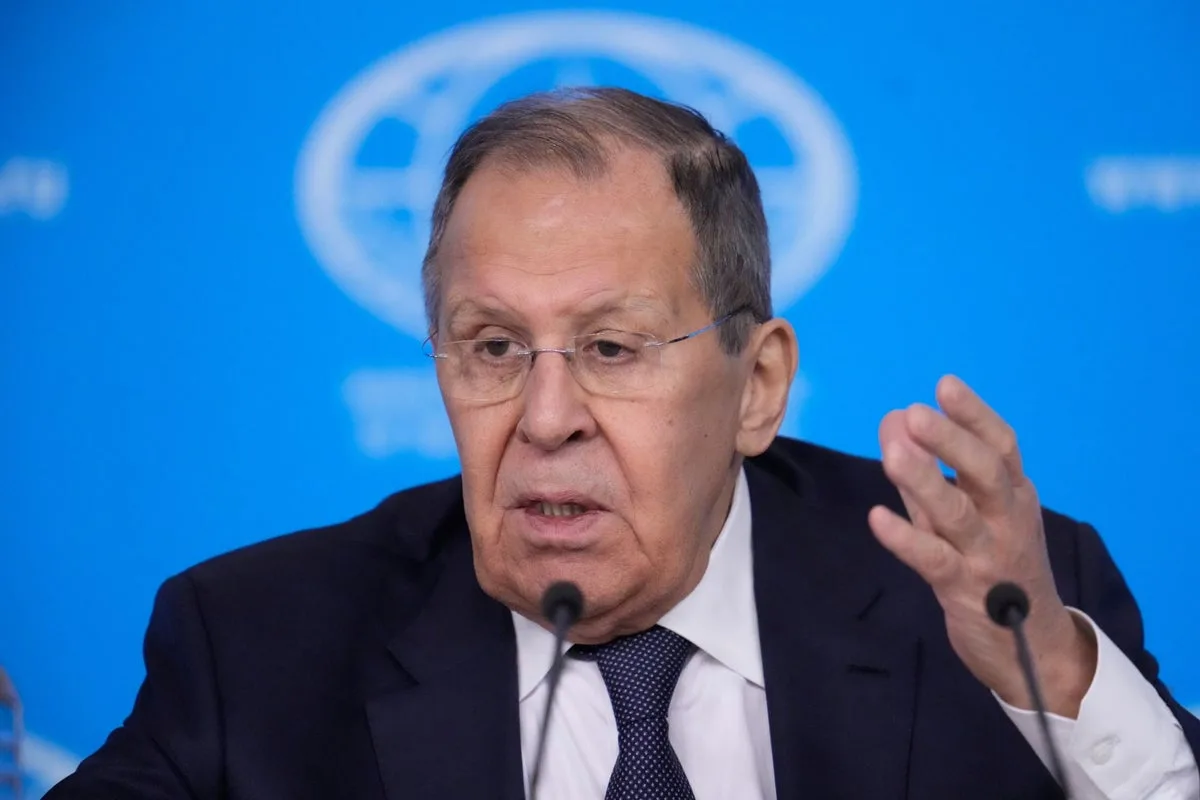
Lavrov Mocks 'Great Britain' Name Amid NATO Tensions Over Greenland
Lavrov: Britain Should Drop 'Great' From Its Name

Russia's Foreign Minister Sergei Lavrov has provocatively suggested that Britain should drop the 'Great' from its name, branding the historical title as an outdated colonial relic. The remarks were delivered to journalists on Tuesday as part of a broader discussion on colonialism, sparked by recent comments concerning Greenland.

A Diplomatic Jab at Historical Grandeur

'I think that Britain should be called simply Britain because 'Great Britain' is the only example of a country which calls itself 'Great',' Lavrov stated. He drew a parallel with the former 'Great Socialist People's Libyan Arab Jamahiriya' under Muammar Gaddafi, noting that this entity 'no longer exists.' Following the comment, his spokeswoman directed a question to Ivor Bennett, a correspondent from Britain's Sky News, to whom Lavrov added a curt 'No offence.'

Geopolitical Tensions and NATO's Fractures

Lavrov's verbal jab arrives amidst significant geopolitical strain. As US President Donald Trump seeks to reset relations with Moscow and broker peace in Ukraine, Britain has been cast as Vladimir Putin's primary public adversary. Concurrently, the British government maintains that Russia represents a substantial threat to European security.

Wide Pickt banner — collaborative shopping lists app for Telegram, phone mockup with grocery list

The controversy has been further inflamed by President Trump's intensified campaign to acquire Greenland from Denmark, a fellow NATO member, citing national security imperatives. This push has included the announcement of tariffs on imports from European allies who oppose a potential US takeover. Trump and his aides argue that Denmark would be incapable of defending the vast, autonomous territory should Russia or China ever attempt an invasion.

The Strategic Significance of Greenland

Greenland's geographical position, lying under the flight path between the United States and Russia, renders it a potentially critical outpost for continental air defences. Without directly addressing Trump's assertions, Lavrov offered a historical perspective, stating, 'Greenland is not a natural part of Denmark, it is a colonial conquest.'

The Russian minister also appeared to revel in the internal challenges confronting NATO, telling reporters that the alliance was 'being put to the test - what is it really worth?'

Russia's Calculated Stance on Arctic Ambitions

Moscow has observed with apparent satisfaction as Trump's Greenland ambitions exacerbate rifts within the transatlantic alliance, despite the potential for serious security ramifications for Russia itself, which harbours its own strategic interests in the Arctic region.

Notably, the Kremlin has refrained from criticising Trump over the Greenland issue at a time when Russia is keen to keep the US President amenable, hoping to ensure any resolution to the war in Ukraine favours Moscow's terms. Russia has bristled at Trump's suggestion that Moscow poses a threat to Greenland—a key part of his rationale for seeking US control—while carefully avoiding mentioning Trump by name in its critiques.

Last week, the Russian Embassy in Belgium, where NATO is headquartered, accused the alliance of embarking on an 'accelerated militarisation of the North.' Russian President Vladimir Putin has not commented publicly on Trump's renewed push for Greenland. However, in March 2025, Putin noted that Trump had 'serious plans regarding Greenland' with 'long-standing historical roots.' At that time, Putin stated the issue 'concerns two specific nations and has nothing to do with us,' but expressed Russian 'concern' over what he described as increasing NATO activity in the Arctic.

The confluence of Lavrov's rhetorical broadside and the simmering dispute over Greenland underscores the fragile state of Western alliances and the complex diplomatic manoeuvring defining contemporary great power politics.

Pickt after-article banner — collaborative shopping lists app with family illustration




