Lammy Engages in Diplomatic Talks with Vance to Strengthen US-UK Alliance
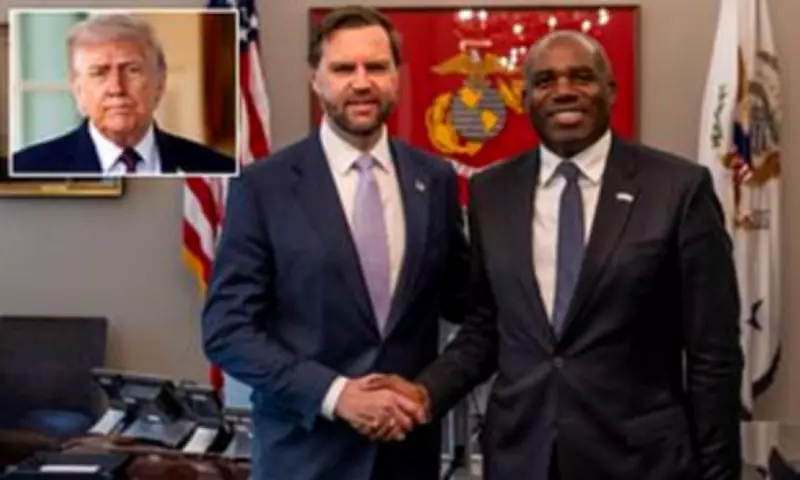
Deputy Prime Minister David Lammy conducted crucial discussions with his American counterpart, Vice President JD Vance, in Washington DC last night. The meeting was strategically aimed at addressing the deteriorating "Special Relationship" between Britain and the United States, which has reached a notably fragile state in recent months.
High-Stakes Discussions Amid Geopolitical Tensions
The talks occurred against a backdrop of escalating friction between Prime Minister Keir Starmer and US President Donald Trump. This tension has been particularly pronounced during the ongoing Iran crisis and the protracted conflict in Ukraine. Mr Lammy described the encounter as "great to catch up with my friend," underscoring the personal rapport between the two officials despite the broader political discord.
Mr Vance had recently returned from Pakistan, where he participated in peace negotiations between the US and Iran over the weekend. Despite an extensive 21-hour session in Islamabad, held during a precarious two-week ceasefire, the warring parties failed to reach a substantive agreement. In response to this diplomatic setback, President Trump has enforced a US military blockade of the Strait of Hormuz.

Critical Focus on the Strait of Hormuz
The Strait of Hormuz, a vital global shipping lane, has been effectively sealed by Iran following US and Israeli strikes on Tehran. Only a limited number of vessels are currently permitted to pass through. During their discussions, Mr Lammy reiterated Britain's commitment to assist in reopening the strait once hostilities subside, emphasising the importance of restoring free maritime traffic to stabilise energy markets.
In addition to his meeting with Vice President Vance, Mr Lammy also engaged with US Secretary of State Marco Rubio during his visit to Washington DC. Both sessions lasted approximately 45 minutes, highlighting the condensed yet significant nature of these diplomatic exchanges.
Public Statements and Underlying Strains
Posting on social media platform X after the talks, Mr Lammy stated: "Great to catch up with my friend @JDVance today in DC following his talks in Pakistan. It is vital that the ceasefire continues and we get shipping flowing freely again through the Straits of Hormuz. We continue to work together towards a just and lasting peace in Ukraine."
This diplomatic mission comes at what is widely regarded as the lowest ebb in US-UK relations for decades. President Trump has repeatedly criticised Sir Keir during the Iran crisis, expressing frustration over the Prime Minister's perceived lack of robust support for US actions against Tehran. Mr Trump has drawn comparisons between Sir Keir and Neville Chamberlain, the British Prime Minister known for his policy of appeasement toward Nazi Germany, while also asserting that Sir Keir is "no Winston Churchill."
Broader Political Context and Personal Dynamics
Prime Minister Starmer recently voiced his exasperation with the impact of President Trump's Middle East policies, which have contributed to volatile oil and gas prices. Sir Keir remarked, "I'm fed up with the fact that families across the country see their bills go up and down on energy, businesses' bills go up and down on energy because of the actions of Putin or Trump across the world," implicitly linking the US President's actions to those of Russian leader Vladimir Putin.
Despite the current political rift, Mr Lammy and Mr Vance share an unlikely friendship that has developed over several years. Last summer, the US Vice President and his family stayed with Mr Lammy at his grace-and-favour residence, Chevening in Kent, during a holiday in the UK. At that time, Mr Lammy served as Foreign Secretary before being appointed Justice Secretary and Deputy Prime Minister in a Cabinet reshuffle last September.
This latest visit to Washington DC is likely to fuel speculation within Westminster that Mr Lammy continues to wield significant influence over foreign policy matters, despite being officially succeeded as Foreign Secretary by Yvette Cooper. The discussions underscore ongoing efforts to navigate complex international challenges while attempting to preserve the foundational ties between the two allied nations.