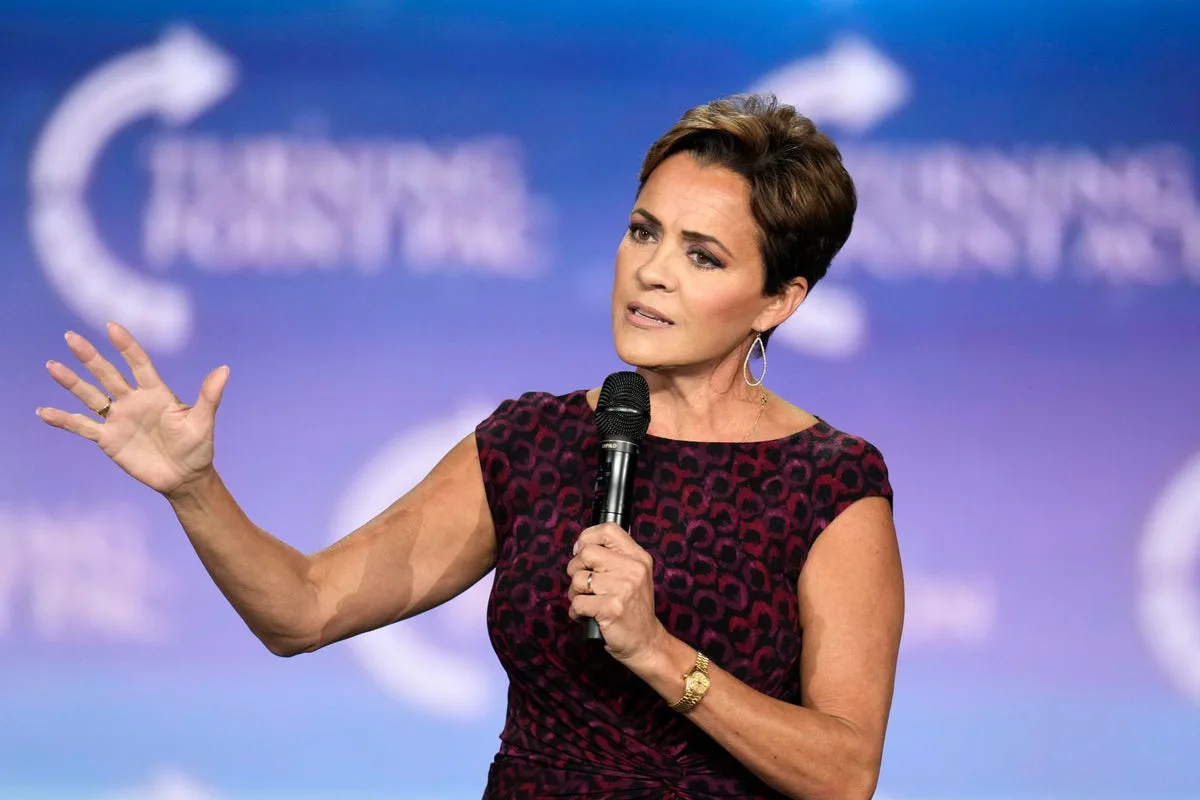
Kari Lake, the Trump loyalist now leading the US Agency for Global Media (USAGM), has publicly defended her decision to block Radio Free Europe and Radio Liberty (RFE/RL) from using a key US transmitter to broadcast into Iran. This move comes as the Iranian regime enforces a severe communication blackout while cracking down on widespread political unrest.
Lake's Defence and the 'Mixed Messages' Claim
In a Facebook post on Tuesday, 13 January 2026, Lake railed against what she called "fake news" reports about the blockage. She confirmed that USAGM was preventing RFE/RL from accessing its transmitter in Kuwait. Lake stated her rationale was to ensure a "unified message" consistent with American foreign policy and national interests, claiming the outlets risked sending "mixed messages" to Iranian protesters.
Lake asserted that she had reached out to RFE/RL President Steve Capus the previous week, and he had agreed on the need for alignment. However, she claimed his team had not yet made the necessary changes. "USAGM is standing by—ready to help—and are simply waiting for Mr. Capus to inform us that he’s made the changes he committed to," Lake wrote.
Iran's Blackout and RFE/RL's Workaround
This administrative blockade occurs against a dire backdrop in Iran. The government has instituted a near-total internet and communication blackout as part of a brutal crackdown that has resulted in the deaths of hundreds, if not thousands, of unarmed protesters.
In response, RFE/RL revealed over the weekend that it had resumed shortwave radio broadcasts into Iran using commercial vendors, bypassing the USAGM transmitter. Steve Capus emphasised the critical nature of this work, stating, "At this historic moment, when the Iranian people have been plunged into digital darkness by their government, Radio Farda’s return to the airwaves is an essential breakthrough."
Broader Context: A Year-Long Battle Over US Broadcasting
The current dispute is part of a nearly year-long effort by the Trump administration and Lake to dismantle or defund USAGM's state-funded networks, including Voice of America (VOA). In March, President Trump signed an executive order aiming to dismantle these outlets, with the White House labelling VOA the "Voice of Radical America."
Despite court orders blocking mass layoffs, the administration's efforts have left many journalists sidelined. Contrasting this, a bipartisan congressional spending bill this week allocated $643 million for USAGM broadcasting, far more than the Trump administration requested.
Meanwhile, former President Trump has promised Iranian protesters that "help is on the way" and threatened military action. Republican lawmakers, like Rep. Michael McCaul, are urging the administration to fully utilise its broadcasting capabilities to counter the regime's information blockade.






