
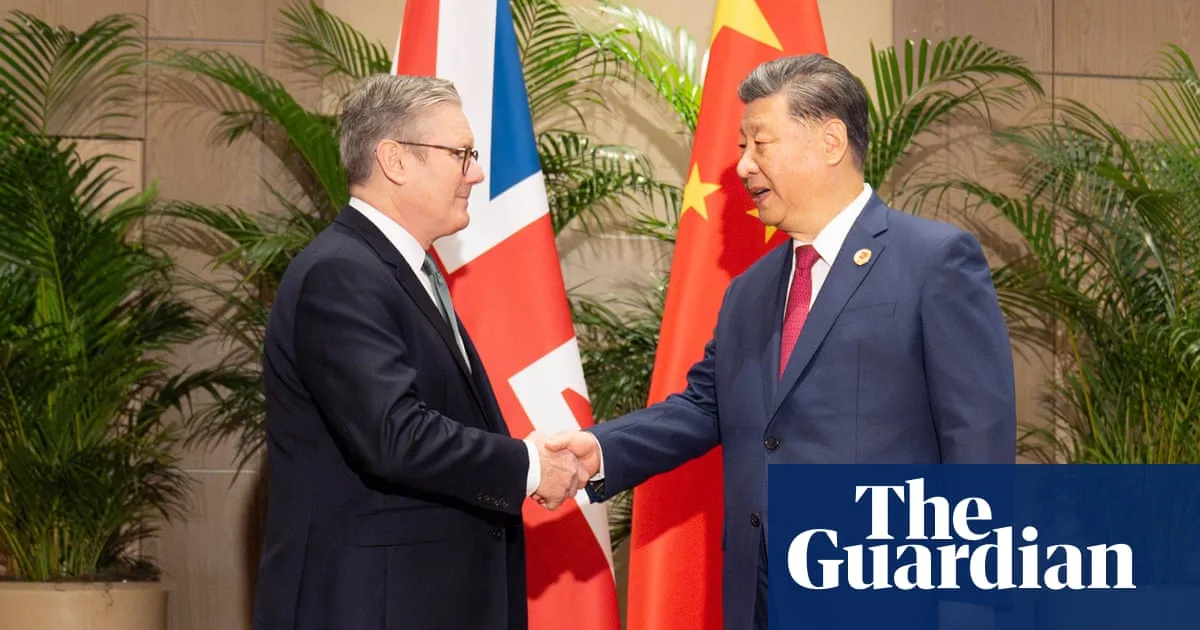
Labour’s already softened approach to China has been reinforced by the government’s refusal to describe the country as a national security threat, after the prosecution of two Britons accused of spying for China was dropped. Critics say the party is hastily pursuing a return to the “golden era” of rapprochement led by David Cameron in 2015, which collapsed after China’s crackdown on Hong Kong and cyber espionage.
In opposition, Labour had promised to declare China’s repression of Uyghur Muslims as genocide, with MPs voting for a genocide amendment in 2021. However, the party backtracked on that commitment in October 2024 before a visit to Beijing by then foreign secretary David Lammy. The election manifesto instead promised a “long-term and strategic approach” to China.
Keir Starmer’s national security adviser, Jonathan Powell, a political appointee and former chief of staff to Tony Blair, is seen as a key figure driving the reset. Powell visited Beijing in July 2025, meeting China’s foreign affairs minister. Other figures, including Peter Mandelson, have also advocated for closer ties, with Mandelson saying Britain had gone too far in its falling out with China.
Threats from China have continued, including a hack of the Electoral Commission affecting 40 million voters, and an estimated 20,000 Britons approached by Chinese state actors on LinkedIn. Chancellor Rachel Reeves visited China in January 2025, securing £600m in investment pledges, though some specialists argued that was a poor return.




