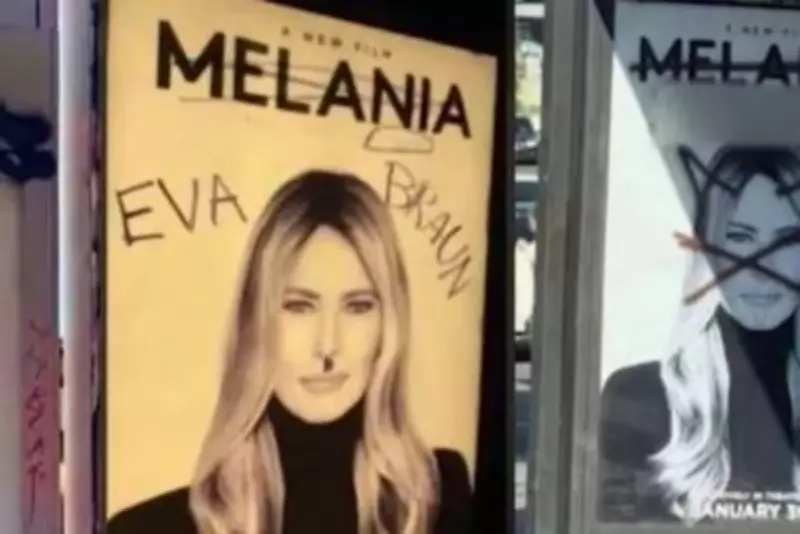
Transport authorities in Los Angeles have been forced to take decisive action following a wave of vandalism targeting promotional material for a controversial new documentary about former First Lady Melania Trump. The city's Metro system has relocated several buses carrying advertisements for the film after images of Melania at bus stops were repeatedly defaced with offensive graffiti and alterations.
Extensive Vandalism Prompts Protective Measures
For several weeks, individuals have been systematically vandalising promotional posters for the Amazon documentary Melania at bus stops throughout Los Angeles. The defacement has included adding devil horns, Hitler mustaches, and other offensive elements to images of the former First Lady. Metro officials described the damage as both extensive and severe, with one official noting the vandalism escalated following a recent high-profile incident involving federal immigration agents in Minneapolis.
"Given that Metro buses have had significant vandalism and damage during previous periods of heightened public activity, we made the decision in the interest of protecting our riders, employees and assets, and out of an abundance of caution, to shift some of these buses to areas where we were not observing that vandalism," Metro spokesperson Patrick Chandler explained to the LA Times.

Activist Group Claims Responsibility
The activist collective Indecline has taken responsibility for at least one of the defaced posters, sharing a video on Instagram showing an altered image of Melania sitting in a chair modified to appear as though she is defecating on an American flag. In a characteristically cheeky social media post, the group wrote: "We know that as a proud immigrant, Melania Trump gives a s*** about America. We also know that advanced ticket sales to her documentary have been abysmal. So, as lovers of cinema, we have gone to great lengths and risks to help create a little marketing buzz ahead of her big premiere tomorrow."
Metro officials confirmed they have moved buses carrying the Melania advertisements to areas experiencing less graffiti activity, though all vehicles remain in active service. The relocation represents a significant logistical undertaking for the transport authority during a period of heightened political tensions.
Controversial Documentary Faces Critical and Commercial Challenges
The documentary itself, which tracks Melania Trump during the twenty days leading up to Donald Trump's return to the White House, premiered on Thursday night at Washington D.C.'s Kennedy Center for the Performing Arts. Early critical reception has been overwhelmingly negative, with The Independent's chief television critic Nick Hilton describing the film as a "ghastly bit of propaganda" and awarding it just one star.
"It will exist as a striking artefact – like The Birth of a Nation or Triumph of the Will – of a time when Americans willingly subordinated themselves to a political and economic oligopoly," Hilton wrote in his scathing review.
Financial Disparity and Presidential Promotion
The production represents a significant financial investment, with Amazon paying approximately $40 million to create the documentary, including $28 million directly to Melania Trump herself. However, industry tracking by the National Research Group predicts the film will generate just $5 million during its opening weekend, creating a substantial financial shortfall.
Adding to the film's challenges, it faces stiff competition from Sam Raimi's horror thriller Send Help, which is projected to earn between $14 million and $17 million domestically during the same period. Despite these commercial realities, former President Donald Trump enthusiastically promoted the documentary on Truth Social following its debut screening, declaring it a "MUST WATCH" and insisting it was "SELLING OUT FAST" – claims unsupported by available data and initial reviews.
When questioned at the premiere about describing the filmmaking process in three words, Melania Trump offered a characteristically evasive response: "I think the people will judge it for themselves. It's beautiful, it's emotional, it's fashionable, it's cinematic, and I'm very proud of it."

The situation in Los Angeles highlights how political documentaries can become flashpoints for public expression and protest, with public infrastructure sometimes caught in the crossfire of ideological conflicts. Metro officials continue to monitor the situation while balancing their responsibility to protect public property with maintaining normal transport services for Los Angeles residents.