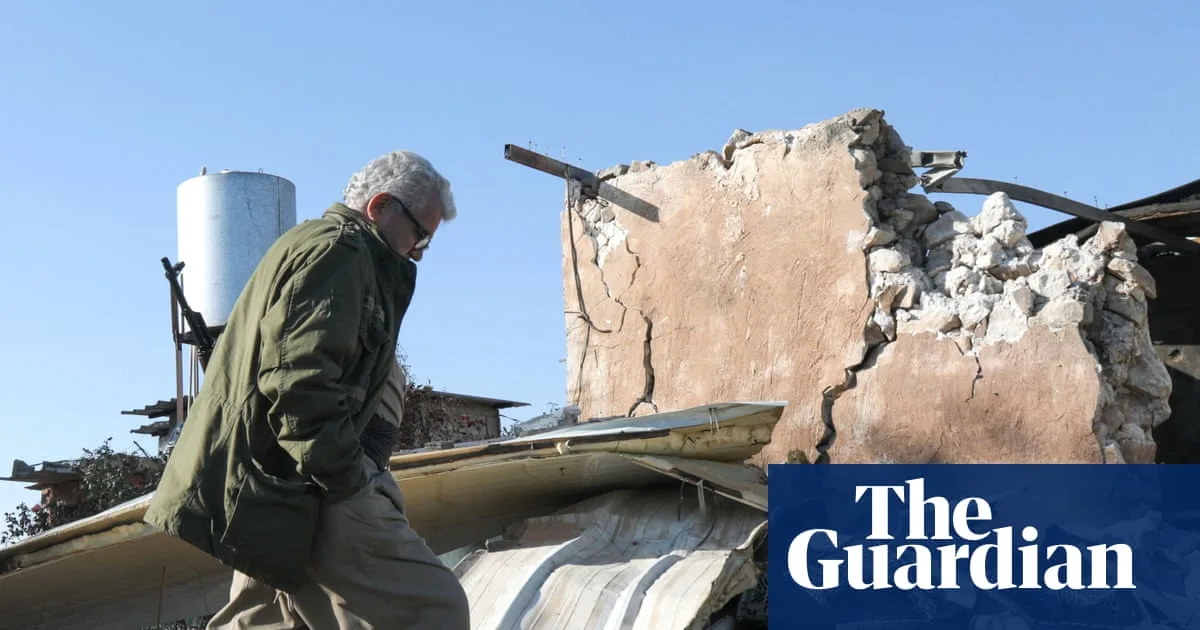
Officials from an armed Kurdish Iranian dissident group operating in northern Iraq have clarified that they are not preparing for an immediate cross-border assault on Iran. However, they have stated that they would join a ground invasion if the United States were to initiate one. These remarks were made in an interview with The Associated Press on Thursday, March 6, 2026.
Reassuring Iraqi Kurdish Officials
The comments appear to be aimed at alleviating concerns among Iraqi Kurdish officials, who have expressed reluctance to allow attacks against Iran to be launched from their territory. They fear being further entangled in the Middle East conflict, which was sparked by recent U.S. and Israeli strikes on Iran.
Khalil Nadiri's Statement
Khalil Nadiri, an official with the Kurdistan Freedom Party (PAK), emphasized that in the event of a U.S. ground operation, "then we would enter alongside the coalition forces." He added, "The Kurds must not place themselves as the spearhead of the attack." Nadiri also noted that his group has armed members already inside Iran, suggesting they might not need cross-border support for a potential uprising.
Denial of Material Aid
Nadiri confirmed that Kurdish groups have been in contact with the U.S. and Israel but denied receiving any material aid from them. This comes after earlier reports this week indicated that Kurdish Iranian dissident groups in northern Iraq are preparing for a possible cross-border military operation, with the U.S. allegedly requesting support from Iraqi Kurds.
Rebaz Sharifi's Perspective
Rebaz Sharifi, a military commander with the PAK, described it as "a very positive development" if the U.S. and its allies were to arm the Kurdish groups. However, he also denied that any such support has been provided so far. Sharifi expressed expectations that U.S. President Donald Trump might eventually seek the involvement of peshmerga forces from Eastern Kurdistan in a ground invasion, stating, "if it reaches that point, we, for our part, would be pleased with it."
Dispelling Fears of a Launching Pad
Both officials sought to address the fears of Iraqi Kurdish officials that the semiautonomous Kurdish region in Iraq could be used as a launching pad for attacks. Peshawa Hawramani, spokesperson for the Kurdistan Regional Government, earlier this week dismissed allegations of involvement in arming and sending Kurdish opposition parties into Iranian territory as "completely unfounded." He emphasized that Iraqi Kurdish parties do not wish to "expand the war and tensions in the region."
Regional Tensions and Attacks
Iran and allied Iraqi militias have already launched numerous missile and drone attacks into northern Iraq, targeting U.S. bases and consulates in Irbil, as well as bases of Iranian Kurdish dissident groups. Sharifi reported that PAK's bases have been attacked twice with ballistic missiles and four times with drones since the conflict began, resulting in one fighter killed and three others wounded.
Respecting Regional Stability
Nadiri explained that due to the Kurdistan region's policy of non-involvement in the conflict and their desire to maintain stability and security, "the environment has not yet been established for us to move our forces back into Eastern Kurdistan." He used this term to refer to the Kurdish region within Iran.
Internal Opposition and Goals
The potential military involvement of Kurds has heightened tensions with other Iranian opposition groups, notably the faction led by Reza Pahlavi, son of the former shah, who has accused the Kurds of separatist aims to divide Iran. Sharifi stated that his group's "ultimate goal is the statehood of the Kurds in all four regions and the reunification of Kurdistan," referring to areas currently split among Iran, Iraq, Turkey, and Syria.
Confederal System Proposal
Nadiri suggested that a confederal system could be a "viable solution" allowing the Kurdish area to remain part of Iran while preserving its "own sovereignty, identity, and unique characteristics." This highlights the complex political aspirations within the Kurdish movement amid ongoing regional conflicts.






