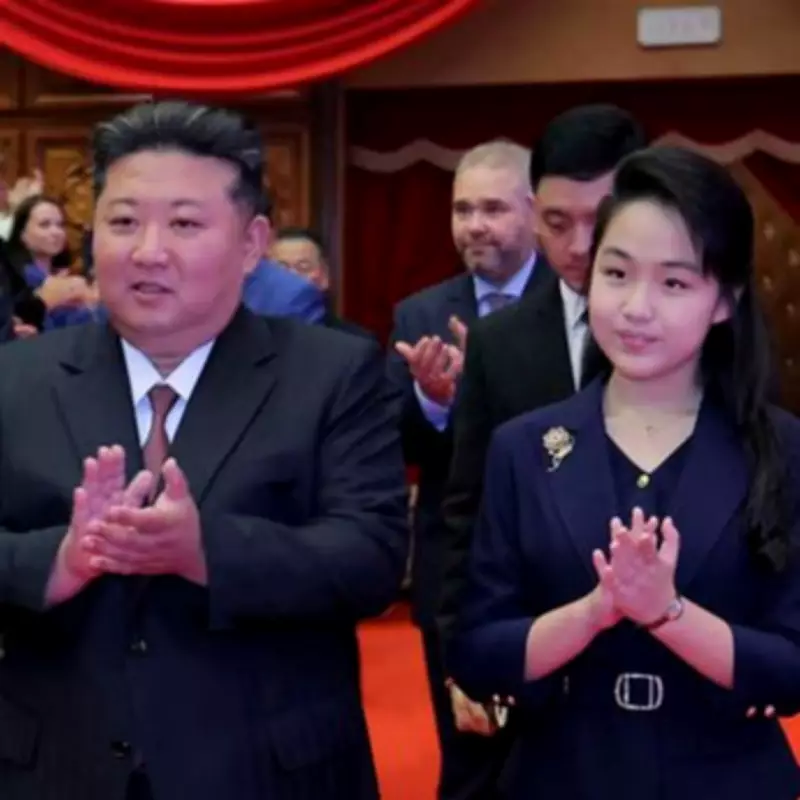
North Korea could be on the brink of a brutal internal conflict as a potential power struggle emerges between Kim Jong-un's daughter and his sister, according to intelligence revelations. This development threatens to destabilise the dictatorship's leadership succession, which has historically passed through three generations of the Kim family.
Intelligence Warning of Family Feud
An ex-intelligence officer has issued a stark warning that North Korea may face a vicious family feud and power vacuum following Kim Jong-un's eventual death. South Korea's spy agency disclosed on Thursday that the supreme leader is allegedly preparing his daughter, Kim Ju-ae, believed to be thirteen years old, to inherit his horrific regime. However, these plans could be dramatically disrupted by his ambitious sister, Kim Yo Jong, who is reportedly eyeing the top position for herself.
The Contenders for Leadership
Kim Yo Jong, aged thirty-eight, holds substantial influence within North Korea's political hierarchy. She serves as the Deputy Department Director of the Publicity and Information Department and is a key member of the State Affair Commission, which dictates policy in the authoritarian state. Despite her brother's apparent grooming of his young daughter for leadership, Kim Yo Jong is widely respected among the country's elite and is scheming to seize control once her brother is gone.

Rah Jong-yil, South Korea's former ambassador to the United Kingdom and a former deputy director of the national intelligence agency, emphasised the gravity of the situation. Speaking to The Telegraph, he cautioned that a ruthless fight for power could ensue, noting the Kim family's notorious history of assassinating rivals. He stated, "It depends on the timing, but I believe if Kim Yo-jong believed that she had a chance of becoming the top leader then she would take it."
Historical Precedents of Violence
The Kim dynasty has a long and bloody record of internal violence to maintain power. Kim Jong-un's estranged half-brother, Kim Jong-nam, was assassinated nine years ago at Kuala Lumpur airport in a shocking attack that involved the chemical weapon VX. The United States government later confirmed North Korea's involvement in this brutal killing. Additionally, in 2013, Kim Jong-un executed his once-powerful uncle, Chang Song-thaek, for alleged acts of treachery, including attempts to overthrow the state after Kim assumed leadership.
These historical incidents underscore the lethal nature of succession battles within the regime. Rah Jong-yil further warned that Kim Ju-ae should be wary, as her family is known to eliminate competitors without hesitation. He added that a power struggle after Kim Jong-un's death "is possible" and that for Kim Yo Jong, "there are no reasons to refrain from putting into effect her own political project."
Implications for Regional Stability
This potential succession crisis poses significant risks not only for North Korea but also for global security. The regime's instability could lead to heightened tensions on the Korean Peninsula, affecting neighbouring countries like South Korea and Japan. As Kim Jong-un continues to bolster his daughter's public profile through appearances at state events, the underlying rivalry with his sister threatens to erupt into open conflict, potentially destabilising the entire region.
The situation remains fluid, with intelligence agencies closely monitoring developments. The outcome of this power struggle could reshape North Korea's future and its interactions with the international community, making it a critical issue for policymakers worldwide.