Late-Night Hosts Slam Trump's Diplomatic Blunders and Epstein Email Revelations
With Stephen Colbert's show on hiatus, late-night television was dominated by Jimmy Kimmel and Seth Meyers, who targeted former President Donald Trump's recent diplomatic missteps and ongoing controversies. The hosts dissected Trump's meeting with Japanese Prime Minister Sanae Takaichi, his comments on Pearl Harbor, and newly unredacted emails related to Jeffrey Epstein.
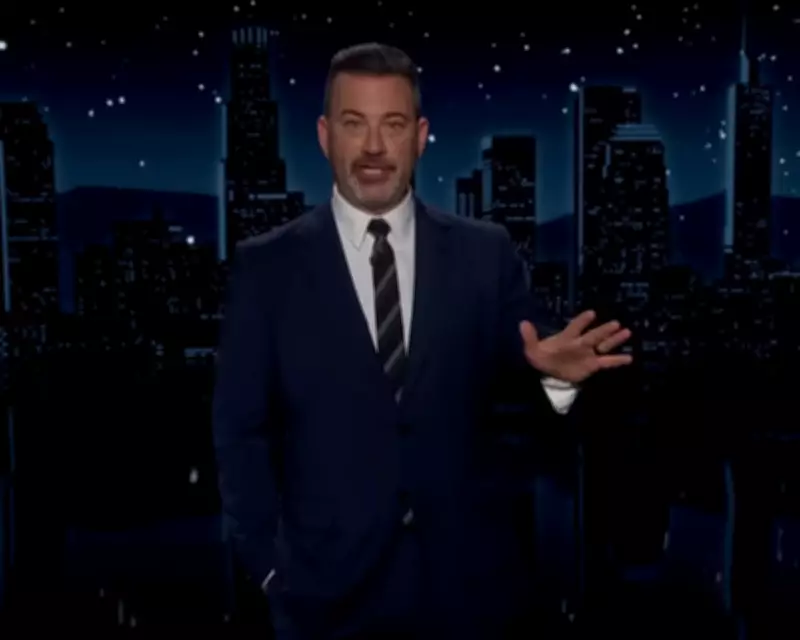
Jimmy Kimmel's Scathing Critique of Trump's Gifts and Gaffes
On Jimmy Kimmel Live!, the host opened with Trump's visit to Japan, where Prime Minister Takaichi presented him with 250 cherry trees to mark the upcoming 250th anniversary of the United States. Kimmel quipped, "This is a guy who paved over the Rose Garden. What is he going to do with 250 cherry trees? He'll probably use them to build a Waffle House or something." The joke referenced Trump's controversial renovation of the White House grounds, highlighting his perceived lack of environmental sensitivity.
Kimmel then turned to Trump's press conference, where the former president attempted to justify not informing allies about attacks in Iran by invoking Japan's surprise attack on Pearl Harbor in 1941. Trump asked, "Why didn't you tell me about Pearl Harbor?" Kimmel responded with sarcasm, saying, "I guess we should be grateful he didn't do an accent. What is going through that orange head of his there? There's no doubt in my mind that everything he knows about Pearl Harbor begins and ends with the movie starring Ben Affleck." This remark underscored Trump's reliance on pop culture over historical knowledge.

Epstein Files and Government Shutdown Fallout
The discussion shifted to the Epstein investigations, where Kimmel highlighted a newly unredacted 2009 email between Trump and Epstein's attorneys. Contrary to Trump's claims that Epstein was expelled from Mar-a-Lago, the email showed Trump stating Epstein was "not a member. May have been a guest. Never asked to leave." Kimmel feigned shock, noting, "This document from 17 years ago would indicate that the president of the United States isn't telling the truth."
Kimmel also addressed the partial U.S. government shutdown, which left 50,000 TSA agents working without pay. He darkly joked, "Some of them from the TSA are reported to be selling blood to pay their bills, which is even harder for TSA agents because they're not allowed to put their blood in containers larger than 3oz." This comment pointed to the absurdity of security regulations amid financial hardship.
Seth Meyers Joins the Fray with Sharp Wit
Seth Meyers, on his show, echoed Kimmel's criticism of Trump's Pearl Harbor remarks. Mocking Trump's question to Prime Minister Takaichi, Meyers said, "'Why didn't you tell me about Pearl Harbor?' Uh, I guess because neither of you had been born yet? What are you talking about? Do you mean the movie Pearl Harbor? Because Japan didn't do that. We did that to ourselves." He further ridiculed Trump's praise of Takaichi's English, deadpanning, "Oh, nobody thought you had picked up Japanese. You already have your hands full with English."
Meyers also commented on Trump's evasiveness regarding troop deployments to Iran, calling it "extra rude, considering who asked," before showing a picture of JD Vance. He touched on Markwayne Mullin's nomination for homeland security secretary, joking about Mullin's admission that he didn't know how to tie a necktie when first elected: "Yeah, I think we made it clear that's not disqualifying. The dress code is slowly turning into custody-hearing casual."
Lighter Moments and Puppy Name Jabs
Amid the political satire, Meyers lightened the mood by discussing popular U.S. puppy names, revealing that Luna is the most favoured. He quipped, "The least popular name is still Ghislaine. If Ghislaine walked out and got lost, you wouldn't walk out and yell that name. That dog's gone." This jest referenced Ghislaine Maxwell, associate of Jeffrey Epstein, blending humour with current events.

In summary, late-night hosts used their platforms to critique Trump's diplomatic errors, question his honesty in the Epstein case, and highlight broader political issues, all while injecting humour into serious topics. Their monologues reflect ongoing public scrutiny of Trump's actions and the ripple effects of government policies.