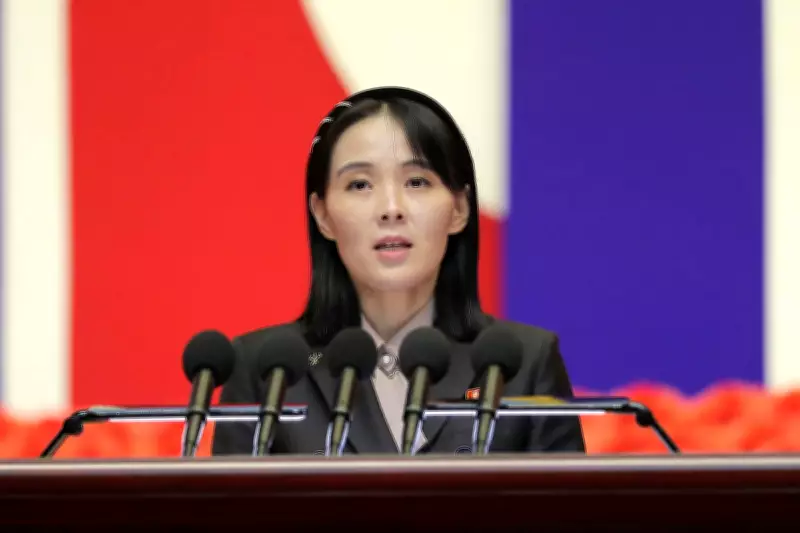
The powerful sister of North Korean leader Kim Jong Un, Kim Yo Jong, stated on Friday that it was "sensible" for a South Korean official to express regret over alleged civilian drone flights into North Korean airspace. However, she emphasized that this gesture was inadequate and issued a severe warning of counterattacks should such provocations happen again.
Background of the Drone Allegations
North Korea has accused South Korea of launching surveillance drone flights in September and again in January, threatening retaliation last month. In response, South Korean Unification Minister Chung Dong-young expressed "deep regret" on Tuesday, highlighting Seoul's commitment to "mutual recognition and peaceful coexistence" between the two nations, which have been divided since the Korean War.
South Korea's Position and Investigations
The South Korean government has firmly denied operating any drones during the periods specified by North Korea. Nevertheless, law enforcement authorities are actively investigating three civilians suspected of flying drones into North Korea from border areas. This development poses a significant threat to efforts by Seoul to resume long-stalled talks with Pyongyang, especially amid an escalating nuclear standoff.

Kim Yo Jong's Stern Warning
Kim Yo Jong acknowledged that Chung's comments displayed "sensible behavior" but criticized them as insufficient for a government response. She demanded stronger measures from Seoul to prevent similar activities in the future. "I give advance warning that reoccurrence of such provocation as violating the inalienable sovereignty of the DPRK will surely provoke a terrible response," she declared, using the initials of North Korea's formal name, the Democratic People's Republic of Korea.
She further elaborated, "Various counterattack plans are on the table and one of them will be chosen without doubt and it will go beyond proportionality," though she did not specify what these plans might entail. This statement underscores the heightened tensions and the potential for military escalation between the two Koreas.
Analysts' Perspectives on North Korea's Motives
Analysts suggest that North Korea's drone accusations are likely part of a broader strategy to amplify anti-South Korea sentiments ahead of the ruling Workers' Party congress scheduled for late February. During this congress, the first in five years, North Korea could potentially incorporate leader Kim Jong Un's declaration of a hostile "two-state" system on the Korean Peninsula into the party constitution.
Broader Implications for Inter-Korean Relations
Public talks between North and South Korea have been absent since 2019, and drone flights have become a significant source of animosity between the rivals. This incident threatens to further dampen prospects for diplomatic engagement, complicating Seoul's push for dialogue amidst ongoing nuclear tensions. The situation highlights the fragile state of relations and the challenges in achieving peaceful coexistence on the peninsula.
As both nations navigate these tensions, the international community watches closely, concerned about the potential for escalation and the impact on regional stability. The warnings from Kim Yo Jong serve as a stark reminder of the volatile dynamics at play in one of the world's most contentious geopolitical hotspots.