Kim Jong Un Threatens South Korea's Destruction While Signaling Conditional US Talks
Kim Jong Un Threatens South Korea, Signals Conditional US Talks

Kim Jong Un Issues Chilling Warning to South Korea Amid Nuclear Expansion

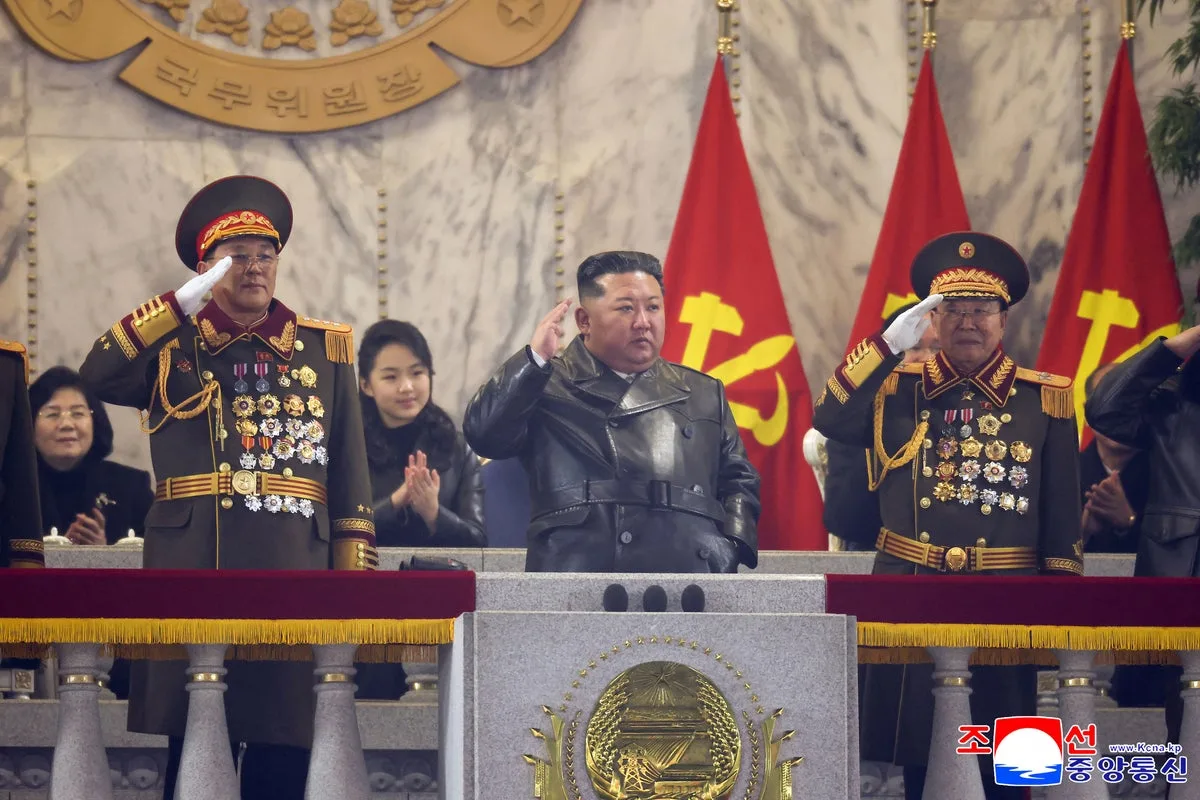
North Korean leader Kim Jong Un has declared that his nuclear-armed nation could "completely destroy" South Korea if its security were threatened, according to state media reports on Thursday. The stark warning came as he concluded a ruling party congress in Pyongyang that outlined his policy objectives for the next five years, while simultaneously signaling conditional openness to dialogue with the United States.

Nuclear Arsenal Expansion and Military Modernization

The official Korean Central News Agency reported that Kim called for accelerated development of new weapons systems to bolster North Korea's military capabilities. This includes intercontinental ballistic missiles that could be launched from underwater platforms and an expanded arsenal of tactical nuclear weapons specifically targeting South Korea, such as artillery and short-range missiles.

Kim asserted that the rapid advancement of his country's nuclear and missile programs has "permanently cemented" North Korea's status as a nuclear weapons state. He emphasized that the United States must discard what he perceives as "hostile" policies toward Pyongyang as a precondition for resuming long-stalled diplomatic talks between the two nations.

Wide Pickt banner — collaborative shopping lists app for Telegram, phone mockup with grocery list

Workers' Party Congress and Military Parade

The Workers' Party congress, which began last Thursday in the North Korean capital, occurs as Kim seeks to establish a more forceful regional presence. This strategy leverages his expanding military nuclear program and growing alignment with Moscow, developments that have intensified standoffs with both Washington and Seoul.

As the congress concluded, North Korea staged a military parade in Pyongyang on Wednesday. During this display, Kim claimed his forces were prepared for "immediately and thoroughly retaliating" against any hostile threats. However, state media did not immediately confirm whether he showcased his largest weapons systems, including intercontinental ballistic missiles potentially capable of reaching the United States mainland.

Strategic Positioning Toward Washington and Seoul

Kim's comments at the congress were widely anticipated, as he has been issuing increasingly hard-line views toward South Korea since 2024. That year marked a significant policy shift when he abandoned North Korea's long-standing goal of peaceful reunification with the South and instead declared South Korea a permanent enemy state.

Analysts note that Kim appears to be taking a more measured approach toward Washington, likely to preserve possibilities for future dialogue. His long-term objectives presumably include securing relief from US-led sanctions and obtaining tacit recognition as a nuclear weapons state.

In his concluding report at the congress, Kim stated that his government maintains the "toughest stance" against Washington, but added there was "no reason we cannot get along" with Americans if they withdrew their supposedly "hostile policy" toward North Korea. Pyongyang frequently uses this terminology to describe US-led pressure and sanctions targeting Kim's nuclear ambitions.

Foreign Policy Alignments and Strategic Calculations

Kim has recently prioritized relations with Russia in his foreign policy, sending thousands of troops and substantial military equipment to support Moscow's war effort in Ukraine. This assistance is believed to be exchanged for aid and military technology from Russia.

Experts suggest that Kim's conditional openness toward Washington reflects strategic calculations that the war in Ukraine could eventually wind down, potentially diminishing North Korea's value to Moscow. By keeping diplomatic options open with the United States, Kim maintains flexibility in his international positioning.

Hard-Line Stance on South Korea

Kim's vilification of South Korea reflects his assessment that Seoul is no longer a useful intermediary with Washington but rather an obstacle to his efforts to establish a more assertive regional footing. He has shown particular sensitivity to South Korean soft power, implementing aggressive domestic campaigns to block the influence of South Korean culture and language among North Korea's population as he works to cement his family's dynastic rule.

Pickt after-article banner — collaborative shopping lists app with family illustration

At the congress, Kim derided liberal South Korean President Lee Jae Myung's calls for engagement as deceptive, accusing successive governments in Seoul of seeking North Korea's collapse. He declared there is "absolutely nothing to discuss" with what he termed an enemy state and stated that North Korea would "permanently exclude" the South from the notion of a shared nation.

"As long as the Republic of Korea cannot escape its geopolitical condition of sharing a border with us, the only way it can live safely is to abandon all ties with us and refrain from provoking us," Kim asserted during the congress proceedings.

Weapons Development Goals and Military Priorities

North Korea has developed or tested numerous weapons systems from an extensive wish list Kim issued at the previous congress in 2021. These include solid-fuel intercontinental ballistic missiles, tactical nuclear systems, and purported hypersonic weapons. The country launched its first military satellite in 2023 and has recently claimed progress in building a nuclear-propelled submarine.

At the latest congress, Kim established new objectives to advance his nuclear forces over the next five years, calling for faster production of nuclear warheads and a broader range of delivery systems. Emphasizing naval capabilities, he specifically mentioned intercontinental ballistic missiles that could be fired from underwater platforms, indicating potential plans to equip these weapons on the nuclear-propelled submarine currently under construction.

Additional military priorities outlined by Kim include developing artificial intelligence-equipped attack drones, strengthening electronic warfare capabilities to disable enemy command centers, deploying more advanced reconnaissance satellites, and creating unspecified weapons to strike enemy satellites. He also announced plans to deploy more nuclear-capable artillery systems against South Korea in phased increments each year while accelerating efforts to "fortify" the inter-Korean border.

The South Korean government under President Lee Jae Myung did not immediately issue a formal response to Kim's latest statements and threats.




