The End of an Era: Ayatollah Ali Khamenei's Complex Legacy
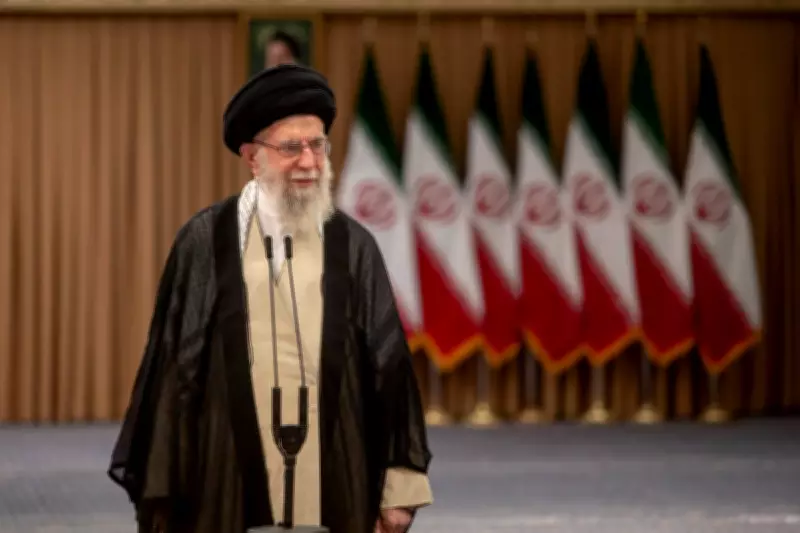
Ayatollah Ali Khamenei, who served as Iran's supreme leader for thirty-six years, has been killed in US and Israeli airstrikes according to Iranian state media reports. His death marks the conclusion of one of the longest leadership tenures in modern Iranian history, a period characterized by immense power consolidation and severe internal repression.
A Formative Journey to Power
Born in Mashhad in 1939, Khamenei's political and religious worldview was shaped early through studies at Islamic seminaries in Najaf and Qom. By age thirteen, he was embracing revolutionary Islamic ideas, including those of cleric Navab Safavi who advocated political violence against Shah Mohammad Reza Pahlavi's rule. His fateful meeting with Ayatollah Ruhollah Khomeini in 1958 led to his full embrace of "Khomeinism," a philosophy blending anti-colonial sentiment, Shia Islam, and social engineering to preserve an Islamic society.
From 1962, Khamenei engaged in nearly two decades of revolutionary activity against the shah on behalf of the exiled Khomeini. His arrest and torture by the shah's secret police in 1971 became part of his revolutionary credentials. Following the 1979 Islamic Revolution, Khamenei joined the Revolutionary Council, served as deputy defence minister, and helped organize the Islamic Revolutionary Guard Corps (IRGC), which would evolve into a dominant political force.

The Surprising Ascension to Supreme Leadership
After surviving an assassination attempt in 1981, Khamenei was elected president that same year and again in 1985, serving through most of the devastating Iran-Iraq war. When Khomeini died in June 1989 without a clear successor, Khamenei emerged as a surprising choice for supreme leader despite lacking the traditional rank of grand ayatollah. A July 1989 referendum amended the constitution to allow a leader with "Islamic scholarship," paving his way to power with significantly expanded authority beyond what Khomeini had enjoyed.
The constitutional changes granted Khamenei sweeping powers to determine general policies, appoint and dismiss Council of Guardians members, order referendums, and silence dissent with relative ease. Though his appointment sparked controversy among Islamic scholars who questioned his clerical qualifications, Khamenei's position was firmly established on paper.
Consolidating Control Through Decades of Rule
Over more than three decades, Khamenei amassed unprecedented control over Iran's domestic politics and foreign policy. He worked variably with different presidents, largely backing Hashemi Rafsanjani's economic agenda but obstructing reformists Mohammad Khatami and Hassan Rouhani who sought political liberalization and better Western relations.
His most famous domestic intervention came after Mahmoud Ahmadinejad's disputed 2009 election victory, when Khamenei backed the official results and ordered harsh crackdowns on protesters that left dozens dead and thousands arrested. He later clashed with Ahmadinejad himself, warning against another presidential bid in 2017. Following reformist Masoud Pezeshkian's 2024 presidential win, Khamenei immediately blocked negotiations with the United States over sanctions relief and thwarted economic reforms.
A Foreign Policy of Resistance and Proxy Warfare
Khamenei maintained extraordinary control over Iran's foreign policy, staunchly supporting resistance to what he termed "Western imperialism." He was a key architect of Iran's regional proxy strategy, funding militant groups including Hezbollah, Hamas, and the Houthis to advance Iranian military objectives. While occasionally amenable to nuclear negotiations with the West, Khamenei returned to a firmly anti-Western posture during Donald Trump's presidency, particularly after the US scuttled the 2015 nuclear deal, reimposed sanctions, and assassinated IRGC Quds Force commander Qassem Soleimani.

The Final Years and Tarnished Legacy
In his final years, Khamenei prioritized regime survival above all else. His government brutally suppressed the December 2025-January 2026 popular uprising that killed thousands. When protests erupted again in late 2025 over economic struggles, he ordered their suppression by any means necessary. Iran's defeat in the 2025 twelve-day war with Israel further eroded regime legitimacy, leaving Khamenei ruling over an increasingly resentful population where some protesters openly chanted for his death.
Despite his lengthy tenure, Khamenei will likely not be remembered by most Iranians as a strong or revered leader. Unlike Khomeini's 1989 funeral attended by millions of mourners, Khamenei's legacy appears destined to be defined by the profound weaknesses his regime brought to the Islamic Republic across multiple fronts. His death concludes an era marked by power consolidation, internal repression, and ultimately, diminished standing both domestically and internationally.