
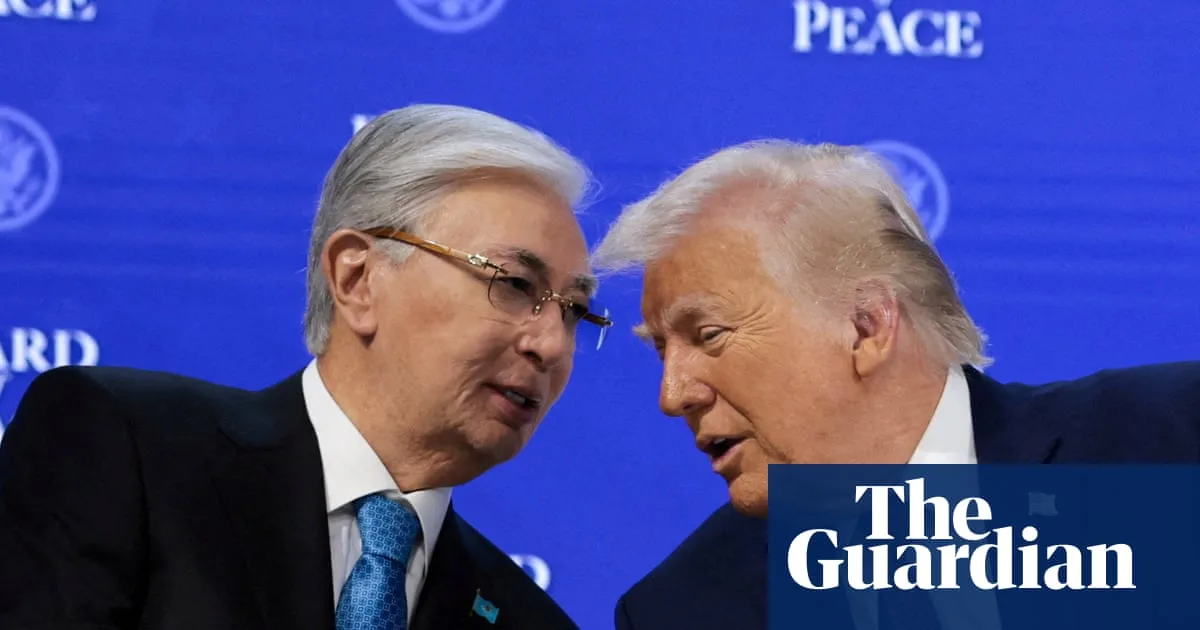
Kazakhstan has become the latest nation to join Donald Trump's newly established Board of Peace, a body that the former US president claims will be 'the most consequential international body in history'. The board, which was initially created to implement Trump's vision for Gaza's future, has since expanded its remit, drawing criticism from democratic allies who fear it undermines the United Nations.
The inaugural meeting, scheduled for Thursday in Washington, will bring together representatives from a mix of countries, many of which are described as authoritarian or repressive regimes. According to the democracy watchdog Freedom House, several founding members rank poorly on political rights and civil liberties. While the exact attendance remains unclear, some nations, including Italy and Greece, have opted to send observers rather than full delegates.
Kazakhstan's participation places it alongside other strongmen and dictatorships, a grouping that has raised eyebrows among traditional US allies. Critics argue that the board, chaired by Trump himself, operates more like a fee-paying club than a genuine peace initiative, with decisions subject to the whims of one individual.
The board's broadened scope has sparked fears that it could serve as an alternative to the more democratic United Nations, sidelining established multilateral institutions. Observers will be watching closely to see how the board's members navigate their first meeting amid global scepticism.




