Japanese Soldier's Embassy Intrusion Escalates Diplomatic Tensions with China
Japan has formally expressed "regret" after an on-duty soldier from the Self-Defence Forces broke into the Chinese embassy in Tokyo, allegedly threatening to kill diplomats. The incident has further strained already troubled relations between the two Asian powers, which have been deteriorating over issues including Taiwan and alleged neo-militarism.
Details of the Embassy Breach
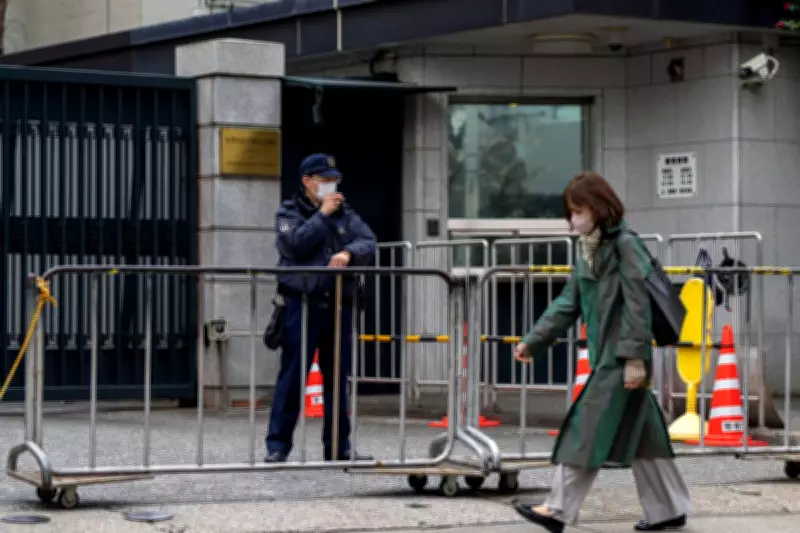
Kodai Murata, a 23-year-old officer, was arrested by Tokyo metropolitan police for scaling the walls of the heavily guarded embassy while carrying an 18cm knife on Tuesday morning around 9am local time. According to reports, embassy staff restrained Murata before handing him over to local authorities, who charged him with trespassing.
The suspect told investigators he was "hoping to meet the ambassador to tell him to refrain from making hardline remarks, and if that request was rejected, I wanted to surprise him by killing myself," as reported by the Yomiuri Shimbun newspaper.

Official Responses and Diplomatic Fallout
China's foreign ministry has demanded that Japan investigate and severely punish the officer, while also blaming the Japanese government for allowing alleged neo-militarism to thrive. Chinese spokesperson Lin Jian stated the incident had "seriously threatened the safety of embassy personnel and damaged its dignity," attributing it to far-right ideologies.
Japan's top government spokesperson, Minoru Kihara, called the incident "regrettable" and announced increased security measures, including more police officers assigned to guard the Chinese embassy in Tokyo. He confirmed that authorities are continuing their investigation to clarify all aspects of the breach.
Broader Context of Bilateral Relations
Relations between Beijing and Tokyo have substantially deteriorated since Japanese Prime Minister Sanae Takaichi suggested last November that a Chinese attack on Taiwan could trigger a military response from Japan. In retaliation, China has:
- Instituted export and travel restrictions
- Reinstated a ban on Japanese seafood imports
- Imposed export restrictions on "dual-use" technologies
- Repeatedly demanded a retraction of Takaichi's comments
Beijing has since accused Japan of seeking to remilitarise, citing both Takaichi's stance on Taiwan and Tokyo's increased defence budget. China considers Taiwan, a self-governed island, an inseparable part of its territory and maintains the option of using force for reunification.
Future Diplomatic Implications
Japan has announced it will downgrade its description of ties with China from "one of the most important" in its annual diplomatic report, citing a series of confrontations with Beijing over the past year. This incident adds to growing concerns about the stability of East Asian relations and the potential for further escalation between two of the region's major powers.
The embassy break-in represents not just a security breach but a symbolic flashpoint in the increasingly contentious relationship between Japan and China, with both sides now facing pressure to de-escalate tensions while addressing fundamental disagreements over regional security and sovereignty issues.