
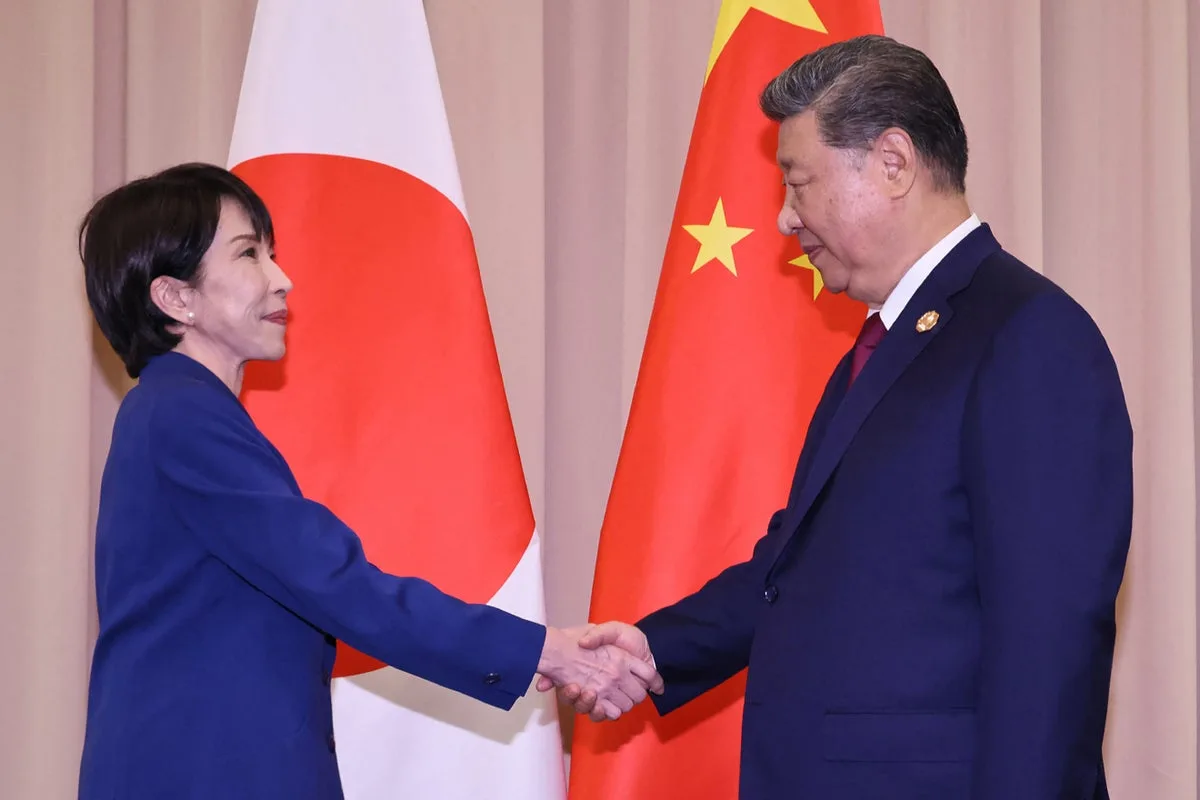
Less than a month after taking office, Japan's Prime Minister Sanae Takaichi is facing her first foreign policy crisis after a senior Chinese envoy issued a graphic threat in response to her remarks on Taiwan. The crisis has seen bilateral relations plummet to their worst level since 1972, according to experts.
Ms Takaichi told parliament that Japan could come to Taiwan's aid with 'battleships and the use of force' if a Chinese attack on the island threatened Tokyo's interests. This marks a departure from Japan's previous policy of playing down any involvement in a military conflict over Taiwan, which is just 100km from Japan's nearest island.
Beijing reacted angrily, urging its citizens not to travel to Japan, leading to the cancellation of almost 500,000 tourist visits in days. Japan has also warned its nationals to take precautions when visiting China. The most extreme reaction came from China's consul general in Osaka, who threatened to cut off any 'dirty neck' that intrudes into China's affairs with Taiwan.
The standoff has hurt share prices in Japanese companies dependent on Chinese tourists. Experts say the two countries' ties are robust but the current crisis could have serious economic implications. Ms Takaichi has refused to retract her statement, only assuring a parliamentary committee she would avoid talking about specific scenarios.
Diplomats from both sides held talks in Beijing on Tuesday aimed at de-escalation. Philip Shetler-Jones of RUSI noted that the visit by Japanese foreign ministry official Masaaki Kanai was a significant step, but warned that Beijing's sensitivities over Taiwan could make the dispute linger.
Allen Carlson of Cornell University said the spat underscores 'how combustible the security situation in Asia is becoming, and how central Taiwan is in such a dynamic.'




