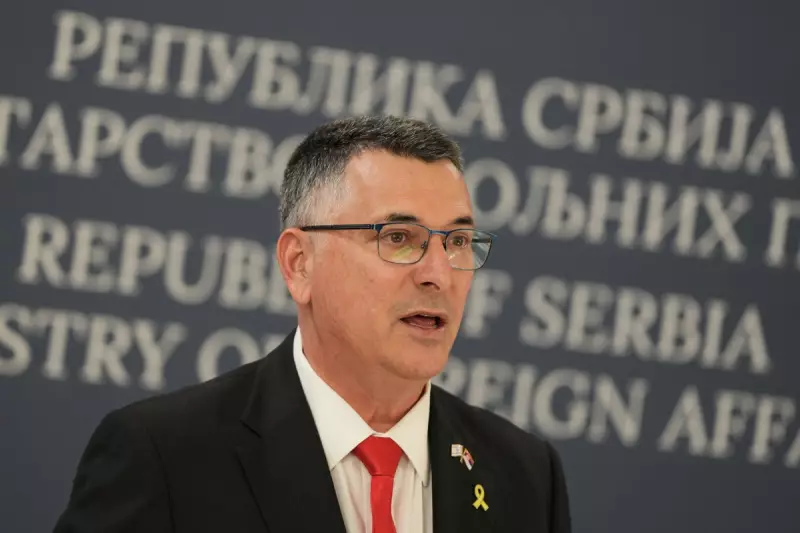
Israel's Foreign Minister, Gideon Saar, has made a historic visit to Somaliland, marking a significant escalation in bilateral ties following Israel's contentious decision to recognise the breakaway territory as a sovereign state.
A Milestone Arrival in Hargeisa
On Tuesday, 6 January 2026, Gideon Saar landed at Hargeisa's airport, where he was greeted by senior members of the Somaliland Cabinet. This visit represents the first by a high-ranking Israeli official since the formal recognition was announced last week. Somaliland's Ministry of Information hailed the occasion as a major milestone for the two entities, underscoring its importance on the social media platform X.
Controversial Recognition and Regional Backlash
The diplomatic move by Israel has sparked considerable controversy. Somaliland declared independence from Somalia in 1991 amid the nation's descent into conflict, but despite functioning with its own government and currency, it had never before been recognised by any UN member state. Israel's decision was swiftly criticised by the African Union, the Organisation of Islamic Cooperation, and more than 20 nations, predominantly from the Middle East and Africa.

The federal government of Somalia maintains that Somaliland is an integral part of its territory. It warns that Israel's recognition undermines Somalia's sovereignty and territorial integrity. The United States, while having previously explored a now-abandoned plan involving Somaliland and Gaza resettlement, continues to officially recognise Somalia's territorial integrity, which includes Somaliland.
Diplomatic Agenda and Future Implications
During his visit, Saar was scheduled to meet with Somaliland's President, Abdirahman Mohamed Abdullahi, widely known as Irro, at the presidential palace. This high-level engagement solidifies a new and unexpected diplomatic partnership. The visit and the preceding recognition are set against a complex geopolitical backdrop, with potential ramifications for stability in the Horn of Africa and Israel's broader foreign policy objectives in the region.
The development highlights the ongoing fragility of the Somali state and introduces a new dynamic in regional diplomacy, challenging long-standing international positions on Somaliland's status.