
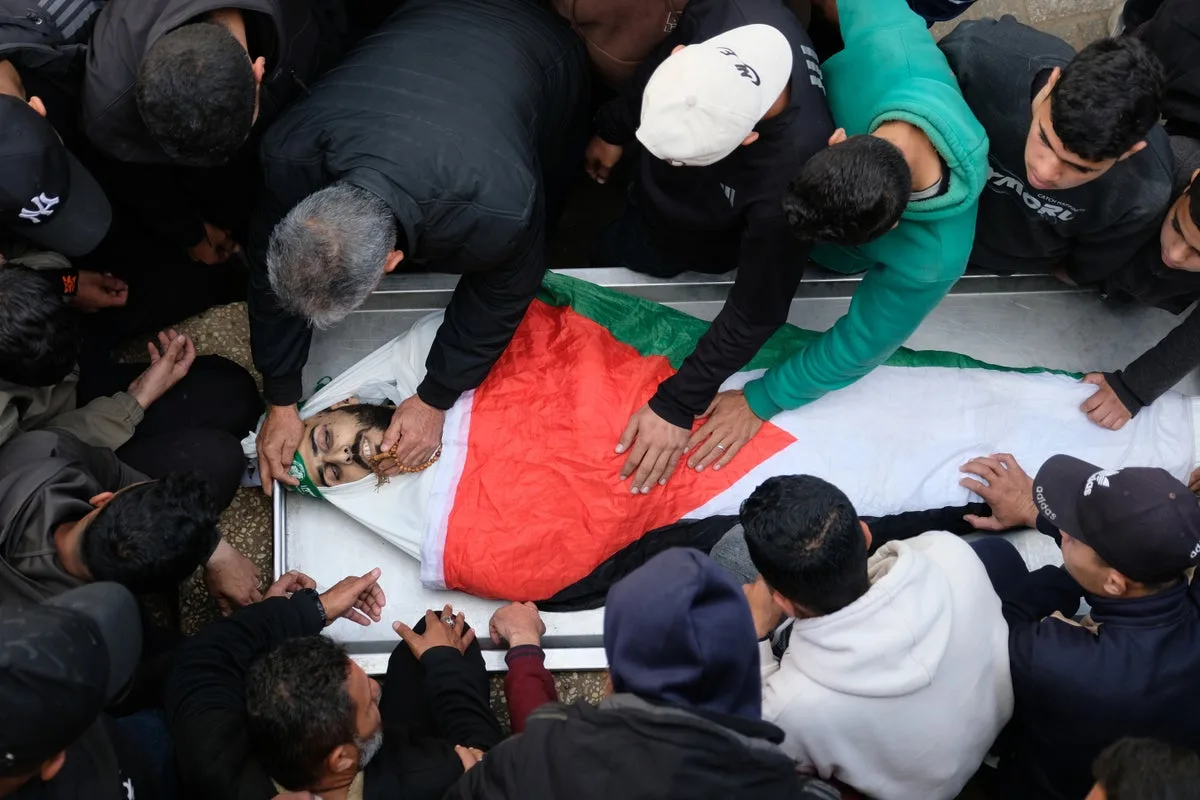
Two Palestinians on bicycles were killed in an Israeli drone strike on Tuesday, according to hospital officials, marking the latest deaths since an October ceasefire that has failed to halt deadly attacks in the Gaza Strip.
Al-Aqsa Martyrs Hospital reported that the two men were struck near the ceasefire line in eastern Deir al-Balah, an area dividing Gaza where one half remains under Israeli military control. The hospital also received the body of a woman killed by Israeli gunfire in the central Maghazi refugee camp. Israel's military did not immediately respond to inquiries about either incident, but has previously stated it acts against ceasefire violations or attacks on its soldiers.
Gaza's Health Ministry, part of the Hamas-led government, said 586 Palestinians have been killed since the ceasefire began, bringing the total death toll since the start of Israel's offensive to 72,037. The ministry's casualty records are widely considered reliable by UN agencies and independent experts. Despite the truce taking effect on 10 October, deadly Israeli strikes have repeatedly disrupted it, leading many in Gaza to feel the war has continued unabated.
Meanwhile, parts of the ceasefire agreement are moving forward. After a chaotic first week, more Palestinians are reportedly crossing into and out of Gaza via the reopened Rafah crossing to Egypt. Plans for an international peacekeeping force are also taking shape. Indonesia announced on Tuesday that its military has begun training personnel for reconstruction and humanitarian response in Gaza, with between 5,000 and 8,000 troops preparing to deploy. However, Indonesian troops will not participate in disarmament, a contentious unresolved element of the peace plan.
The war began on 7 October 2023 when Hamas-led militants attacked southern Israel, killing around 1,200 people, mostly civilians, and taking 251 hostages. Hostages have been returned in various ceasefire agreements, with the remains of Israeli police officer Ran Gvili, the final body in Gaza, recovered in January, paving the way for the ceasefire. The conflict has sparked worldwide protests and allegations of genocide, which Israel denies.




