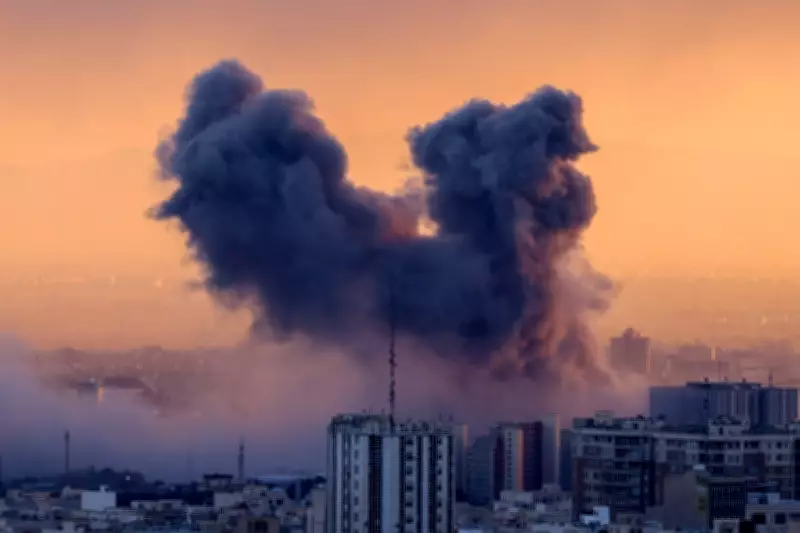
A thick plume of smoke was seen rising over the Iranian capital Tehran early on Wednesday, following what Israel described as a 'broad wave' of new strikes targeting key infrastructure across the country. This escalation marks a critical phase in the ongoing conflict, now entering its fifth day, with devastating humanitarian and economic consequences unfolding globally.
US Compares Opening Strikes to Iraq War 'Shock and Awe'
The United States military has claimed that the intensity of the initial strikes on Saturday, within the first 24 hours of the war, nearly doubled the scale of the infamous 'shock-and-awe' campaign launched against Iraq in 2003. According to US officials, nearly 2,000 targets have been hit in Iran so far, indicating a relentless and coordinated assault aimed at crippling Iranian defences and strategic assets.
Humanitarian Toll and Regional Fallout
The Iranian Red Crescent Society reports that at least 787 people have been killed since the conflict erupted. Among the most tragic incidents was a direct strike on a girls' elementary school in Minab on Saturday, which resulted in up to 168 fatalities, highlighting the severe civilian cost of the military operations.

In Lebanon, Israeli strikes on two towns south of Beirut, Aramoun and Saadiyat, killed six people and wounded eight, according to the Lebanese health ministry. These areas lie outside Hezbollah's traditional strongholds, suggesting a broadening of the conflict's geographical scope. The United Nations estimates that at least 30,000 people have been displaced in Lebanon due to heavy Israeli airstrikes, exacerbating the regional humanitarian crisis.
Global Markets in Turmoil as Energy Prices Soar
The war has sent shockwaves through global financial markets, with significant disruptions to energy exports from the Middle East. Iran's attacks on ships and energy facilities have closed navigation in the Gulf, forcing production stoppages from Qatar to Iraq and triggering a sharp spike in global oil and gas prices.
Asian markets have been particularly hard-hit. In Tokyo, the Nikkei 225 continued its decline on Wednesday, falling approximately 3.9% during early trading. In Seoul, the Kospi index, which dropped 7.2% on Tuesday, plunged a further 8.1% before trading was suspended on Wednesday due to extreme volatility. In contrast, Wall Street appears poised to open only marginally lower in New York, according to pre-market trading data, indicating a mixed response across global financial hubs.
US Naval Aggression and Diplomatic Tensions
President Donald Trump announced that the US navy could begin escorting oil tankers through the Strait of Hormuz if necessary, a move aimed at containing soaring energy prices. In a stark declaration, Trump also stated that the US was sinking 'all of the Iranian navy' and had already destroyed 17 Iranian ships, underscoring the aggressive naval posture adopted by the administration.
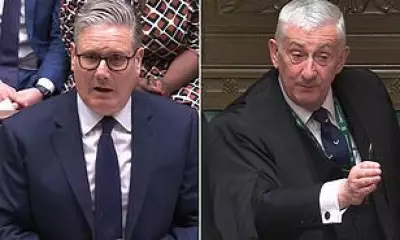
Diplomatic relations have frayed under the strain of the conflict. Trump said the US would cut off all trade with Spain over its refusal to allow US military use of its bases for missions linked to strikes on Iran. He also expressed displeasure towards UK Prime Minister Keir Starmer, who has not joined the attacks but permitted US forces to use UK bases, remarking, 'This is not Winston Churchill that we're dealing with.'
Military Developments and International Responses
Israel's strikes early on Wednesday targeted launch sites, defence systems, and additional Iranian infrastructure, as part of a sustained offensive. Iran has continued to fire dozens of ballistic missiles at Israel, though most have been intercepted, with eleven fatalities reported in Israel since the conflict began.
The US Department of Defense identified four of the six American soldiers killed on Sunday during a drone strike on a US base in Kuwait. Trump acknowledged that more service members would likely be killed before the war concludes, reflecting the ongoing human cost on all sides.
In a notable international response, French President Emmanuel Macron ordered the nuclear-powered aircraft carrier Charles de Gaulle to move from the Baltic Sea to the Mediterranean, escorted by frigates and its air wing, to help protect allied assets in the region.

Political Rhetoric and Justifications
Trump has claimed that Iran was poised to attack before the US did, walking back assertions by Marco Rubio that Israel triggered the war. 'I think they were going to attack first, and I didn't want that to happen. So, if anything, I might have forced Israel's hand,' Trump stated, offering a rationale for the pre-emptive nature of the strikes.
As the conflict enters its fifth day, the situation remains fluid, with escalating military actions, significant economic disruptions, and a mounting humanitarian crisis shaping the trajectory of this intense geopolitical standoff.