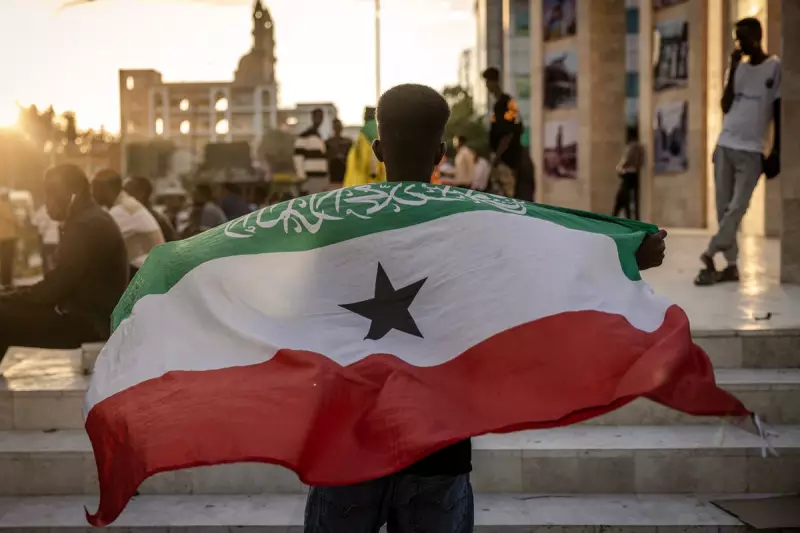
In a significant geopolitical shift, Israel has become the first country in over three decades to formally recognise the breakaway region of Somaliland as an independent and sovereign state. This landmark decision, confirmed by a meeting between Israeli Foreign Minister Gideon Saar and Somaliland's president on Tuesday, is reshaping alliances and drawing both support and condemnation across the Horn of Africa and beyond.
A Strategic Recognition with Global Implications
The move, which occurred just ten days before the high-level meeting, has ignited speculation that other nations may soon follow Israel's lead. A source within the Somaliland government and a regional diplomat both indicated that further recognitions could be imminent. However, the government in Mogadishu has reacted with fierce opposition, condemning the act as a direct assault on Somalia's territorial integrity and sovereignty.
The recognition has found a prominent supporter in United States Senator Ted Cruz. On Monday, he took to social media platform X to voice his approval, arguing that recognising Somaliland aligns with US security interests. He described the region as "an ally that shares our values in a region vital to global trade and counterterrorism."

The Geopolitical Chessboard: Ports, Alliances and Rivalries
Somaliland's value is deeply rooted in its geography. The region, which declared independence from Somalia in 1991, sits at a crucial maritime chokepoint where the Indian Ocean meets the Red Sea. Its Berbera port offers direct access to some of the world's busiest shipping lanes. Analysts suggest that a key motivation for Israel's decision is the desire to counter threats from Yemen's Houthi militia, which has repeatedly targeted commercial vessels in these waters. This could lay the groundwork for future security and military cooperation, though Somaliland has firmly denied that the recognition permits Israel to establish military bases or resettle Palestinians from Gaza.
The potential ripple effects are substantial. Landlocked Ethiopia, Africa's second most populous nation, is rumoured to be preparing its own recognition. This follows a 2024 memorandum of understanding where Addis Ababa agreed to lease area around the Berbera port, reportedly in exchange for recognising Somaliland's independence. That earlier deal provoked Somalia to strengthen ties with Egypt and Eritrea, both historical rivals of Ethiopia.
Meanwhile, regional powers are manoeuvring for influence. The United Arab Emirates, which normalised relations with Israel in 2020, already wields considerable power in Somaliland through Dubai's DP World, which operates the Berbera port, airport, and a major free-trade zone. Turkey, which trains Somali forces and provides aid, mediated talks in December 2024. India has dismissed online rumours it will recognise Somaliland, though some analysts argue it should to counter China's growing economic footprint in Djibouti, Kenya, and Tanzania.
Regional Reactions and the Path Ahead
The situation remains volatile. Hundreds of protesters in Somalia have demonstrated against Israel's decision, highlighting the deep domestic tensions. While Turkey's mediation led Ethiopia to agree to work with Somalia to resolve the dispute, the persistent rumours of Addis Ababa's impending recognition suggest the diplomatic landscape is far from settled.
Israel's groundbreaking recognition of Somaliland is more than a bilateral formality; it is a strategic gambit with the power to redraw the map of influence in the Horn of Africa. It underscores the region's importance in global trade and security, pulling in actors from the Middle East and beyond, and setting the stage for a complex new chapter in regional politics.