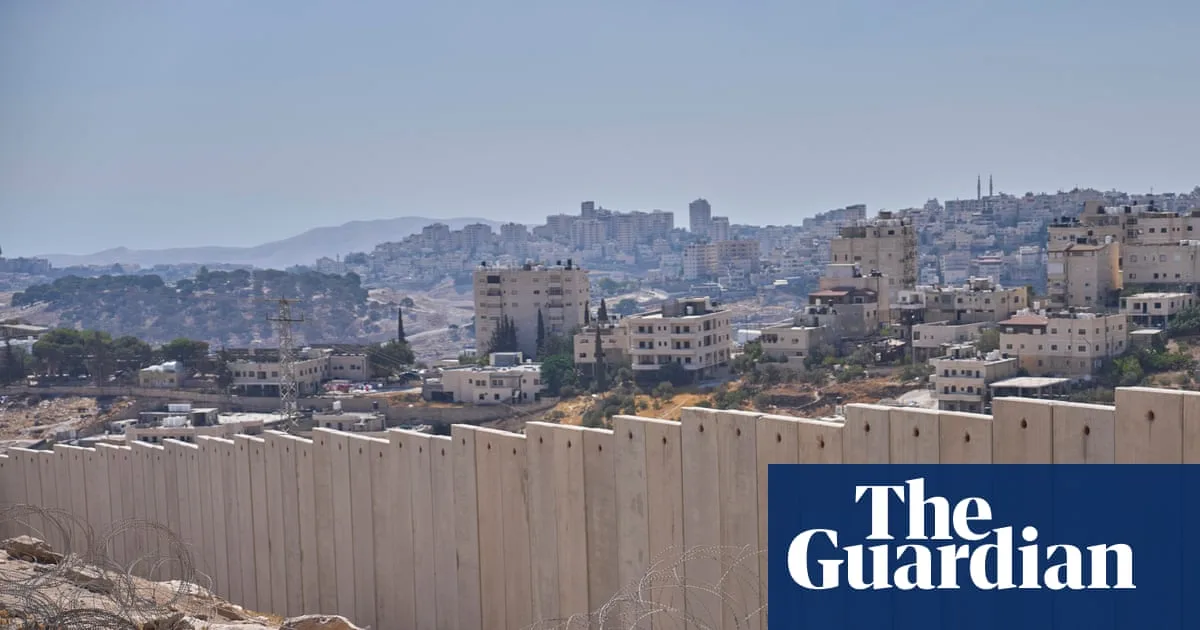
Israel Advances 3,401-Home E1 Settlement, Threatening Two-State Solution
Israel pushes vast West Bank settlement, burying Palestine state

Israel is accelerating plans to construct a major new illegal settlement in a strategically vital part of the occupied West Bank, a move explicitly designed to undermine the foundation of a future Palestinian state.

A Tender for Transformation

In a significant but quiet step, the Israel Land Authority posted a tender in mid-December for the construction of 3,401 housing units as part of the long-contested "E1" development project. The document, discovered online by the advocacy group Peace Now, sets a deadline for construction companies to bid for the work by mid-March.

"This timeline suggests bulldozers could start work in less than a year," warned Yonatan Mizrachi, a co-director of Peace Now's Settlement Watch. He stated the tender "reflects an accelerated effort to advance construction in E1", an area that would effectively create a wedge between the northern and southern halves of the West Bank, while further isolating East Jerusalem from Palestinian territory.

The British government has previously described such settlement building in this area as "a flagrant breach of international law".

Decades in the Making, Now Gaining Speed

The concept of building in the E1 zone is not new. It was first mooted in the 1990s by then-Prime Minister Yitzhak Rabin. For years, successive US administrations and European allies blocked construction, recognising its devastating implications for a two-state solution—the very reason it is now championed by Prime Minister Benjamin Netanyahu and key ministers in his far-right coalition.

Israel's Finance Minister, Bezalel Smotrich—a settler himself—claimed last year that the Trump administration had dropped longstanding US opposition. Following formal planning approval in August, Smotrich declared the project would "bury" the idea of a sovereign Palestine, creating "facts on the ground" of homes and families.

The pace of progress is notably rapid. Settlement expert Hagit Ofran from Peace Now pointed out that tenders are usually prepared six months to a year after planning approval, not within four months as seen with E1. "I am afraid we will see construction in coming months," Ofran said, suggesting the government is racing to create irreversible facts before national elections due by October.

Wider Context of Escalation and Condemnation

The E1 plan is just one element of an aggressive settlement expansion agenda. In December alone, Israel approved proposals for 19 new settlements in the occupied West Bank. According to Peace Now, the number of settlements will rise from 141 in 2022 to 210 once recently approved projects are built.

This push occurs alongside a surge in violence against Palestinians in the West Bank by Israeli soldiers and settlers during the war in Gaza, which a UN commission and rights groups consider genocidal. Hundreds of Palestinians have been killed in the West Bank since October 2023, with tens of thousands displaced.

International condemnation has been swift but seemingly ineffectual. More than 20 countries, including allies like France, Canada, and Australia, condemned the E1 approval. Meanwhile, the UN's International Court of Justice ruled in 2024 that Israel's occupation violates international law, ordering it to end "as rapidly as possible".

Despite this, with little domestic political opposition and key figures like Smotrich—sanctioned by the UK and others for inciting violence—driving the agenda, the path is being cleared for a settlement that aims to reshape the geopolitical landscape of the region permanently.