Israel Intercepts First Missile from Yemen as Middle East Conflict Escalates
Israel's military announced it intercepted a missile launched from Yemen toward Israel early Saturday, marking the first such attack by Iranian-backed Houthi rebels since the war in the Middle East began. Brig. Gen. Yahya Saree, a Houthi military spokesman, claimed responsibility in a statement aired on the rebels' Al-Masirah satellite television.
Houthi Involvement and Regional Implications
The potential entry of the Houthis into the war raises significant questions about whether the group will resume targeting commercial shipping in the Red Sea corridor. Saree stated the Houthis fired a barrage of ballistic missiles at "sensitive Israeli military sites" in southern Israel, following a vague statement on Friday signaling their intent to join the conflict.
The Houthis have controlled Yemen's capital, Sanaa, since 2014, and had previously maintained an uneasy ceasefire with Saudi Arabia, which launched a war against them in 2015. Their involvement could further complicate global shipping, already disrupted by Iran's control over the Strait of Hormuz, a critical passage for oil and gas.

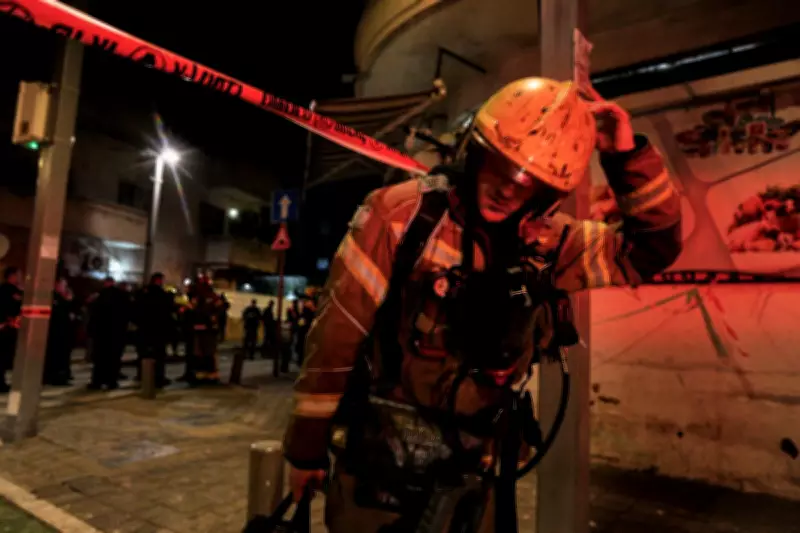
In related developments, sirens sounded around Beer Sheba and near Israel's main nuclear research center overnight Friday into Saturday, as Iran and Hezbollah continued attacks. Loud explosions were reported in Tel Aviv, with Israel's Fire and Rescue Service responding to 11 impact sites across the metro area.
Israeli Strikes on Iranian Nuclear Facilities
Israel focused its attacks on Friday on sites "in the heart of Tehran" involved in ballistic missile production, as well as missile launchers and storage sites in western Iran. Iranian state media reported two nuclear facilities were targeted: the Shahid Khondab Heavy Water Complex in Arak and the Ardakan yellowcake production plant in Yazd Province.
The strikes did not cause casualties or contamination risk, according to Iran's Atomic Energy Organization. Israel claimed the attack was a major blow to Iran's nuclear program, with the military stating raw materials for enrichment are processed at the Yazd plant.
Iranian Foreign Minister Abbas Araghchi threatened retaliation via social media, saying, "Iran will exact HEAVY price for Israeli crimes." Late Friday, Israeli authorities reported Iranian missile strikes killed a 52-year-old man in Tel Aviv.
Broader Regional and Economic Fallout
In Lebanon, authorities said over 1,100 people have been killed since the war started, with Israel's military actions now described as an invasion. Israeli forces have moved thousands of troops into southern Lebanon, engaging in ground combat with Hezbollah militants for at least three weeks.
U.S. stocks experienced further declines on Friday, with the S&P 500 sinking 1.7% to close its worst week since the Iran war began. Crude oil prices continued to soar, and with U.S. gas prices approaching $4 a gallon, members of Congress are pushing to suspend the federal gasoline tax.
More than two dozen U.S. troops have been wounded in Iranian attacks on Saudi Arabia's Prince Sultan air base in the past week, including a Friday strike involving six ballistic missiles and 29 drones that injured at least 15 troops. The base, about 96 kilometers from Riyadh, is run by the Royal Saudi Air Force but also used by U.S. troops.
Diplomatic and Military Moves
U.S. President Donald Trump reiterated his desire for Israel and Saudi Arabia to normalize relations, speaking at an event sponsored by the Saudi sovereign wealth fund. However, significant hurdles remain, including Saudi Arabia's insistence on a credible path to a Palestinian state.
Diplomacy proceeded alongside a U.S. troop buildup, with Trump claiming talks on ending the war were going "very well." Washington delivered a 15-point "action list" to Iran via Pakistan, proposing restrictions on Iran's nuclear program and reopening the Strait of Hormuz. Iran rejected the offer and presented its own five-point proposal.
U.S. ships carrying about 2,500 Marines and 1,000 paratroopers from the 82nd Airborne have been ordered to the Middle East. Secretary of State Marco Rubio stated the U.S. "can achieve all of our objectives without ground troops," with deployments aimed at adjusting to contingencies.

Humanitarian and Agricultural Breakthrough
There appeared to be a positive development as Tehran agreed to allow humanitarian aid and agricultural shipments through the Strait of Hormuz, following a U.N. request. Ali Bahreini, Iran's ambassador to the U.N. in Geneva, said Iran would "facilitate and expedite" such movement, which is critical for global food security.
The death toll continues to climb, with 19 people killed in Israel, four Israeli soldiers in Lebanon, and over 1,900 in Iran. The U.N. reported 82,000 civilian buildings in Iran, including hospitals, are damaged, affecting 180,000 people.