The Irish government has welcomed the significant development of the United States withdrawing its threat to impose additional tariffs on eight European allies, a move that has been described as validating the European Union's strategic approach to international diplomacy.
A Welcome Diplomatic Development
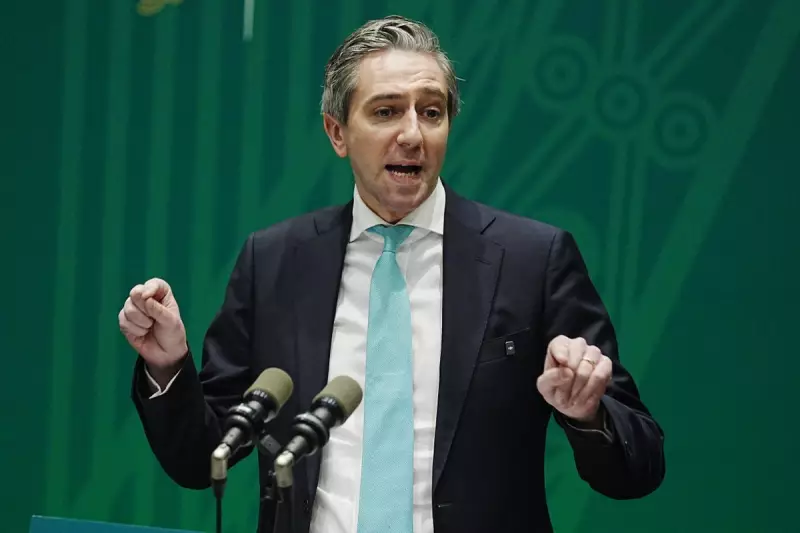
Ireland's Tánaiste and Finance Minister Simon Harris stated that the withdrawal of the tariff threat by US President Donald Trump represents "a welcome development" that gives "credence and credibility" to the EU's carefully calibrated strategy. This strategy, according to Mr Harris, is defined by maintaining "cool heads" and not responding impulsively to "every bit of political noise" or "every Truth Social post."
The Greenland Controversy
The diplomatic tension emerged when President Trump threatened to impose a 10% tariff on eight European allies, including the United Kingdom, from February 1st unless they agreed to his proposed purchase of Greenland. During a speech to world leaders at the Davos summit on Wednesday, the US President reiterated his demands for immediate negotiations to acquire the Arctic territory while explicitly ruling out the use of military force.

Although Ireland was not among the eight nations directly threatened with tariffs, the Irish government had consistently maintained that tariffs imposed on any European Union member state effectively amount to tariffs on all member states, given the integrated nature of the single market.
Strategic Calm Prevails
In a detailed statement following the withdrawal of the tariff threat, Minister Harris emphasized the importance of continued European unity. "There's much detail to emerge, and there's still obviously much volatility, but today we have heard the President of the United States rule out force in relation to Greenland," he stated.
"We've also now seen in the last number of minutes him withdraw the threat of additional tariffs. But it is important we continue to work collectively as a European Union, and collectively to stand up for the sovereignty of Denmark and Greenland – Greenland being a part of the Kingdom of Denmark."
Economic Implications and Transatlantic Relations
Earlier in the diplomatic standoff, Minister Harris had issued stark warnings about the potential economic consequences of US tariffs on European countries. He cautioned that such measures could create a "spiral of events" with potentially "enormous" impacts on economies and financial markets across the continent.
The Finance Minister explained that while economic models can predict some consequences of tariff impositions – suggesting that a 15% tariff could reduce growth by 1.4% to 1.5% annually and result in approximately 60,000 fewer jobs being created in affected economies – these models cannot capture the broader implications of a fundamental change in transatlantic relations.
Looking Forward
Minister Harris concluded his remarks by emphasizing the importance of implementing existing trade agreements between the European Union and the United States. "We must collectively work to seek the full implementation of the trade agreements that we already agreed with the US administration – an agreement that is key to protecting economic activity on both sides of the Atlantic," he stated.
The withdrawal of the tariff threat follows President Trump's announcement that NATO Secretary General Mark Rutte had "formed the framework of a future deal" for the Arctic region, suggesting ongoing diplomatic negotiations regarding Greenland's status and future.