Irish Government Welcomes US Retreat on Greenland Tariff Threats
The Irish Government has warmly welcomed the withdrawal of additional tariff threats against European allies by US President Donald Trump, following his demands for immediate negotiations to acquire the Arctic territory of Greenland. While Ireland was not among the eight European nations directly threatened with 10% tariffs from February 1, senior ministers emphasised that tariffs on any member state effectively impact the entire European Union bloc.
Trump's Davos Announcement and Diplomatic Shift
During a significant address to world leaders at the Davos summit on Wednesday, President Trump reiterated his demands for negotiations regarding Greenland's acquisition while explicitly ruling out the use of military force. Subsequently, he retracted the tariff threat, stating that NATO Secretary General Mark Rutte had established "the framework of a future deal" for the Arctic region. This diplomatic shift represents a notable de-escalation in transatlantic tensions that had been mounting over recent weeks.
Irish Ministers Praise EU's Strategic Response
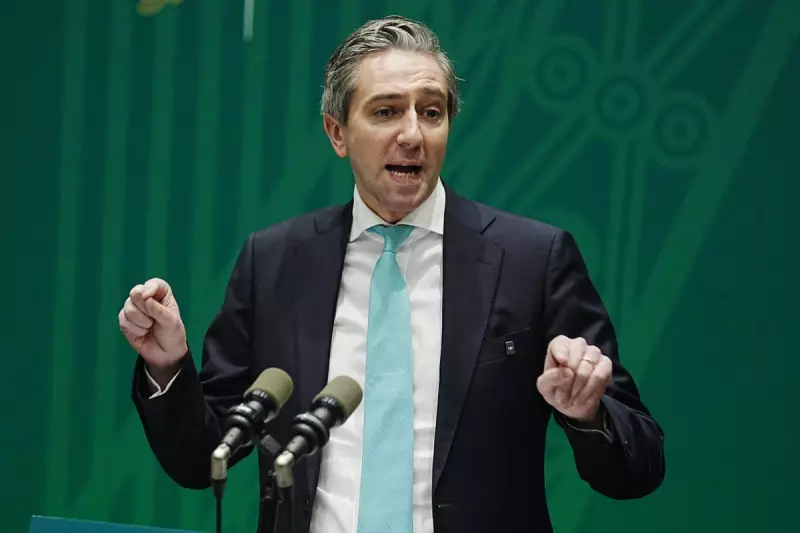
Tánaiste and Finance Minister Simon Harris described the development as "significant" and stated it gave "credence and credibility" to the European Union's strategic approach. He emphasised that the EU's strategy was defined by maintaining "cool heads" and not responding to "every bit of political noise" or "every Truth Social post." In a detailed statement, Minister Harris acknowledged that while much detail remains to emerge and volatility persists, the withdrawal of tariff threats represents important progress.

"Today we have heard the President of the United States rule out force in relation to Greenland," Harris stated. "We've also now seen in the last number of minutes him withdraw the threat of additional tariffs. But it is important we continue to work collectively as a European Union, and collectively to stand up for the sovereignty of Denmark and Greenland."
Collective European Response and Economic Implications
The Finance Minister stressed the importance of European nations working together to seek full implementation of existing trade agreements with the US administration, describing these agreements as "key to protecting economic activity on both sides of the Atlantic." Taoiseach Micheál Martin similarly welcomed the de-escalation, telling RTÉ News in Davos that the development reflected his consistent position that resolution requires "dialogue, through discussion and through engagement."
Ministerial Cautions and Market Considerations
Foreign Affairs Minister Helen McEntee offered a more cautious perspective, noting that while the tariff threat had been "taken off the table," this did not create certainty. Speaking on The Tonight Show on Virgin Media One, she emphasised that "things have changed in the past" and warned against complacency. Minister McEntee suggested President Trump was "of course" influenced by market considerations, acknowledging that a trade war would benefit neither US nor EU citizens.
She revealed that EU foreign ministers had held "hope and an anticipation" of a climbdown but admitted there had been no indication of weakening in the US position during a meeting of counterparts on Tuesday night, just hours before the announcement.
Economic Modelling and Transatlantic Relationship Concerns
Earlier warnings from Minister Harris highlighted potential economic consequences, suggesting US tariffs could create a "spiral of events" with potentially "enormous" impacts on economies and markets. He noted the difficulty of modelling such impacts, as they could signal fundamental changes in the transatlantic relationship.
"If the US were to annex Greenland that would 'fundamentally alter the transatlantic relationship,'" Harris explained, warning this could trigger "a spiral of events and retaliatory events" across economies and markets. Previous modelling indicated that a 15% tariff could reduce growth by 1.4% to 1.5% annually over the medium term and result in approximately 60,000 fewer jobs being created.

"But what those models can't capture," Harris cautioned, "is what happens if the transatlantic relationship, as we know it, doesn't exist into the future." This statement underscores the broader strategic concerns underlying what might otherwise appear as a specific tariff dispute.
Strategic Implications and Future Diplomacy
The Irish Government's response reflects a careful balancing act between welcoming diplomatic progress while maintaining vigilance about future developments. Ministers have consistently emphasised the importance of European unity in responding to external pressures, while acknowledging the complex interdependence of transatlantic economic relationships. The Greenland situation has highlighted both the fragility and resilience of international diplomatic frameworks in an era of shifting global power dynamics.