The Violent End of Iran's Supreme Leader
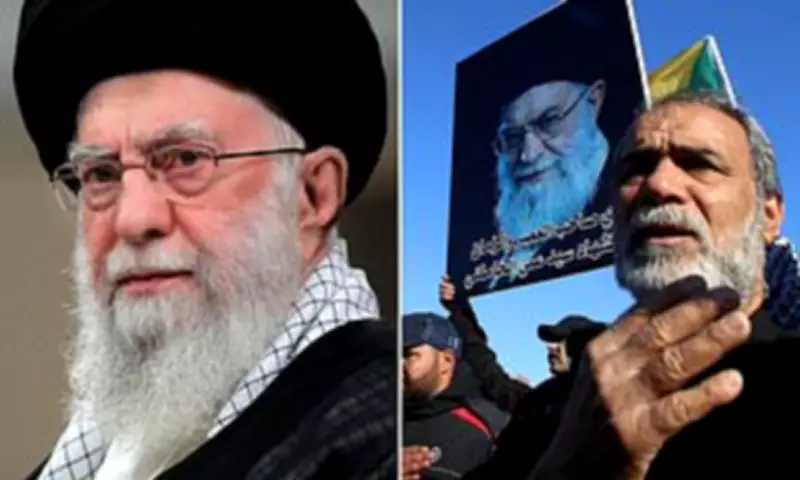
For decades, Ali Hosseini Khamenei stood as the great survivor of Iranian politics, maintaining an iron grip on power through repression and ideological fervor. His death, however, proved as violent as the terror and destruction he exported abroad and inflicted upon his own citizens. The Supreme Leader, whose despotic rule spanned over four decades, reportedly met his "martyrdom" in the rubble of his Tehran compound following a coordinated military operation.
A Reign Marked by Brutality and Corruption
Khamenei's leadership was characterized by arbitrary executions, mass imprisonments, state-sponsored terrorism, and systemic corruption that impoverished millions in an oil-rich nation. His guiding obsession remained a profound hatred of Israel, which ultimately proved his undoing when Israeli bombs leveled his compound in a devastating morning strike.
The Supreme Leader's death offers cold comfort to the families of approximately 40,000 Iranians murdered by his feared Revolutionary Guard forces since nationwide protests erupted in December. International condemnation followed these atrocities, prompting an American armada to steam toward the region. President Donald Trump had hoped a show of force would compel Tehran to abandon its nuclear enrichment and missile programs, but stalled negotiations in Oman and Geneva revealed Khamenei as the primary obstacle.

Unfinished Business from Last June's Conflict
While American missiles targeted military installations, Israeli Defense Forces received the critical mission of eliminating key figures within Khamenei's regime, with the Ayatollah himself as their ultimate prize. This operation represented unfinished business from last June, when combined U.S.-Israeli airstrikes pummeled Iran's nuclear facilities until Trump halted the twelve-day campaign.
Though bruised and bloodied, Khamenei emerged from hiding to declare victory over the "American Great Satan" and its Israeli ally. That triumphant narrative has now been permanently silenced.
From Humble Beginnings to Revolutionary Zeal
Few could have predicted the turbulent trajectory of the future Ayatollah when Ali Hosseini Khamenei was born in April 1939 in Mashad, Iran's northeastern holy city. His father, a minor Muslim cleric of Azeri ethnicity, and his Persian mother shared the Shiite Muslim faith that would define their son's destiny.
As a teenager, Khamenei felt conspicuous in his traditional, hand-me-down garments among peers wearing Western attire. He voraciously consumed translated works by John Steinbeck and Victor Hugo, captivated by their depictions of poverty and oppression. Yet it was religious devotion rather than class consciousness that transformed him into a revolutionary.
At nineteen, Khamenei traveled to Qom to study under Ruhollah Khomeini, a firebrand critic of the Shah. Like many radicals, he endured brutal treatment and torture by the Shah's secret police, experiences that hardened rather than humanized him. Khamenei's generation emerged from prison believing their suffering entitled them to inflict pain on those they deemed deserving—a justification that would expand exponentially throughout his long reign.
The Path to Supreme Leadership
Following the Shah's overthrow in 1979, Khamenei navigated revolutionary power struggles by remaining fiercely loyal to Ayatollah Khomeini while undermining potential rivals. In 1981, he joined the witch-hunt against his predecessor, Bani Sadr, securing his position as the Islamic Republic's second president. That same year, a bomb attack by rival radicals paralyzed his right arm—an injury he interpreted as divine grace despite causing lifelong pain.
The 1980s presented Iran with the nuclear question that would haunt it for decades. Facing Saddam Hussein's Iraq, which rained chemical weapons and missiles upon Iran during a brutal war, Khamenei opposed investing billions in long-term weapons projects when immediate threats demanded attention. This stance caused a rift with Prime Minister Mir Hussein Mousavi, who advocated for an Iranian bomb before his 1989 dismissal.

When Khomeini died that year, Khamenei ascended as Supreme Leader of both state and religion. Mousavi would reemerge in 2009 leading the Green Movement opposition, galvanizing large-scale protests that were mercilessly crushed by Basij religious police and Revolutionary Guards—forces Khamenei had helped establish in 1979.
Growing Discontent and Hypocrisy
The Islamic Republic's rigid gender rules sparked increasing resentment in the 21st century as Iranian women chafed against contradictions between educational opportunities and societal restrictions. The 2022 murder of Mahsa Amini by morality police ignited nationwide "Women, Life, Freedom" protests that were similarly suppressed.
While a wave of Muslim piety had swept the Ayatollahs to power, religious practice waned significantly under Khamenei's rule. Friday prayer attendance slumped to approximately 35 percent by the 2020s, with many mosques closing due to lack of congregations. More damaging was widespread perception of clerical hypocrisy—corruption that had undermined the Shah's regime now flourished under absolute power and censorship, creating a culture where everyone had a price, even when approached by Israeli Mossad agents.
Intelligence Failures and Strategic Miscalculations
Tel Aviv's extraordinary penetration of Tehran's deepest secrets revealed Khamenei's fatal overconfidence. Former President Mahmoud Ahmadinejad, who shared Khamenei's anti-Israel rhetoric, warned that "Mossad is nearer to us than our own ears," but the Ayatollah dismissed such concerns. He failed to recognize that his head of anti-Mossad operations, along with twenty staff members, were actually Israeli agents.
Western analysts dismissed this as paranoid conspiracy thinking, yet Israel's targeted killings of Iranian figures in supposedly secure locations demonstrated Khamenei's naive self-assurance. During last June's conflict with Israel, he retreated to a bunker—as he had during COVID-19—fearing both disease and potential coup attempts.
Nuclear Ambitions and Regional Rivalries
Many Revolutionary Guards criticized Khamenei's approach to nuclear development: creating bomb components without assembling a workable weapon. With Saddam's Iraq no longer a threat, Iran jostled with Israel and Saudi Arabia for regional supremacy while facing the specter of American invasion. Khamenei insisted Allah forbade weapons of mass destruction—a caveat that failed to deter Western efforts to prevent Iranian nuclear capability.
From his bunker last June, Khamenei surrendered military authority to new Revolutionary Guard commanders, belatedly recognizing his failure to designate a successor earlier. In the ceasefire's aftermath, he initiated a savage purge of suspected Israeli spies and saboteurs, equally targeting critics who blamed him for Iran's vulnerable position.
An Uncertain Future for the Islamic Republic
Eight months later, Khamenei's surviving enemies will not mourn his death but will warily watch what follows. A power struggle among potential successors threatens to shatter the Islamic Republic's cohesion, potentially sparking civil conflict. Yet his powerful allies may leverage his propaganda image as a divinely-inspired leader to maintain the regime under new management.
Ali Khamenei's dead hand could remain on the tiller for some time, but his violent demise marks the end of an era defined by repression, regional tension, and profound miscalculation. The consequences will reverberate across Iran and the Middle East for years to come.