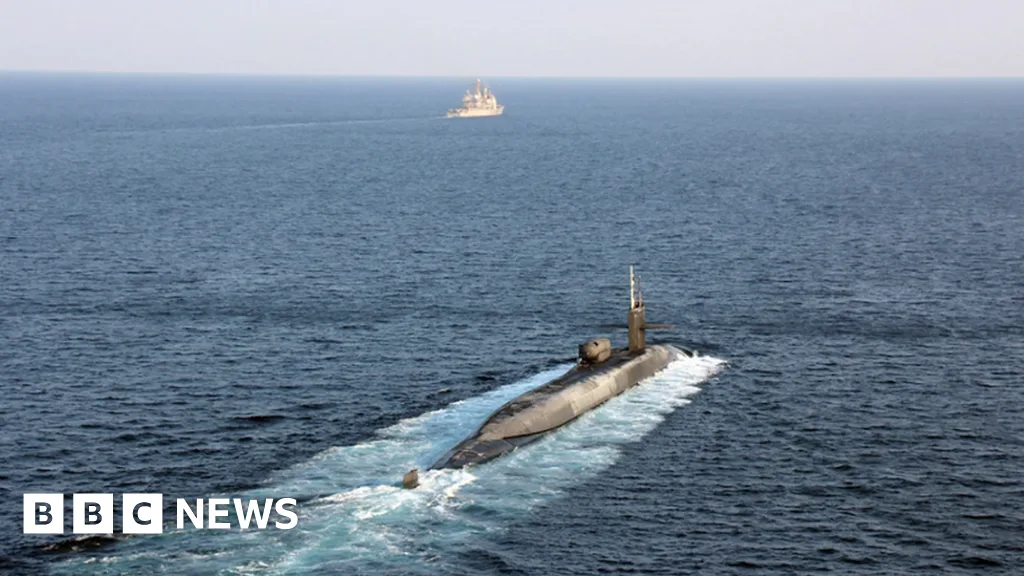
Iran's Strait of Hormuz Military Drill Sparks US Warning Amid Rising Tensions
Iran's Strait of Hormuz Drill Sparks US Warning

Iran's Planned Military Drill in Strait of Hormuz Heightens Tensions with US

Iran has announced plans to conduct a live-fire military exercise in the strategically crucial Strait of Hormuz this weekend, raising alarm bells in Washington and across global energy markets. The narrow waterway, through which approximately one-fifth of the world's traded oil passes, has once again become a focal point of international tension as Tehran prepares for naval manoeuvres that could encroach upon vital shipping lanes.

Critical Global Shipping Chokepoint Under Threat

The Strait of Hormuz represents one of the world's most important maritime corridors, connecting the Persian Gulf with the Gulf of Oman and beyond to global shipping routes. At its narrowest point, the strait measures just 33 kilometres (21 miles) wide, creating a natural bottleneck for international trade. While Iran and Oman maintain territorial waters within the strait, it is internationally recognised as a crucial waterway through which all vessels have transit rights.

Historical significance combines with modern economic necessity in this region. For centuries, the strait served as a conduit for valuable commodities including Chinese ceramics, ivory, silk and textiles. Today, its deep channels accommodate supertankers transporting vast quantities of oil and liquefied natural gas, predominantly to Asian markets. The United Arab Emirates, with its glittering metropolis of Dubai, sits adjacent to this vital maritime artery.

Iran's Drill Details and Potential Disruption

According to maritime notices issued via radio on Thursday, Iran plans to conduct "naval shooting" exercises on Sunday and Monday. The coordinates provided suggest these drills may extend into the Traffic Separation Scheme – a carefully organised 3.2-kilometre (2-mile) wide, two-lane system that regulates vessel movement through the strait. Ships entering the Persian Gulf use the northern lane, while those exiting toward the Gulf of Oman utilise the southern lane.

The northern shipping lane falls within the announced drill coordinates, raising concerns about potential disruption to commercial traffic. While Iran has released minimal public details about the exercise, analysts anticipate involvement from the country's paramilitary Revolutionary Guard. This force maintains a fleet of small, fast-attack vessels in the region that have previously engaged in tense encounters with United States Navy ships.

US Military Issues Stern Warning

In response to Iran's announcement, the United States military's Central Command issued a strongly worded warning early on Saturday. While acknowledging Iran's right to operate professionally in international waters, the statement cautioned against any interference with American warships or commercial vessels transiting the area.

The command, which oversees the US Navy's Bahrain-based Fifth Fleet, declared it "will not tolerate unsafe actions" by Revolutionary Guard forces. Such actions could include aircraft or vessels approaching American warships too closely or directing weapons toward them. The statement emphasised that "the US military has the most highly trained and lethal force in the world," underscoring Washington's determination to protect freedom of navigation in these critical waters.

Broader Context of Escalating Tensions

The planned military drill occurs against a backdrop of heightened regional tensions. US President Donald Trump has threatened military action against Iran following the government's violent crackdown on nationwide protests. The administration has established clear red lines regarding the treatment of peaceful demonstrators and potential mass executions of detainees.

In recent days, concerns about Iran's nuclear programme have further complicated the diplomatic landscape. The USS Abraham Lincoln aircraft carrier, accompanied by supporting guided missile destroyers, currently operates in the Arabian Sea within potential striking distance of Iranian targets. Tehran has responded with warnings about possible preemptive strikes against American interests throughout the Middle East and Israel.

The region remains on edge following last June's twelve-day conflict between Israel and Iran, during which Tehran launched ballistic missiles and Israel targeted Iranian weapons stockpiles. Iran maintains an arsenal of short- and medium-range missiles capable of reaching neighbouring Gulf Arab states, adding another layer of complexity to the current standoff.

Global Energy Security Implications

The timing of Iran's military exercise raises significant concerns about global energy security. While alternative pipelines exist in Saudi Arabia and the United Arab Emirates, the US Energy Information Administration notes that "most volumes that transit the strait have no alternative means of exiting the region." Previous threats to this crucial shipping route have triggered sharp increases in global energy prices, with market analysts closely monitoring the current situation for potential disruptions.

The international community now watches anxiously as events unfold in this narrow waterway where geopolitical tensions, energy security, and military posturing converge with potentially far-reaching consequences for global stability and economic security.




