Iran has marked the 47th anniversary of its 1979 Islamic Revolution on Wednesday, with the nation's theocracy confronting significant pressure from both international adversaries and domestic discontent. The commemoration occurred as US President Donald Trump suggested deploying an additional aircraft carrier group to the Middle East, while Iranian citizens voiced anger over recent violent suppression of nationwide protests.
Domestic Commemoration Amid Internal Tensions
On Iranian state television, authorities broadcast images of tens of thousands of people taking to the streets across the country to express support for the theocracy and its 86-year-old Supreme Leader Ayatollah Ali Khamenei. Participants waved images of Khamenei and Ayatollah Ruhollah Khomeini, the founder of the Islamic Republic, alongside Iranian and Palestinian flags. Chants of "Death to America!" and "Death to Israel!" echoed through the crowds.
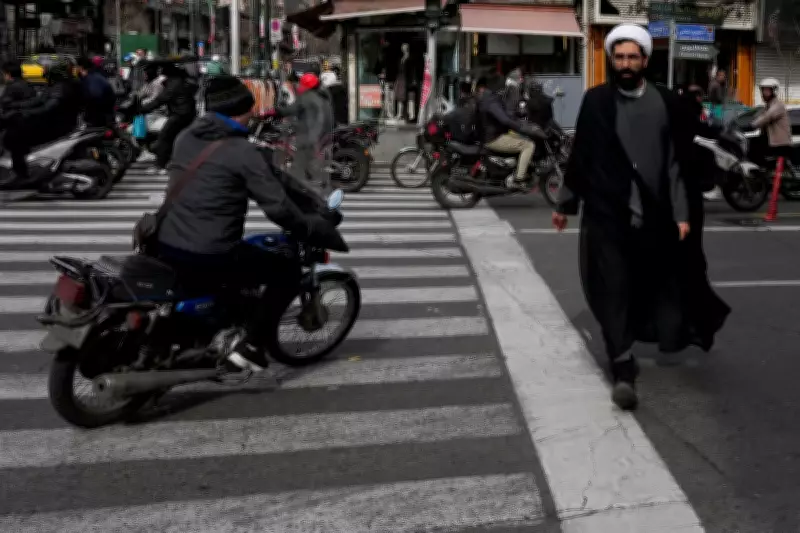
However, the celebrations were not without dissent. On Tuesday night, as government-sponsored fireworks illuminated the sky in Tehran, witnesses reported hearing shouts from residential areas of "Death to the dictator!" This highlights the deep divisions within Iranian society, where a hard-line element supports the regime—including members of the paramilitary Revolutionary Guard who brutally suppressed last month's protests—while others participate in demonstrations primarily as government employees or to enjoy the holiday atmosphere.

International Diplomatic Maneuvers
The anniversary coincided with heightened diplomatic activity. Israeli Prime Minister Benjamin Netanyahu, a long-time critic of Iran, visited Washington to advocate for stringent terms in any nuclear agreement with Tehran. Meanwhile, senior Iranian security official Ali Larijani traveled from Oman to Qatar, a key mediator in the fledgling nuclear talks that also hosts a major US military installation—a site Iran attacked in June following US airstrikes on its nuclear facilities during the brief Iran-Israel war.
In an interview with Russian state channel RT, Iranian Foreign Minister Abbas Araghchi expressed lingering distrust toward the United States, citing a breakdown in negotiations last June when the US launched attacks. "We need to make sure that that scenario is not repeated and this is mostly up to America," Araghchi stated. Despite these concerns, he suggested the possibility of reaching a "better deal than Obama," referencing the 2015 nuclear accord from which Trump unilaterally withdrew during his first term.
US Military Posturing and Regional Tensions
The United States has already deployed the aircraft carrier USS Abraham Lincoln, along with supporting ships and warplanes, to the Middle East to pressure Iran into a nuclear agreement and maintain strike capabilities. Recent incidents include US forces downing a drone near the Lincoln and assisting a US-flagged ship that Iranian forces attempted to intercept in the Strait of Hormuz.
In an interview with Axios, Trump revealed he is considering sending a second carrier to the region, remarking, "We have an armada that is heading there and another one might be going." While the specific carrier remains unclear, the USS George H.W. Bush has departed Norfolk, Virginia, and the USS Gerald R. Ford is currently in the Caribbean following operations related to Venezuela.
As Iran's reformist President Masoud Pezeshkian prepared to address the nation from Tehran's Azadi Square, the anniversary underscored the precarious balance between revolutionary fervor and the mounting challenges from within and beyond its borders.