Iran's First Message Under New Supreme Leader Vows Continued Conflict
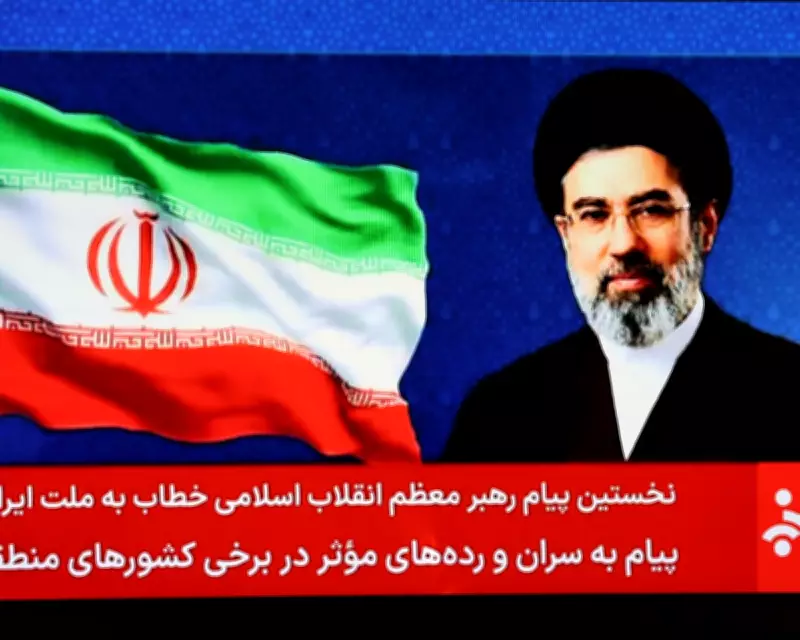
Iran has delivered its inaugural public statement in the name of Mojtaba Khamenei, the newly appointed supreme leader, declaring an unwavering commitment to maintain the closure of the Strait of Hormuz and persist in assaults on American military installations across the region. The message was broadcast on state television this Thursday, read aloud rather than presented live or via video, a method that is unlikely to quell widespread speculation regarding Khamenei's actual condition and vitality following a lethal attack on his father's residence.
Doubts and Defiance in Tehran's Leadership Transition
Amid swirling uncertainties about his health after the fatal assault on his father, Ayatollah Ali Khamenei, during the initial phase of the US-Israeli offensive, this televised address is poised for intense scrutiny as observers seek initial insights into the leadership style of Mojtaba Khamenei, a figure previously known for his behind-the-scenes political role. Described as a hardliner with close ties to the Islamic Revolutionary Guards Corps, the 56-year-old leader offered minimal commentary on recent internal divisions within Iran, instead lauding "the masses of people who have gathered in magnificent assemblies to reaffirm their allegiance to the system."
Khamenei emphasised the critical importance of national unity, urging citizens to overlook "points of disagreement" during these challenging times. He extended commendation to the Iranian populace for their resilience against aggressors, noting that their steadfastness has garnered admiration from allies and astonishment from adversaries.

Strategic Moves and Regional Warnings
In his address, Khamenei asserted his confidence that the Iranian public desires the nation to continue on its current trajectory, explicitly stating that "certainly the leverage of blocking the strait of Hormuz must continue to be used." He revealed that studies have been conducted to identify alternative fronts where opponents possess limited experience and would be highly vulnerable, indicating potential expansions in conflict zones.
The message also included praise for Houthi forces in Yemen and Hezbollah in Lebanon, acknowledging their support for Iran despite existing obstacles, although the Houthis have not yet engaged directly in the conflict. Khamenei vowed retaliation for the "blood of your martyrs," referencing an estimated 175 fatalities from a missile strike on an elementary school in Minab, which a preliminary US military investigation has reportedly attributed to Washington.
Gulf Relations and Compensation Demands
Addressing Iran's relationships with neighbouring Gulf states amidst ongoing missile and drone barrages, Khamenei highlighted that "the enemy has gradually established bases, both military and financial, in some of these countries over the years to secure its dominance over the region." He clarified that recent Iranian attacks targeted only these bases, as previously warned, and insisted that such actions will persist, albeit with a continued belief in the necessity of friendship with these neighbours.
Khamenei urged Gulf leaders to "clarify their stance towards the aggressors of our dear homeland and the killers of our people," recommending the swift closure of American bases and dismissing US claims of establishing security and peace as deceptive. Unlike Iran's president, Masoud Pezeshkian, who recently apologised for damages inflicted on Gulf states, Khamenei offered no such regrets, asserting that Tehran does not seek colonisation or domination but rather stronger bonds and increased wealth for Gulf nations if they sever ties with Washington.

Personal Losses and Leadership Challenges
Khamenei disclosed that he learned of his elevation to supreme leader through television broadcasts, admitting the role presents significant difficulties for him. He also mourned personal losses from the US-Israeli attack, stating, "Apart from my father, whose loss has become a public matter, I have lost my dear and loyal wife … my devoted sister who dedicated herself to serving our parents and ultimately received her due reward, her young child and the wife of another sister … to the caravan of martyrs." Additionally, he confirmed having viewed his father's body, though no funeral date has been established.
This message underscores Iran's defiant stance under new leadership, with Khamenei positioning himself as a resolute figure committed to ongoing conflict and regional influence, even as questions about his health and public presence remain unresolved.