Iran's New Supreme Leader Inaugurates Rule with Signed Missile Strike on Israel
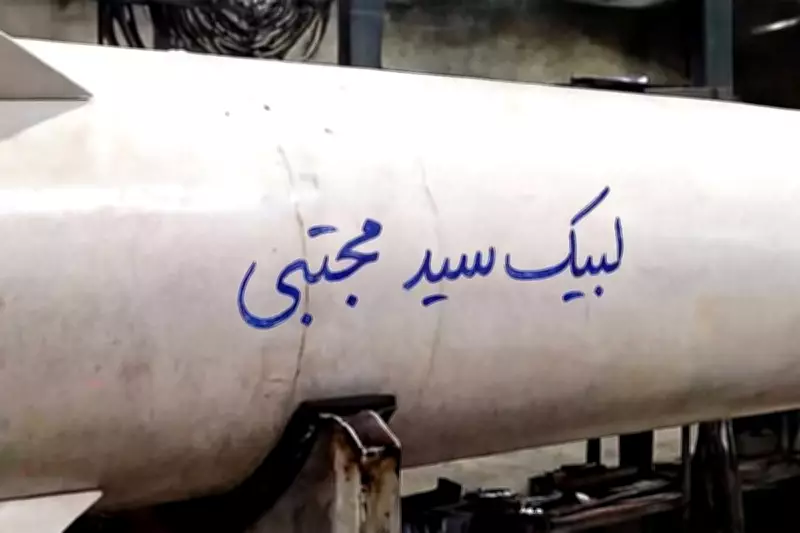
Mojtaba Khamenei, aged 56, has been officially appointed as the supreme leader of the Islamic Republic of Iran, succeeding his father Ayatollah Ali Khamenei, who was assassinated in an Israeli airstrike on February 28. In a bold and provocative first move, the new leader has launched missile strikes targeting Israel, with a projectile bearing his personal signature and the inscription "At your service, Sayyid Mojtaba." This message was prominently displayed on Iran's state broadcaster IRIB's Telegram channel, signalling a direct and defiant stance against international adversaries.
Defiance in the Face of Global Pressure
The missile launch represents a clear act of defiance against United States President Donald Trump, who had insisted on being consulted regarding Iran's leadership transition. Trump has publicly declared Mojtaba Khamenei an "unacceptable" candidate and warned that his tenure "is not going to last long" without American approval. Additionally, Israel had previously threatened to target whoever was chosen as Iran's new leader, escalating tensions in a region already fraught with conflict.
Recent weeks have seen Israel intensify its assaults on Iranian infrastructure, particularly targeting oil and energy facilities, which have resulted in thick black smoke enveloping Tehran. Reports have emerged of black "acid rain" falling over parts of Iran following US-Israeli airstrikes on oil depots over the weekend. Iran's Red Crescent Society has issued warnings that this oil-contaminated rainfall could be "highly dangerous and acidic," posing health risks such as headaches and breathing difficulties for residents as it settles on buildings and vehicles.
Human and Economic Toll of Escalating Conflict
The ongoing conflict has taken a severe human toll, with Iran's UN ambassador reporting at least 1,332 Iranian civilian deaths and thousands wounded from US-Israeli attacks. On the American side, the US military confirmed a seventh fatality from wounds sustained during Iran's initial counter-attack a week ago, following President Trump's oversight of the repatriation of six other casualties. Economically, the war has driven oil and gas prices above $100 per barrel, exacerbating global market instability.
Under Iran's complex theocratic system, the supreme leader holds ultimate authority over foreign policy, controls the nation's nuclear programme, and guides the elected president and parliament. Mojtaba Khamenei's appointment has been met with internal criticism, particularly from Iranian protesters who recall his role during the 2022 unrest following the death of Mahsa Amini in police custody. He is perceived as having significant leverage over Iran's security apparatus, which has been instrumental in repressing multiple waves of protests in recent years.
In response to the attacks, Iran has threatened retaliatory strikes on oil facilities, while vowing not to target its Gulf partners. The Islamic Revolutionary Guard Corps and the Assembly of Experts have pledged allegiance to Mojtaba Khamenei over the weekend, consolidating his power amidst escalating regional hostilities. This development marks a critical juncture in Middle Eastern geopolitics, with potential ramifications for global security and energy markets.