Decade-Long Study of MAGA Rhetoric Sheds Light on Pete Hegseth's Approach
After a decade of analysing MAGA communication patterns, a clear picture emerges of how figures like Secretary of Defense Pete Hegseth operate within Donald Trump's second administration. With loyalty becoming the primary qualification for official positions, Trump's current cabinet features numerous right-wing and far-right media personalities who bring their distinctive communication styles to government.
Contrasting Leadership Styles in Military Communication
When former Defense Secretary James Mattis addressed escalating operations against the Islamic State in 2017, he emphasised careful strategy development and adherence to rules of engagement designed to protect civilians. His measured, professional tone stands in stark contrast to Secretary Hegseth's approach following the initial days of joint U.S.-Israeli combat operations in Iran.
On March 2, 2026, after boasting about the devastating capabilities of American military hardware including B-2 bombers, fighter jets, drones, and missiles, Hegseth dismissed concerns about long-term geopolitical planning. He declared there would be "no stupid rules of engagement, no nation-building quagmire, no democracy building exercise, no politically correct wars. We fight to win."
Addressing media criticism directly, he commanded: "to the media outlets and political left screaming 'endless wars:' Stop. This is not Iraq."
The New Communication Paradigm in Government
As a communication scholar who has studied MAGA rhetoric extensively, I've observed how Hegseth and other officials in Trump's second administration reject traditional expectations for public officials. They refuse to conform to what recurring rhetorical situations typically demand - those urgent public matters that compel speech to audiences capable of being influenced.
The prevailing theme of this administration appears to be that no one will dictate what they say or how they say it. They feel encumbered neither by established norms nor by the exigencies that typically compel speech in democratic societies.
Departure from Expected Military Communication
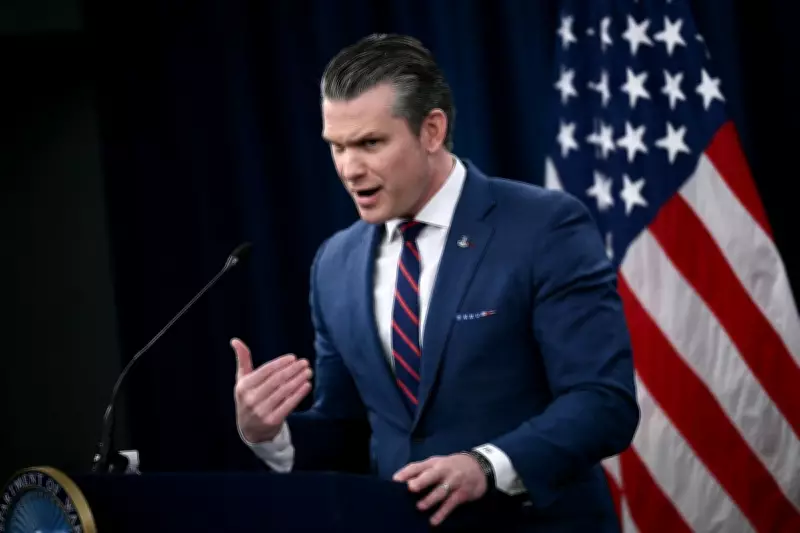
When nations engage in warfare, the public reasonably expects the president and defense secretary to justify military actions through detailed explanations conveyed with appropriate seriousness and competence. However, during the first week of operations in Iran, Hegseth's press briefings deviated significantly from the measured tone traditionally expected from high-ranking military officials.
Hegseth employed villainous colloquialisms including "they are toast and they know it," "we play for keeps," and "President Trump got the last laugh." These statements were delivered with a combative tone that communicated masculine self-assurance, surprising many observers with their haughty delivery, hypermasculine preoccupation with domination, apparent giddiness about violence, and casual attitude toward casualties.
The Evolution of Rule-Breaking in the Administration
During Trump's first term, this tendency toward norm-breaking was largely confined to the president himself, whose transgressions formed part of his populist appeal. Although Trump's initial cabinet members shared most political objectives, they generally attempted to restrain what they perceived as the president's more dangerous impulses.
The current administration operates differently, with loyalty becoming the primary qualification for officials. Trump's second cabinet now includes numerous right-wing and far-right media personalities alongside Hegseth, such as Kash Patel, Sean Duffy, and Mehmet Oz.
The Anti-Institutional Ethos of Far-Right Media
The anti-institutional mindset prevalent in far-right media helps explain why these officials refuse to conform to "elite" expectations, instead adopting communication styles that are bombastic, outrageous, and deliberately provocative. Among them, there exists little reverence for what they might perceive as emasculating traditions of politeness and decorum.
In their media marketplace, "owning," "dominating," and "triggering" opponents represents valuable currency. Far-right media personalities have honed their ability to command attention through showmanship and swagger, qualities that appear to have influenced Trump's selection of Hegseth specifically for his ability to perform the "big man" role perfectly.
The Strategy of "Kill Talk" in Military Communication
Hegseth's language choices and petulant tone don't demonstrate ignorance of what rhetorical situations typically demand; rather, they reflect a deliberate refusal to be constrained by what he might view as cumbersome, emasculating norms.
When discussing the war's first week, Hegseth grinned while delivering action-movie one-liners like: "turns out the regime who chanted 'Death to America' and 'Death to Israel' was gifted death from America and death from Israel."
This represents what communication scholars term "kill talk" - a verbal strategy typically directed at military recruits that denies the enemy's humanity while disguising the terrible costs of violence. His repetitive use of words like "death," "killing," "destruction," "control," "warriors," and "dominance" frames violence in heroic terms detached from war's grim realities.
The Gamification of Warfare
Hegseth essentially addressed the public as a squad leader might address military recruits, apparently delighting in dispensing death and glorifying warfare while saying virtually nothing about long-term strategy beyond the concept of "winning."
Within the MAGA media ecosystem, winning represents the ultimate objective. If victory constitutes the sole goal, then war becomes, by profound inference, a game - a test of masculine fortitude rather than a complex geopolitical undertaking.
This perspective became particularly evident when the White House posted a video interspersing footage of airstrikes on Iran with "killstreak animation" from the popular video game Call of Duty: Modern Warfare. In the game, players who eliminate multiple opponents without dying earn rewards including missile strikes to exterminate opposing teams. This messaging approach effectively gamifies violence while obscuring warfare's destructive human toll.
Informed by the contemptuous hypermasculinity characteristic of far-right media culture, this taboo behavior and glorified portrayal of death convey one fundamental message: when the public most needs explanation and justification for government actions, those in power believe they owe the public neither explanation nor comfort.