Iran War Sparks Energy Crisis, Renewables Seen as National Security Solution
As the Iran war continues to shake the global energy system, it is also casting a long shadow over Earth's climate future. World leaders have historically attempted to combat climate change by urging collective action for the common good, but these efforts have largely fallen short. Now, the conflict and its resulting energy crunch have prompted some experts to speculate that selfishness and nationalism might paradoxically offer a more viable path to planetary salvation by accelerating support for homegrown renewable energy over imported fossil fuels.
A Shift Driven by Self-Interest
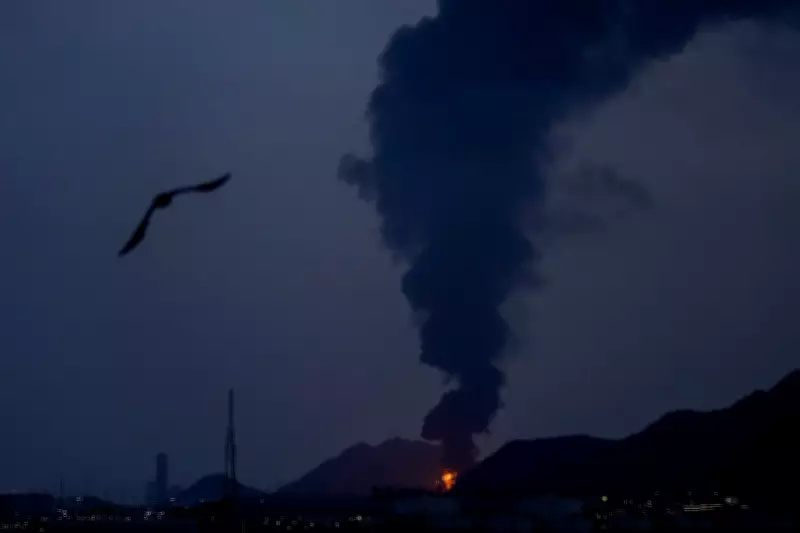
The destruction of refineries, disruption of key shipping channels for oil and liquefied natural gas, and soaring fuel prices are creating a powerful economic incentive. Some analysts hope these pressures will push even the most reluctant political leaders toward a cleaner, fossil-free future. However, sceptics remain unconvinced, pointing to the recent example of Russia's invasion of Ukraine. That crisis initially sparked similar talk of a green transition, but ultimately led some European nations to temporarily replace gas with even dirtier coal.
"Just wishful thinking," remarked Stanford University climate scientist Rob Jackson, who monitors global carbon dioxide emissions. This sentiment underscores the challenge of turning crisis into lasting change.

The UN's Call for an 'Exit Ramp'
United Nations Secretary-General António Guterres presented a counter-argument, stating that the current turmoil highlights the fragility of a fossil fuel-dependent global system. "The turmoil we are witnessing today in the Middle East makes it evident that we are facing a global energy system largely tied to fossil fuels," Guterres said. "In past oil shocks, countries had little choice but to absorb the pain. Now they have an exit ramp."
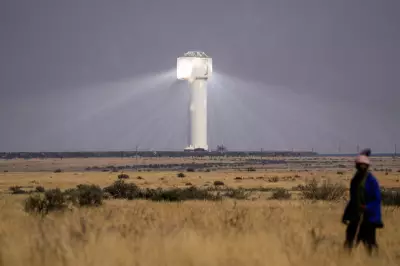
He emphasised that renewable energy is now cheaper, more accessible, and more scalable than ever, offering resources that "cannot be blockaded or weaponized." This presents a stark contrast to the volatile geopolitics of oil and gas.
The Failure of Global Cooperation
Annual UN climate conferences aimed at fostering global cooperation have yielded minimal progress. The most recent COP30 meeting in Brazil concluded without even mentioning "fossil fuels" in its final statement, let alone establishing a timeline for reducing their use. Guterres himself admitted the outcome was insufficient. Notably, the United States, under President Donald Trump—whose policies contributed to the current tensions—did not participate in the Brazil summit.
Despite record growth in renewable energy installations globally, which now outpaces fossil fuel expansion, the world's overall fossil fuel consumption and associated emissions of carbon dioxide and methane continue to rise annually. This trend fuels atmospheric warming and intensifies costly, deadly extreme weather events worldwide.
"The bottom line is that for at least another five years and maybe longer, emissions reduction will in fact be dealt with largely unilaterally," said Michael Oppenheimer, a Princeton professor of climate and international affairs. He suggested that if nations perceive the Iran conflict as a reason to abandon fossil fuels, it will likely happen through domestic policy shifts rather than international treaties.
A Potential Moment of Opportunity
Caroline Baxter, director of the Converging Risks Lab at the Council on Strategic Risks, noted a "dramatic slowdown" in fossil fuel shipments due to the war. For energy-import-dependent nations like Japan and South Korea, this disruption is significant. Baxter suggested that a shift toward green energy could occur simply because renewables offer greater stability than fossil fuels.
"I think there is an opportunity, rightly or wrongly, for countries to really turn inward and try to power themselves in a way that cuts off their dependence on other nations for that source," said Baxter, a former US defense official. She argued that if nations pursue energy independence through renewables, it could limit climate change without the complex diplomacy of international climate talks.

Energy analyst Ana Maria Jaller-Makarewicz of IEEFA Europe predicted the war would lead to increased installations of solar panels and heat pumps in the coming months.
A Reality Check from Recent History
More cautious observers point to the Russian invasion of Ukraine as a cautionary tale. That crisis severely disrupted Europe's natural gas supply but did not fundamentally alter global fossil fuel dependence. Politicians often respond to energy insecurity caused by war by pivoting to other fossil fuels, such as coal, which emits even higher levels of greenhouse gases.
"We have seen this at the European level where actors post-2022 slowly wanted to move away from the energy transition which is exactly the wrong lesson," said Pauline Heinrichs, a war studies lecturer at King's College London.
Experts like Geoff Dabelko of Ohio University and Neta Crawford of the University of St. Andrews warn that major emitters like China and India could similarly increase coal use in response to the current crisis, following Europe's earlier example.
The Inevitable Pollution of War
Regardless of national energy choices, the war itself will significantly increase emissions. Recent reports indicate that the world's militaries are responsible for 5.5% of global greenhouse gas emissions annually—more than any single country except China, the United States, and India.
Neta Crawford, co-founder of the Costs of War project, highlighted the environmental cost of military operations, such as fuel-guzzling fighter jets. "The consequences of war on emissions will far exceed any incremental offset in emissions due to increased enthusiasm for a green transition," she concluded, offering a sobering reminder of the conflict's direct climatic impact.