Starmer's Wilsonian Stance: Standing Firm Against US Pressure on Iran
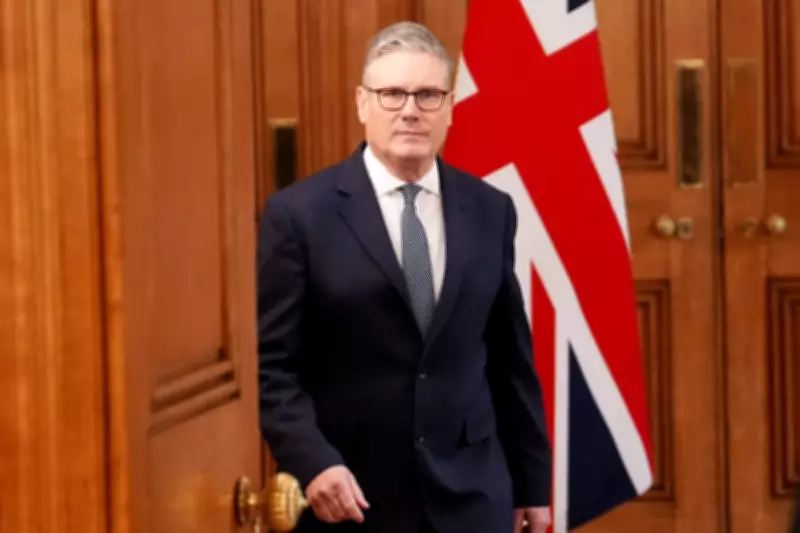
In a bold move that has drawn comparisons to a Labour predecessor, Prime Minister Keir Starmer has reaffirmed his refusal to allow British territories to be used for US strikes on Iran, despite sharp criticism from former US President Donald Trump. This decision, announced on Wednesday, 4 March 2026, highlights Starmer's admiration for Harold Wilson, the former prime minister who similarly resisted American pressure during the Vietnam War, as noted by Alan Johnson, a former Labour cabinet minister and Wilson biographer.
Harold Wilson's Legacy and Starmer's Inspiration
Fifty years ago this month, Harold Wilson shocked the nation by announcing his resignation from 10 Downing Street on his 60th birthday. Having won four elections—a feat matched only by Gladstone—and a European referendum, unlike David Cameron, Wilson left office at a younger age than Starmer was when he first entered. It is no surprise that Wilson is cited as the prime minister Starmer most admires, rather than Winston Churchill, as Trump might have implied in his recent remarks.
Wilson's administrations were instrumental in modernising Britain, introducing landmark reforms such as the first protections against racial discrimination, legalisation of homosexuality, abolition of capital punishment, and an end to theatre censorship and back-street abortions. His government built a record 400,000 council houses in a single year, reformed archaic divorce laws, promoted equal opportunities and pay for women, expanded higher education, and established the Open University.

The Vietnam Parallel: A Lesson in Diplomatic Courage
However, as Johnson emphasises, it is what Wilson did not do that resonates most strongly today: his refusal to send British troops to Vietnam. This stance is now mirrored in Starmer's approach to the Iran conflict, where he faces pressure from figures like opposition leader Kemi Badenoch and Nigel Farage to align with Trump, while others, such as Green party leader Zack Polanski and some Labour backbenchers, urge public condemnation of the US president. Amidst this, Starmer has positioned himself as a measured leader, echoing Wilson's pragmatic yet principled diplomacy.
Wilson's success lay not just in refusing military involvement but in maintaining a close UK-US relationship despite this. He provided America with most of what it wanted, except for troop commitments, a strategy that drew criticism from student revolutionaries unaware that American loans funded Britain's welfare state and their grants. Wilson was accused of excessive pragmatism, but his anti-war instincts were genuine, as seen when he refused to send troops to Rhodesia (now Zimbabwe) after Ian Smith's unilateral declaration of independence, arguing that military measures would be disproportionate and costly.
Modern Pressures and Historical Echoes
In dealing with Vietnam, Wilson acted as an honest broker between Washington and Moscow, facing intense pressure from US President Lyndon B. Johnson. Dean Rusk, Johnson's Secretary of State, famously remarked that the US needed just one regiment, like the Black Watch, and warned that America might not come to Britain's aid in future conflicts—a sentiment that sounds Trumpian today. Yet, history has vindicated Wilson's stance; America lost 58,000 lives in a war now seen as a tragic mistake, while Vietnamese casualties ranged from 970,000 to three million.
Similarly, there is broad consensus that regime change in Iran cannot be achieved through airstrikes, and evidence suggests its nuclear capacity could have been neutralised via negotiation. Starmer, while facing domestic challenges, has earned respect on the world stage, even from political opponents. Unlike Wilson, he may receive credit for staying close to America while avoiding reckless adventurism, a fitting tribute to his hero's legacy.
Harold Wilson: Twentieth Century Man by Alan Johnson (£7.99, Swift Press) is now available in paperback, offering deeper insights into this influential figure.