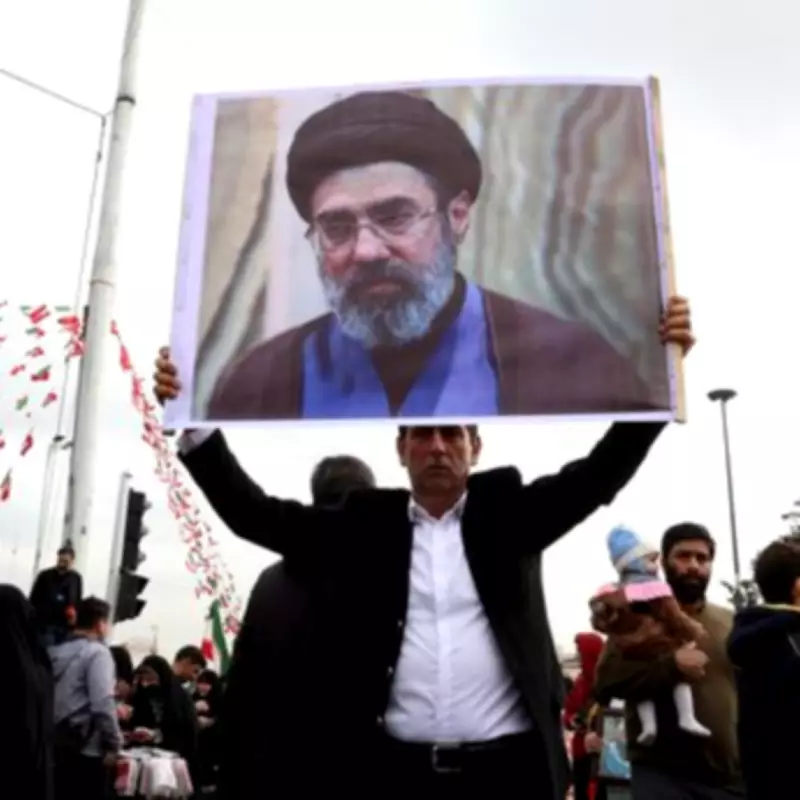
Iran's New Hardline Leader Signals Prolonged Conflict with West
The probable appointment of Mojtaba Khamenei as Iran's new Supreme Leader marks a significant shift towards a more aggressive and unyielding stance against Western powers. As the second son of the slain Ayatollah, his ascension solidifies the dominance of Tehran's shadowy military elite, the Islamic Revolutionary Guard Corps (IRGC), and sets the stage for a protracted and volatile conflict in the Middle East.
A Wealthy Hardliner with Deep Ties to the IRGC
Mojtaba Khamenei, a multi-billionaire with extensive property holdings and Swiss bank accounts, emerges as a paradoxical figure. Despite his lavish lifestyle, he enjoys immense popularity among hardline zealots and has long been groomed as a successor. His appointment, believed to be a foregone conclusion, was finalized after just two remote virtual meetings by Tehran's Assembly of Experts, a process expedited after the intended voting site in Qum was bombed by US and Israeli forces.
Born into wealth and comfort, the 56-year-old has adopted much of his father's hardline views on the West, further hardened by personal tragedy. His wife, Zahra Haddad-Adel, was killed in a US-Israel airstrike, alongside his mother and one of his sons during recent strikes. Yet, he maintains a more worldly perspective, with reported properties in the UK and significant international financial dealings.
Military Background and Strategic Influence
As a mid-ranking cleric, Mojtaba served in Iran's armed forces during the Iran-Iraq war in the 1980s, forging lasting loyalties with the IRGC. For years, he has exerted behind-the-scenes power in Tehran, shadowing his father's rule and taking on substantial responsibilities while the late Ayatollah sought shelter. Although he never held a formal position, his influence within Iran's political and security apparatus is widely acknowledged.
His survival during five days of military strikes, achieved by moving through Tehran's vast underground tunnel network hundreds of metres deep, underscores his resilience and strategic acumen. These tunnels, accessible only by lengthy elevator rides, have become a symbol of his defiance and preparedness for prolonged conflict.
Implications for Regional Stability
Sources indicate that Mojtaba is unlikely to bend to pressure from Israel and the US, instead preferring to prolong the conflict and export violence across the region. His appointment is seen as a clear signal of Tehran's defiant war posture, with Israeli officials already marking him as a prime target. Israeli politician Israel Katz stated, "Any leader selected by the Iranian terror regime... will be a certain target for assassination, no matter his name or where he hides."
Mojtaba's close ties to the IRGC, combined with his arch-strategist mindset and theocratic beliefs inherited from his father, suggest a future of heightened tensions. The IRGC's pressure on the Assembly of Experts to select him highlights the military's growing control over Iran's leadership, potentially leading to more aggressive policies and sustained hostilities.
As the Middle East braces for further escalation, the international community watches closely, anticipating that Mojtaba Khamenei's rule will deepen regional divides and challenge global security frameworks. His wealth, military connections, and personal vendettas position him as a formidable and unpredictable leader in an already turbulent landscape.