Israeli Military Mandates Immediate Evacuations in Southern Lebanon Amid Intensified Beirut Strikes
The Israeli military has issued an urgent directive on Wednesday, ordering residents of dozens of border villages in southern Lebanon to evacuate "immediately" as airstrikes on suburbs of Beirut escalate and Hezbollah claims additional attacks. This development follows Lebanon's early Monday entry into the broader Middle East conflict, which ignited after U.S.-Israeli strikes on Iran, prompting Hezbollah to launch rockets and drones into northern Israel.
Evacuation Orders and Escalating Violence
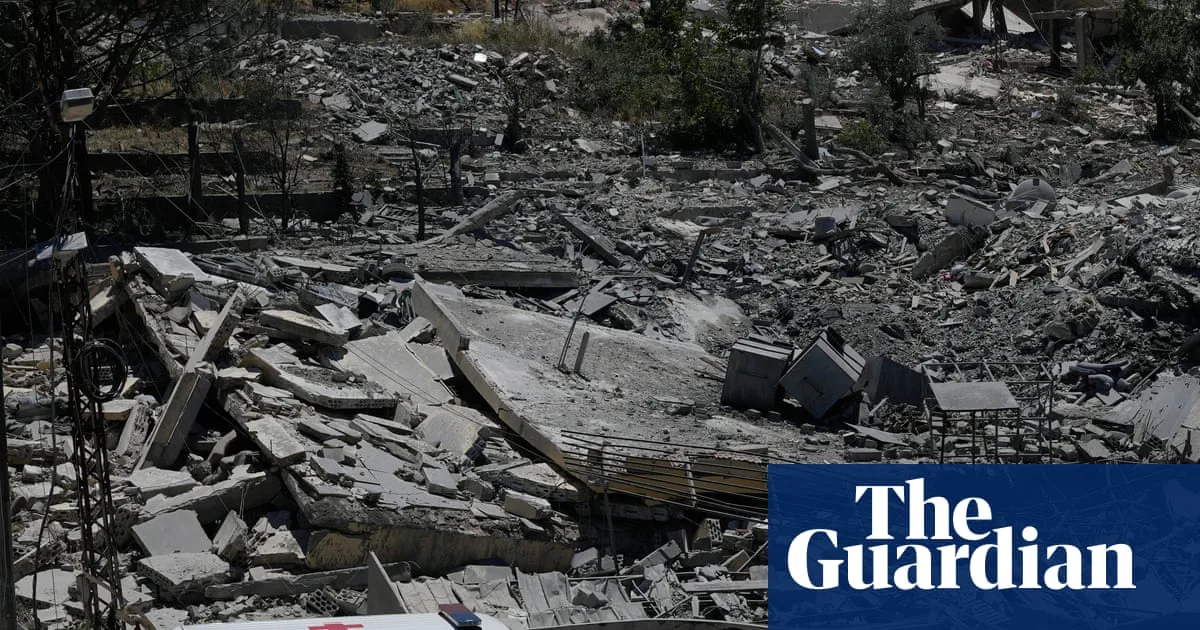
In response to Hezbollah's actions, Israeli retaliatory airstrikes have targeted various parts of Lebanon, resulting in over 50 fatalities and approximately 300 injuries. The conflict has also displaced tens of thousands of people from southern Lebanon, the eastern Bekaa Valley, and Beirut's southern suburbs. The Israeli military's statement specifically instructs residents in villages near the Israeli border to move north of the Litani River without delay.
The Israeli army's Arabic spokesperson warned on social media platform X that individuals choosing to remain south of the river would be endangering their lives. This area, constituting about 8% of Lebanon's territory and primarily bordering Israel, has reportedly been cleared of Hezbollah's military presence by the Lebanese government in recent months, according to official statements.
Recent Airstrikes and Civilian Impact
The evacuation order coincides with a series of overnight airstrikes targeting the predominantly Christian southeastern suburb of Hazmieh, where a hotel was struck. Additional strikes hit the towns of Aramoun and Saadiyat, located just south of Beirut's international airport, killing six people and wounding eight. Another attack on the eastern city of Baalbek resulted in six fatalities and 15 injuries, as reported by state media.
These four airstrikes occurred without prior warning, a tactic often associated with targeted assassinations. Security officials, speaking anonymously in compliance with regulations, indicated that the target in Hazmieh was a local official from Beirut's southern suburb of Ghobeiri, who sustained injuries.
Maggie Shibli, wife of the owner of the struck Hotel Comfort in Hazmieh, expressed the pervasive fear among residents, stating, "We live in a country where a missile can fall on your head at any moment." Abbas Najdeh, displaced from the southern port city of Tyre and staying at the hotel, recounted the harrowing experience: "We were sleeping then suddenly I, my children and my wife were thrown away."
Hezbollah's Response and Ground Invasion Concerns
On Wednesday, the Israeli military also issued multiple warnings for people to evacuate buildings in Beirut's southern suburbs, which were subsequently struck. Hezbollah responded by claiming several attacks on Israel, including two utilizing precision-guided missiles. This escalation has raised concerns about a potential Israeli ground invasion, especially after Israel deployed troops into southern Lebanon for the first time since a ceasefire ended a 14-month Israel-Hezbollah war in November 2024.
While it remains unclear if Israel is preparing for a full-scale ground invasion, Lebanon's state-run National News Agency reported Israeli artillery shelling on several border villages, including Aid al-Shaab and Beit Lif. In eastern Lebanon, the main border crossing with Syria was temporarily closed on Wednesday due to a warning of an impending Israeli strike, later deemed a false alarm. Similar false alarms in Beirut and other regions have heightened resident anxieties.
Historical Context and Ongoing Tensions
This conflict is not the first between Hezbollah and Israel. Hostilities began after Hezbollah initiated attacks into Israel following the October 7, 2023, Hamas-led assault on southern Israel, which triggered the war in Gaza. After months of low-level fighting, a full-scale war erupted in September 2024, leading to an Israeli ground invasion of Lebanon.
Although Israeli forces withdrew from most of southern Lebanon after a U.S.-brokered ceasefire in late 2024, they continue to occupy five points on the Lebanese side of the border. Israel has maintained near-daily strikes, primarily in southern Lebanon, alleging that Hezbollah is attempting to rebuild its positions in the region.




