Iran's Leadership Crisis: Succession Process Begins After Khamenei's Death
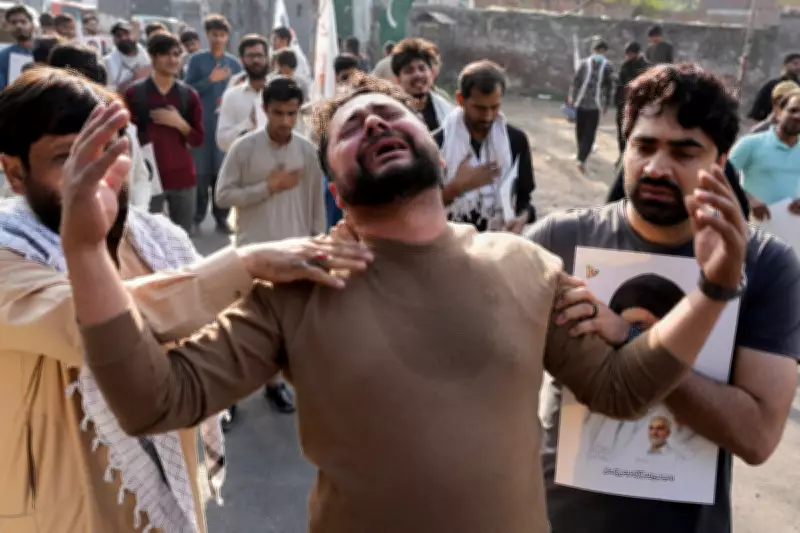
The death of Supreme Leader Ayatollah Ali Khamenei after nearly thirty-seven years in power has plunged Iran into a critical leadership transition. Iranian state television confirmed the passing of the eighty-six-year-old cleric, though no official cause of death was provided. This announcement followed joint United States and Israeli strikes on Iranian territory, with former US President Donald Trump claiming Khamenei had perished in these attacks and urging Iranians to seize the opportunity for change.
Immediate Governance and Regional Tensions
In response to the leadership vacuum, Iran has swiftly established a temporary leadership council as mandated by its constitution. This council comprises Iran's current reformist President Masoud Pezeshkian, hard-line judiciary chief Gholamhossein Mohseni Ejei, and a member selected by the Expediency Council. They will collectively assume all supreme leadership duties during this interim period.
The geopolitical landscape remains volatile following Saturday's attacks, which prompted Iranian retaliation strikes across several Gulf nations, including the United Arab Emirates, Qatar, Bahrain, and Saudi Arabia. The United Kingdom's Foreign Office has advised British nationals in Bahrain, Israel, Palestine, Qatar, and the UAE to register their presence due to heightened security concerns.

The Complex Succession Mechanism
While the leadership council provides temporary governance, the permanent selection of a new supreme leader falls to the eighty-eight-member Assembly of Experts. This panel, consisting entirely of Shiite clerics, is required by Iranian law to convene promptly and choose a successor. The Assembly's members are popularly elected every eight years, but their candidacies must first be approved by the Guardian Council, Iran's constitutional watchdog known for disqualifying candidates across various elections.
This intricate process marks only the second transfer of supreme leadership power since Iran's 1979 Islamic Revolution. The previous transition occurred in 1989 following the death of Grand Ayatollah Ruhollah Khomeini, who led Iran through its war with Iraq. The current succession unfolds against a backdrop of recent conflict, including Israel's twelve-day war against Iran in June 2025.
Potential Successors and Political Dynamics
The clerical deliberations surrounding succession occur largely behind closed doors, making it challenging to identify clear frontrunners. Previously, hard-line President Ebrahim Raisi was considered a potential successor, but his death in a May 2024 helicopter crash has altered the landscape.
Attention has now shifted to Mojtaba Khamenei, the fifty-six-year-old Shiite cleric son of the late supreme leader. Despite never holding government office, Mojtaba represents a potential dynastic succession that could provoke significant controversy. Such a father-to-son transfer might anger both critics of clerical rule and system supporters who could view it as un-Islamic and reminiscent of the pre-revolutionary monarchy.
The Supreme Leader's Vast Authority
The supreme leader occupies the central position within Iran's complex Shiite theocracy, wielding ultimate authority over all state matters. This role includes serving as commander-in-chief of Iran's military and the powerful Revolutionary Guard, a paramilitary force designated as a terrorist organization by the United States in 2019. Under Khamenei's leadership, the Revolutionary Guard expanded its influence significantly, leading the "Axis of Resistance" network of militant groups across the Middle East while accumulating substantial wealth and holdings within Iran.
As Iran navigates this rare leadership transition, the international community watches closely, with the United Kingdom's shadow foreign secretary Dame Priti Patel remarking that "no-one should shed any tears for the death of Khamenei." The succession process will ultimately determine the future direction of Iranian policy both domestically and across the volatile Middle Eastern region.