Iranian Powerbroker Larijani Dismisses US Negotiations Amid Leadership Crisis
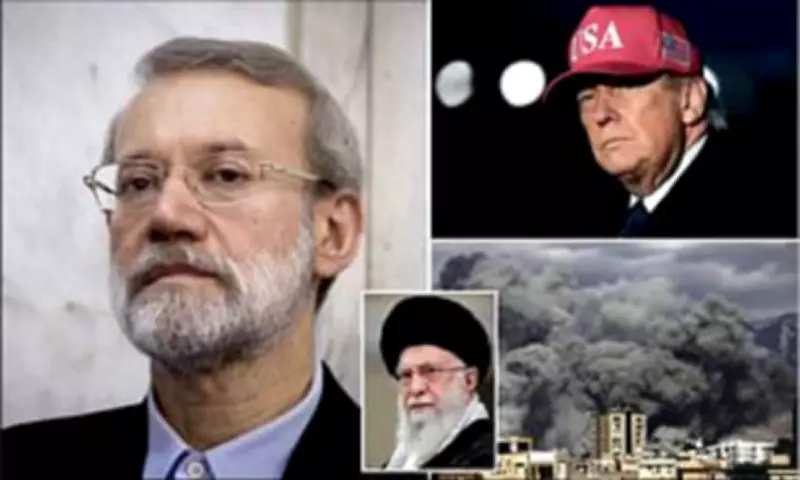
A veteran Iranian powerbroker and close ally of the late Supreme Leader Ayatollah Ali Khamenei has launched a scathing attack on former US President Donald Trump, labelling his policies as "delusional fantasies" and declaring that Iran will not engage in negotiations with the United States. Ali Larijani, the secretary of Iran's Supreme National Security Council, made these remarks as Tehran grapples with a leadership vacuum following Khamenei's death in a recent airstrike.
Hardline Stance Against US and Israel
In a series of statements carried by Iranian state television and posted on social media platform X, Larijani accused the United States and Israel of seeking to "plunder and disintegrate" Iran. He issued a stark warning to so-called "secessionist groups" within the country, stating they would face a severe response if they moved against the state. His comments came just hours after he announced the formation of a provisional governing structure in the wake of the airstrike that killed Khamenei and dozens of senior officials.
Larijani's rhetoric intensified with a direct rebuke to Trump, asserting, "We will not negotiate with the US." He further criticised Trump's foreign policy, claiming the former president had transformed his "America First" slogan into "Israel First" and had sacrificed American soldiers for Israel's ambitions. "Trump plunged the region into chaos with his 'delusional fantasies' and now fears more American troop casualties," Larijani wrote.

Regional Warnings and Security Posture
The Iranian official also addressed neighbouring countries in the Middle East, clarifying that Tehran does not seek to attack them directly. However, he issued a clear warning regarding American military bases hosted in the region. "When the bases located in your country are used against us, and when the United States carries out operations in the region relying on these forces, then we will target those bases," Larijani stated. He emphasised that such bases are considered "American soil" rather than part of the host nation's territory.
Larijani's appointment as secretary of the Supreme National Security Council in August marked his formal return to the core of Iran's security establishment, a position he had held two decades earlier. This move came after a 12-day air war between Iran and Israel that involved the United States. With the leadership vacuum at the top of the Islamic Republic, Larijani has swiftly moved to consolidate his influence.
Background and Diplomatic Engagements
Born in Najaf, Iraq, in 1958 into a prominent clerical family, Larijani holds a doctorate in philosophy and has a long history of service within the Iranian regime. A former parliament speaker and veteran member of the Islamic Revolutionary Guard Corps, he has overseen critical portfolios including nuclear diplomacy, regional alliances, and internal security. Despite being barred from running in the 2021 and 2024 presidential elections by the Guardian Council, he has remained embedded in the regime's inner circle.
In recent months, Larijani has been actively involved in diplomatic efforts, traveling to Oman to prepare for indirect nuclear talks with Washington and making repeated visits to Moscow to meet Russian President Vladimir Putin as Tehran deepens security ties with the Kremlin. He has also managed Iran's long-term cooperation framework with China. On the nuclear issue, Larijani has occasionally struck a pragmatic tone, suggesting in an interview with Oman state television that concerns about Iran acquiring nuclear weapons are "resolvable."
Historical Context and Current Sanctions
Larijani previously served as Iran's chief nuclear negotiator from 2005 to 2007 and was speaker of parliament from 2008 to 2020, a period that included the 2015 nuclear agreement with world powers. Trump withdrew the United States from that deal in 2018. In January, the US Treasury announced sanctions against Larijani, accusing him of calling for violence during anti-government protests. Rights groups reported thousands killed in the unrest, which Larijani distinguished from what he described as "terrorist-similar groups."

The recent airstrike that killed Khamenei also resulted in the deaths of 40 key Iranian commanders, including chief of staff Abdolrahim Mousavi, according to Israel's military. This coordinated assault has decapitated much of Iran's top military leadership and triggered retaliatory missile launches across the region. As Iran mourns its supreme leader, Larijani's firm rejection of US talks and his accusations against Trump underscore the heightened tensions and complex geopolitical landscape facing the Middle East.