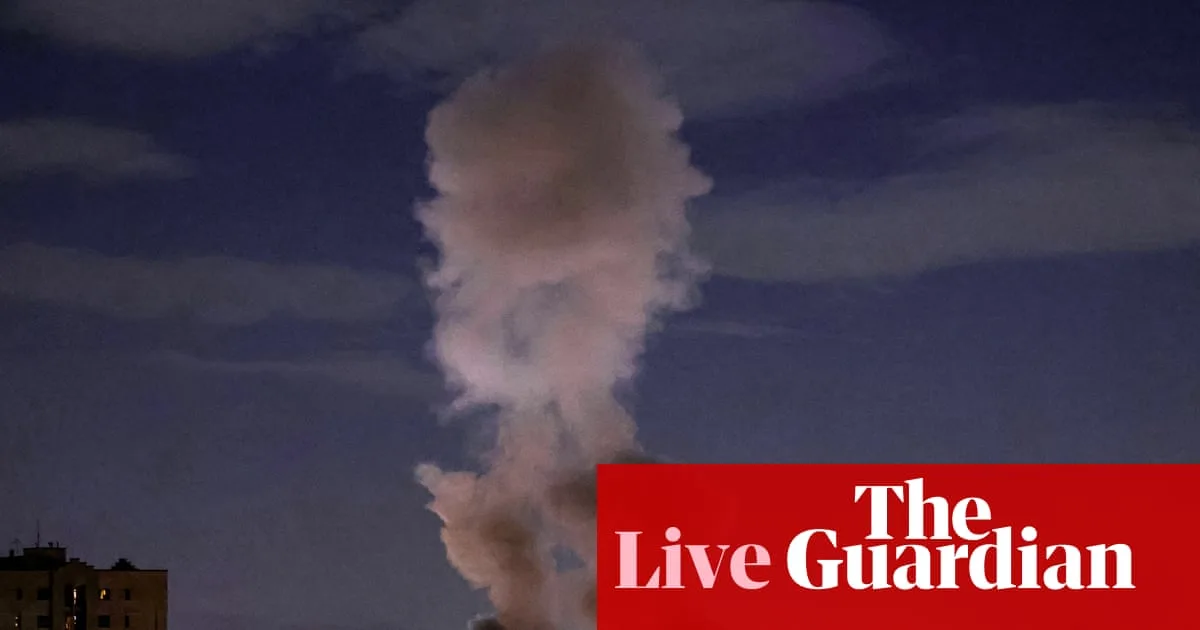
Iran's Supreme Leader Killed in Coordinated US-Israeli Military Strikes
Ayatollah Ali Khamenei, the supreme leader of the Islamic Republic of Iran, has died at the age of 86 following joint military strikes conducted by the United States and Israel. The death of the long-serving clerical ruler is expected to plunge the Middle East region into further instability, creating a significant power vacuum in Tehran after his three-decade rule.
Trump Confirms 'Major Combat Operations' Against Iran
Former US President Donald Trump publicly confirmed that Khamenei was killed in overnight airstrikes, describing the Iranian leader as "one of the most evil people in history." Trump asserted that this moment represents the "single greatest chance for the Iranian people to take back their country."
Trump's confirmation followed earlier reports from a senior Israeli government source indicating that Khamenei was killed when his compound was flattened during the attack. The Israeli military later disclosed that approximately 200 warplanes participated in the coordinated operation.
Khamenei's Rise to Power and Three-Decade Reign
Born on April 19, 1939, in the holy city of Mashhad in northeast Iran, Khamenei was raised in a clerical family and undertook religious studies from an early age. His political journey began in the 1960s and 70s as a vocal critic of Shah Mohammad Reza Pahlavi, resulting in multiple arrests and eventual exile in 1964.
Khamenei played a pivotal role in the 1979 Islamic Revolution that transformed Iran from an imperial state to an Islamic republic. After returning to Tehran, he became President of Iran in 1981, surviving an assassination attempt that same year when a bomb hidden in a tape recorder exploded beside him during prayers, severely injuring his right arm.
Following the death of Ayatollah Ruhollah Khomeini, Khamenei was selected as Supreme Leader by Iran's Assembly of Experts. He went on to rule for three times longer than his predecessor, profoundly shaping Iranian society and foreign policy during his tenure.
Consolidation of Power and Regional Influence
During the devastating Iran-Iraq War from 1980 to 1988, which caused between one and two million casualties, Khamenei consolidated his power and developed close ties with Iran's Revolutionary Guards. He transformed this paramilitary force into the dominant power within Iran's military and internal politics while entrenching the system of rule by Shiite Muslim clerics.
Under Khamenei's leadership, Iran pursued an aggressive foreign policy that framed the United States and Israel as principal enemies. Tehran built and funded an extensive network of regional proxies including:
- Hezbollah in Lebanon
- Hamas in Israel and Palestine
- The Houthi movement in Yemen
The Supreme Leader cultivated close relationships with key international figures including Syria's former president Bashar al-Assad, China's Xi Jinping, and Russia's Vladimir Putin.
Nuclear Program and International Tensions
Iran's nuclear program development under Khamenei's rule created significant tensions with Western nations, despite his insistence that the regime did not intend to build nuclear weapons. In 2015, President Hassan Rouhani struck a nuclear agreement with the US and Western allies, but President Donald Trump withdrew from the deal three years later, arguing it was insufficient to restrain Iran.
Tensions escalated dramatically in 2020 when Washington killed Iranian General Qassem Soleimani in a drone strike, prompting retaliatory missile attacks from Tehran on US bases in Iraq.
Domestic Unrest and Recent Challenges
Khamenei's regime faced substantial domestic challenges throughout his rule, including:
- Massive nationwide protests in 2009 following allegations of vote-rigging in Mahmoud Ahmadinejad's election victory
- Widespread demonstrations in 2022 after the death of Mahsa Amini in morality police custody
- Ruthless crackdowns on dissent resulting in numerous arrests and executions
Recent years have seen significant setbacks for Iran's regional influence, including:
- The dismantling of proxy networks following Hamas's October 7, 2023 attack on Israel
- The fall of ally Bashar al-Assad in Syria in December 2024
- US bombing of three Iranian nuclear facilities in June 2025
The death of Ayatollah Ali Khamenei leaves Iran without a clear internal successor after his transformative three-decade rule, creating uncertainty about the country's future direction and potentially destabilizing the entire Middle East region.






