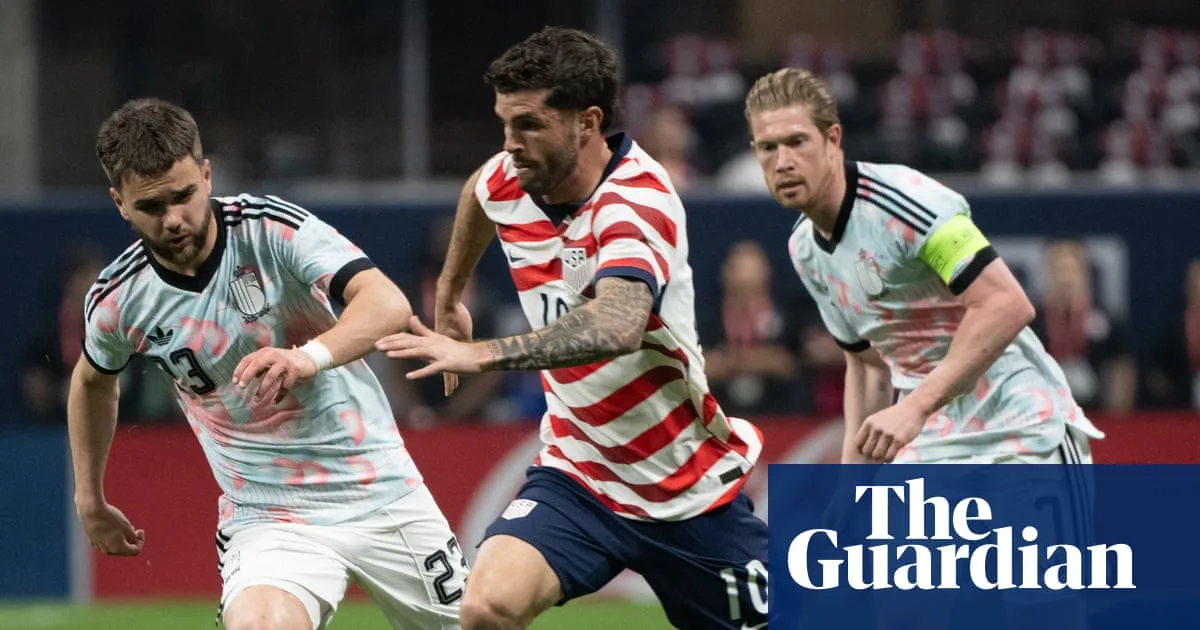
Saturday's friendly between the US men's national team and Belgium at Mercedes-Benz Stadium in Atlanta was marked by unusual elements, including a confusing kit matchup and mandatory hydration breaks that left fans and players alike bewildered. The US wore their red-and-white striped World Cup kits, while Belgium donned a lighter away strip, causing difficulty for spectators and players in distinguishing the teams on the pitch.
US captain Christian Pulisic acknowledged the issue, stating, 'Yes, it was [difficult]. That's not an excuse at all, because both teams had to deal with it, but that just can't happen.' He added that he sometimes could not tell players apart when turning on the field.
The match also featured mandatory hydration breaks, implemented to replicate World Cup conditions. Despite the climate-controlled indoor stadium with a perfect 22°C temperature, the referee halted play for breaks, confusing the 66,867-strong crowd, who booed when the reason was announced. US head coach Mauricio Pochettino expressed his displeasure, saying, 'To be honest I don't like [them]... I think you cut the rhythm of the game.'
Belgium coach Rudi Garcia, however, welcomed the breaks, noting they provided an opportunity to speak with his team about strategy. 'I like them because this is an opportunity for us coaches to speak with the team... It was very good and interesting to speak with the team during these breaks,' he said.
US players had mixed reactions. Goalkeeper Matt Turner noted that players from leagues like MLS are already acclimated to such breaks, while Timothy Weah praised them for player safety. Weston McKennie joked about having a dry mouth but said he did not think the breaks would significantly affect the game. The match ended in a loss for the US, with Belgium clearly controlling the game before the first break.